
Nikumaroro Expedition Concludes: 'Taraia Object' Identified as Tree Debris, Not Earhart Wreckage
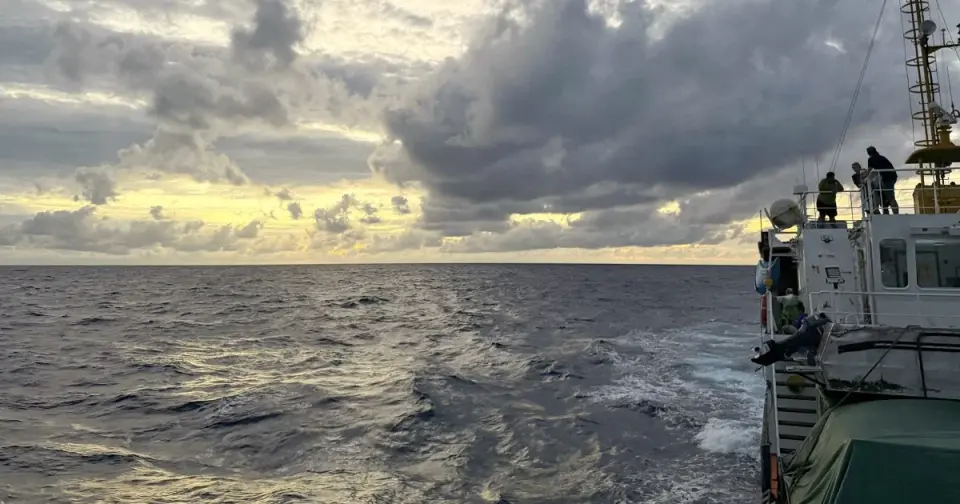
A 17-person expedition to Nikumaroro Island in Kiribati has concluded that the 'Taraia Object,' a satellite anomaly previously hypothesized to be Amelia Earhart’s missing plane, is actually a cluster of washed-up trees. Researchers from Purdue University and the Archaeological Legacy Institute found no conclusive evidence of the 1937 aircraft, though they recovered other artifacts supporting the castaway theory.
Key points
- The expedition, launched from Tarawa on October 6, 2026, traveled to Nikumaroro Island in the Republic of Kiribati to investigate the 'Taraia Object' first seen in 2020 satellite imagery.
- Purdue University and the Archaeological Legacy Institute (ALI) determined the object was a collection of large trees deposited along the peninsula’s sandpit, not metallic aircraft wreckage.
- The reflective surface previously interpreted as metal was identified as a carbonate veneer, a natural layer of carbon-rich sediment found on other items in the area.
- The team recovered a 30-inch steel tube in the lagoon and other 1930s-era artifacts, including glass bottles and a woman’s makeup compact, which support the theory that Earhart and navigator Fred Noonan survived as castaways.
- The expedition faced logistical challenges, including severe weather and large coconut crabs, forcing the crew to sleep offshore during parts of the five-day voyage.
Background
Amelia Earhart and navigator Fred Noonan disappeared in July 1937 while attempting to circumnavigate the globe in a Lockheed Electra 10-E. Nikumaroro Island has long been a leading candidate for their final landing site. Previous searches have dismissed other theories, such as capture by Japanese forces or survival under an alias, but the 'Taraia Object' remained a key hypothesis until this expedition. This marks the 20th major search for the aircraft.
How outlets are covering it
NBC News and The Guardian report that the expedition found no conclusive evidence of the plane, with ALI executive director Rick Pettigrew stating the object was likely debris. The Guardian notes that some longtime Earhart explorers, including the TIGHAR group, had previously argued the object was a fallen tree and that the aircraft lies in deep water off the island’s western end. Purdue University emphasized that while the specific hypothesis was disproven, the mission supports the broader castaway theory due to the recovery of other artifacts. All sources agree that the mystery of Earhart’s fate remains unsolved, but the 'Taraia Object' is no longer considered a viable candidate for the wreckage.
Why it matters
The expedition resolves a long-standing debate among researchers regarding the 'Taraia Object,' eliminating a major hypothesis in the search for Amelia Earhart’s plane. While it does not solve the 1937 disappearance, it reinforces the castaway theory through the discovery of other artifacts, guiding future searches toward deep-water locations off Nikumaroro Island.
What to watch
Researchers will further study the recovered 30-inch steel tube and other artifacts to determine their origin. Future expeditions may focus on deep-water searches off the western end of Nikumaroro Island, as suggested by critics of the 'Taraia Object' hypothesis.
- ‘No conclusive evidence’ of Amelia Earhart’s missing plane found in South Pacific expedition NBC News
- Amelia Earhart researchers leave remote atoll empty-handed after ‘plane debris’ found to be a clump of trees The Guardian
- Search for Amelia Earhart’s plane continues after Taraia Object expedition on Nikumaroro rules out latest hypothesis Purdue University
- New Evidence Is Reviving the Theory That Amelia Earhart Survived Her Crash. And Then She Was Eaten by Crabs. Popular Mechanics
- Expedition to a remote Pacific island fails to find fresh clues in hunt for Amelia Earhart’s plane CNN
Want the full story? Read the original reporting
Read on NBC News