
Construction in Oceanside Uncovers 45-Million-Year-Old Fossils of Mysterious Hoofed Mammal
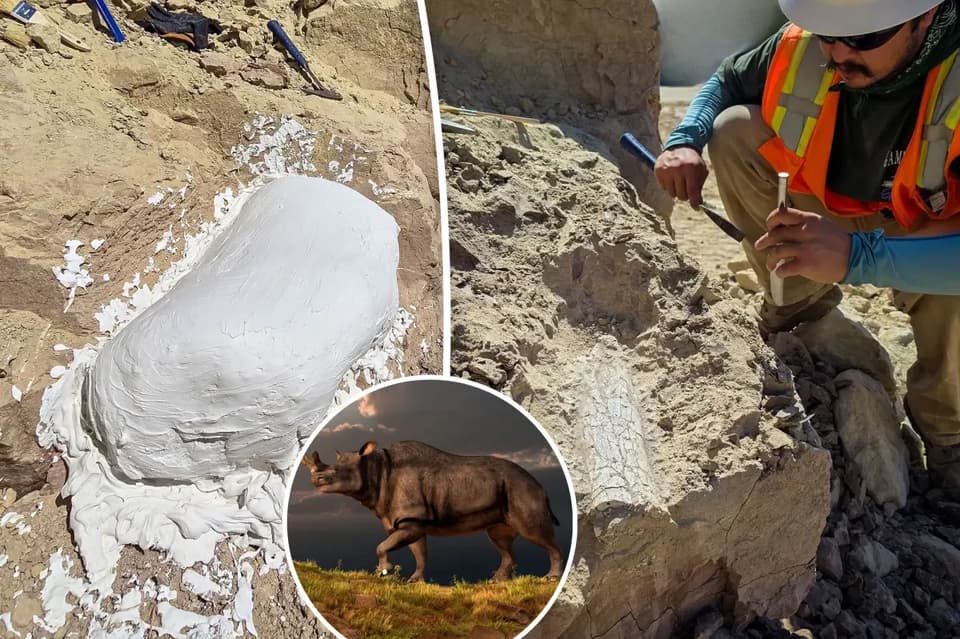
Construction crews in Oceanside, California, unearthed the fossilized remains of a large, extinct hoofed mammal dating back 40 to 45 million years. The discovery, found 12 feet underground during a water infrastructure project, includes limb bones and ribs. Scientists believe the animal is either a 'thunder beast' or a 'swamp rhino,' but identification remains uncertain without a skull.
Key points
- Fossils were discovered on August 31, 2026, during routine excavation for a water infrastructure project in Oceanside, California.
- The remains, found 12 feet below the surface in the Santiago Formation, include limb bones, ribs, and other fragments, with the largest bone measuring approximately 2.5 to 3 feet.
- Paleontologist Joseph El Adli led a seven-day extraction effort, encasing the fossils in plaster before transporting them to a lab in Carlsbad for analysis.
- Experts believe the animal belongs to one of two extinct families: Brontotheriidae (thunder beast) or Amynodontidae (swamp rhino), both odd-toed herbivores from the Eocene Epoch.
- The exact location of the dig site is being withheld by city officials to protect the site's integrity and prevent unauthorized excavation.
Background
Southern California has a history of significant fossil discoveries during construction projects. In 2015, Ice Age fossils of mammoths and bison were found in Oceanside, and in 2024, a massive marine fossil deposit was uncovered in San Pedro. The Santiago Formation, where these new fossils were found, is known for preserving Eocene-era life, including early saber-toothed carnivores and primates.
How outlets are covering it
The California Post and The Daily Beast emphasize the 'thunder beast' identification, highlighting its rhino-like size and Y-shaped horn. The Los Angeles Times and The Desert Sun provide a more balanced view, noting that the fossils could equally belong to a 'swamp rhino,' a semi-aquatic herbivore with tusk-like teeth instead of a horn. All sources agree that the lack of a skull or jaw prevents definitive identification, with El Adli expressing hope that further excavation will yield teeth or a lower jaw to resolve the mystery.
Why it matters
This discovery adds to the growing body of evidence regarding Eocene-era biodiversity in Southern California. It highlights the importance of paleontological monitoring during construction projects and underscores the potential for new scientific insights from previously overlooked sedimentary layers. The find may also influence future infrastructure planning in fossil-rich areas of the region.
What to watch
The fossils are currently undergoing lab analysis in Carlsbad, where experts will clean the bones and strengthen them with resins. Once processed, the specimens are expected to be transferred to a museum, potentially the San Diego Natural History Museum or the Los Angeles County Natural History Museum, for public display. Further excavation may continue if additional fossils are detected.
- ‘Thunder beast’ that lived 45 million years ago unearthed in California beach town: scientists New York Post
- Thunder beast or swamp rhino? Fossils of prehistoric animal uncovered at SoCal construction site latimes.com
- 'Remarkable' 40-million-year-old fossils found at California project site The Desert Sun
- Construction Workers Stumble Across Stunning Prehistoric Discovery thedailybeast.com
- Ancient fossils unearthed at Oceanside construction site could be a ‘thunder beast’ San Diego Union-Tribune
Want the full story? Read the original reporting
Read on New York Post