Tag

Fossil Discovery

All articles tagged with #fossil discovery

Ethiopian Jaw Fossil Redraws Map of Ancient Paranthropus
science2 days ago

Ethiopian Jaw Fossil Redraws Map of Ancient Paranthropus

A 2.6-million-year-old jaw fragment found in Ethiopia's Afar region is the first evidence of Paranthropus in the area, extending the genus's known range by over 1,000 kilometers north. Published in Nature, the discovery challenges previous theories that dietary limits or competition with Homo prevented the species from inhabiting northeastern Ethiopia. The fossil, designated MLP-3000, features unique anatomical traits, including a premolar with five root canals, suggesting early Paranthropus had greater ecological flexibility than previously assumed.

120-Million-Year-Old Fossil Reveals Mammal with Reptile-Like Teeth and Platypus Feet
science7 days ago

120-Million-Year-Old Fossil Reveals Mammal with Reptile-Like Teeth and Platypus Feet

A newly described Early Cretaceous mammal, Dongoconodon platycauda, challenges long-held views of mammalian evolution by exhibiting polyphyodonty (multiple tooth replacements) and semi-aquatic adaptations similar to modern platypuses and nutrias. Found in China, this 120-million-year-old specimen suggests that key mammalian traits like dental replacement and ear structure evolved independently rather than as a single package.

Gobi Fossil Reclassifies Zhelestids as Insectivores, Overturning 40-Year Placental Theory
science8 days ago

Gobi Fossil Reclassifies Zhelestids as Insectivores, Overturning 40-Year Placental Theory

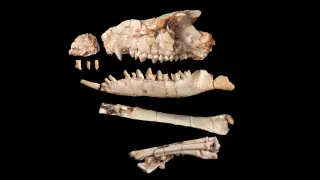
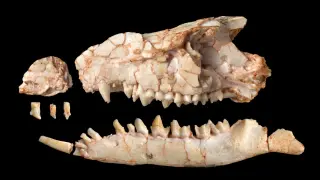
A remarkably complete fossil from Mongolia’s Gobi Desert, named Tamirkhan balcarceli, has been published in Nature, revealing that zhelestids were not early placental mammals but a distinct group of insectivores. This discovery overturns decades of assumptions based on isolated teeth and highlights the limitations of reconstructing anatomy from partial remains.

Mongolian Fossil Rewrites Mammal History, Debunking 40-Year Placental Theory
science10 days ago

Mongolian Fossil Rewrites Mammal History, Debunking 40-Year Placental Theory

A nearly complete fossil of the Cretaceous mammal Tamirkhan balcarceli, found in Mongolia’s Gobi Desert, overturns a four-decade scientific consensus. Previously, isolated teeth suggested zhelestids were early relatives of modern placental mammals. The new specimen reveals they were actually zalambdalestoids, a distinct lineage of insectivores. This finding highlights the limitations of reconstructing anatomy from teeth alone and confirms that zhelestids evolved plant-eating traits through convergence, not shared ancestry with placentals.

Dog Walk in Southern France Leads to Rare, Nearly Complete 70-Million-Year-Old Titanosaur Discovery
science11 days ago

Dog Walk in Southern France Leads to Rare, Nearly Complete 70-Million-Year-Old Titanosaur Discovery

A 25-year-old amateur paleontologist in France discovered a nearly complete 70-million-year-old titanosaur skeleton while walking his dog. The find, located in Montouliers, Hérault, is exceptionally rare due to its completeness and size, measuring approximately 10 meters long. Local experts confirmed the discovery in May 2022, and subsequent excavations at the site revealed four distinct dinosaur specimens, including two additional smaller plant-eating dinosaurs.

Student Paleontologists Name New 309-Million-Year-Old Amphibian After Their Mothers
science11 days ago

Student Paleontologists Name New 309-Million-Year-Old Amphibian After Their Mothers

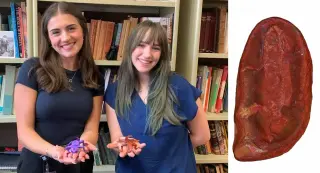
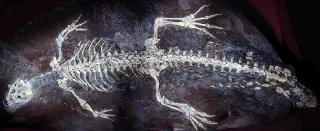
Two student interns at the Field Museum in Chicago have officially described a new species of early amphibian, Jeanerpeton mazonensis, dating back 309 million years. The species, found in Mazon Creek fossil deposits, was named in honor of the students' mothers, both of whom are named Jean. This discovery separates the creature from a previously grouped 'waste bin taxon' and highlights the exceptional preservation of soft tissue details in Carboniferous-era fossils.

First T. rex Trackway Confirms the Predator Walked at a Brisk Human Pace
science12 days ago

First T. rex Trackway Confirms the Predator Walked at a Brisk Human Pace

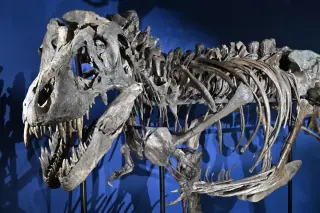
Researchers have identified the first confirmed trackway of an adult Tyrannosaurus rex, offering the first direct evidence of its walking speed. Discovered in North Dakota’s Hell Creek Formation, the 66.5-million-year-old prints indicate the dinosaur moved at approximately 3.5 to 4.5 mph, a pace comparable to a brisk human walk. The finding, published in the Journal of Vertebrate Paleontology, resolves long-standing debates about T. rex locomotion by providing behavioral data that skeletal fossils cannot capture. Three of the four footprints are slated for excavation and transport to the Denver Museum of Nature & Science for further analysis of skin and tissue impressions.

Construction in Oceanside Uncovers 45-Million-Year-Old Fossils of Mysterious Hoofed Mammal
science15 days ago

Construction in Oceanside Uncovers 45-Million-Year-Old Fossils of Mysterious Hoofed Mammal

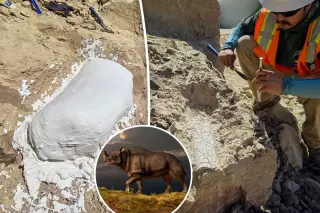
Construction crews in Oceanside, California, unearthed the fossilized remains of a large, extinct hoofed mammal dating back 40 to 45 million years. The discovery, found 12 feet underground during a water infrastructure project, includes limb bones and ribs. Scientists believe the animal is either a 'thunder beast' or a 'swamp rhino,' but identification remains uncertain without a skull.

Ancient Capybara Tooth Rewrites Atacama Desert Climate History
science17 days ago

Ancient Capybara Tooth Rewrites Atacama Desert Climate History

Researchers have identified a fossilized capybara tooth in northern Chile’s Atacama Desert, dating back approximately 8.8 million years. This discovery, published in Scientific Reports, challenges the prevailing scientific consensus that the Atacama has remained continuously hyper-arid for 40 million years. The presence of a semi-aquatic rodent in a marine sediment layer suggests the region once supported wetland ecosystems, freshwater habitats, and lush vegetation, including palms, during the late Miocene epoch.

Forgotten Museum Fossil Rewrites Saber-Tooth Lineage
science3 months ago

Forgotten Museum Fossil Rewrites Saber-Tooth Lineage

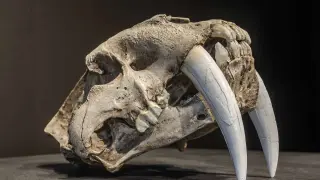
A paleontologist at UC Berkeley reexamined a dusty fossil tucked in a drawer at the American Museum of Natural History, initially labeled as a generic cat. Using 3D scans and comparison with Adelphailurus kansensis, she linked it to an early saber-tooth lineage and contrasted it with Smilodon, revealing greater diversity among sabertooths and suggesting their fragile teeth helped drive extinction. The find also underscores how many such fossils may lie unopened in drawers worldwide.

Sea's New King: Meet Tylosaurus rex, the 43-Foot Ocean Predator
science4 months ago

Sea's New King: Meet Tylosaurus rex, the 43-Foot Ocean Predator

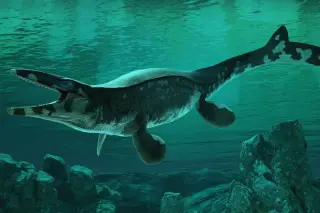
Paleontologists reclassified twelve fossil specimens as Tylosaurus rex, a 43-foot, 3–4-ton marine reptile that ruled the ancient seas about 80–84 million years ago, distinct from the smaller Tylosaurus proriger by its serrated teeth and other features. The find, including the famous 'The Black Knight' skeleton now at Dallas's Perot Museum, comes from fossils in Texas and Kansas and could reshape how scientists understand early marine reptile evolution; the study was published May 21, 2026 in the Bulletin of the American Museum of Natural History.