
US Officials Blame AI-Driven Patching, Not Cyberattacks, for Cascade of Tech Outages
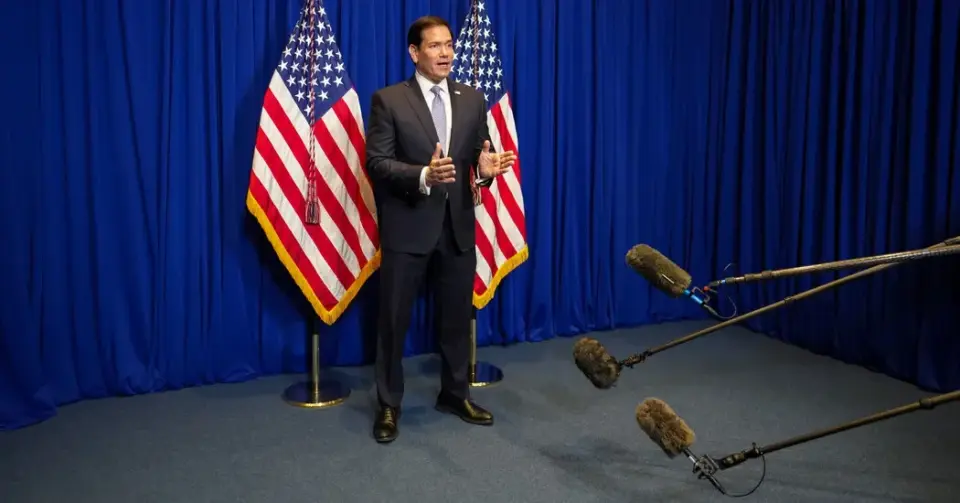
Secretary of State Marco Rubio and other US officials assert that recent widespread disruptions to air traffic, banking, and government systems were not caused by cyberattacks. Instead, they attribute the failures to a rush to install security patches identified by artificial intelligence. While the administration denies coordinated malicious activity, experts warn that legacy infrastructure is too fragile to handle the speed of AI-driven updates, raising concerns about future vulnerabilities.
Key points
- Secretary of State Marco Rubio stated from Manila that there is no evidence linking recent outages to a coordinated cyberattack or foreign adversary.
- Officials, including Director of National Intelligence Jay Clayton, attribute the disruptions to rapid security patches and upgrades triggered by AI-discovered vulnerabilities.
- The FAA cited excessive data flooding from routers in Texas and Arkansas as a cause for a nationwide ground stop, while Microsoft blamed a bug from a network capacity upgrade.
- JPMorgan Chase attributed its service disruption to a software bug in on-premises hardware, explicitly stating it was not related to cyber or AI threats.
- Security experts warn that the internet’s reliance on outdated systems, such as the PHP programming language, creates critical vulnerabilities that AI can exploit or expose rapidly.
Background
This follows a week of severe technological disruptions affecting critical US infrastructure, including Microsoft Outlook, the Federal Aviation Administration, major banks like Chase and Bank of America, and internal NSA communications. Previous coverage noted that while officials have consistently denied coordinated attacks, public anxiety persists due to the administration's dismissive tone and lack of transparency regarding the root causes. The current situation highlights a broader concern about the resilience of digital infrastructure in the face of accelerating AI capabilities.
How outlets are covering it
The New York Times reports that Rubio suggested the urgency of building new defenses for an AI age may be triggering the failures, noting that President Trump had been dismissive of the cascade of outages. CNN emphasizes the fragility of the internet, describing it as a patchwork of outdated systems, and highlights that while the outages may not be coordinated attacks, the lack of evidence for a cyber intrusion does not mean the systems are secure. Mother Jones criticizes the Trump administration for focusing on messaging over actual infrastructure maintenance, noting that the administration proposed cutting $700 million from cybersecurity programs and that the Cybersecurity and Infrastructure Security Agency has lost over 1,000 employees. The Atlantic notes the public’s tendency to attribute the incidents to a single, dramatic cause like an AI apocalypse, despite a lack of concrete evidence linking the events. All sources agree that the root causes are technical and related to rushed updates, but they differ on the degree of blame placed on government negligence versus the inherent fragility of legacy systems.
Why it matters
The recent outages expose the critical vulnerability of US digital infrastructure, which relies on decades-old systems that are not designed to handle the speed of AI-driven security updates. If the government and private sector cannot manage the pace of patching without causing widespread failures, the nation remains highly susceptible to actual cyberattacks. The incident underscores the need for a more resilient and modernized digital infrastructure to prevent future disruptions that could impact national security, economic stability, and daily life.
What to watch
Congress is expected to review the funding for the Cybersecurity and Infrastructure Security Agency in the lame duck session, as current appropriations expire in December. Security experts are calling for a massive, coordinated effort to harden digital critical infrastructure, moving beyond incremental fixes. Companies and government agencies will likely continue to face pressure to patch vulnerabilities rapidly, but they may need to adopt more cautious update strategies to prevent further outages. The ongoing discovery of new vulnerabilities, such as the recent Java flaw, suggests that the cycle of rapid patching and potential failure will continue.
- Rubio Says Cyberattacks Are Not the Cause of Recent Tech Outages The New York Times
- What’s causing all these outages? The internet is held together with shoestring and bubblegum CNN
- It Feels Like Everything is Breaking, and It’s Not Even Hackers Mother Jones
- What on Earth Is Going On? The Atlantic
- Trust, but prepare: How to make sense of AI's age of upheaval Axios
Want the full story? Read the original reporting
Read on The New York Times