
Hurricane Polo weakens to Category 4 but threatens Mexico with severe flooding and Southern California with high surf
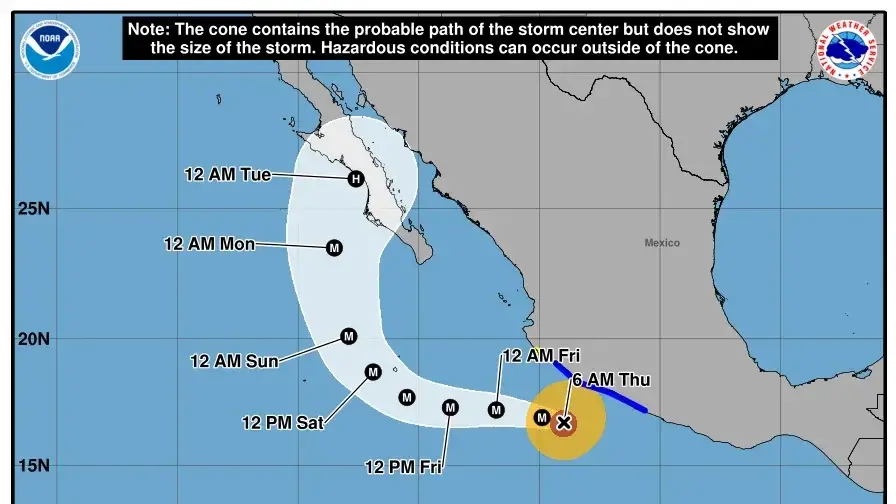
Hurricane Polo has weakened slightly to a Category 4 storm with 155 mph winds but remains a major threat to Mexico's Pacific coast. The storm, which previously reached Category 5 status, is expected to bring 4 to 8 inches of rain to Guerrero and Michoacán, causing flooding and mudslides. Meanwhile, Tropical Storm Nolo has become a hurricane and is heading toward Hawaii, where it could cause catastrophic flooding. Swells from Polo are also expected to reach Southern California, potentially causing coastal flooding and disrupting rail service.
Key points
- Hurricane Polo is now a Category 4 storm with 155 mph winds, down from its peak of 180 mph.
- The storm is moving west-northwest at 10 mph and is expected to remain offshore of southwestern Mexico.
- Tropical storm warnings are in effect from Tecpan de Galeana to Manzanillo, Mexico.
- Guerrero could receive 4 to 8 inches of rain, leading to flooding and mudslides.
- Tropical Storm Nolo has become a hurricane and is threatening Hawaii with 15 to 30 inches of rain.
- Swells from Polo are expected to reach Southern California, potentially causing coastal flooding.
Background
Hurricane Polo rapidly intensified to Category 5 status earlier in the week, becoming the second-strongest hurricane in the Pacific basin. The storm's rapid intensification was fueled by record-breaking El Niño waters. Previous coverage noted that the storm was moving parallel to Mexico's coast, posing severe flood risks without making landfall. California had also declared a state of emergency in preparation for a historic 'super' El Niño.
How outlets are covering it
USA Today emphasizes the record-breaking nature of Hurricane Polo's intensification and its potential to bring moisture to the southwestern United States. ABC7 Los Angeles focuses on the immediate impact on Mexico's coast and the threat to Hawaii from Tropical Storm Nolo. The San Diego Union-Tribune highlights the potential for coastal flooding and high surf in Southern California, particularly in North County, due to the combination of swells from Polo and large high tides. While all sources agree on the severity of the storms, they differ in their focus, with USA Today and ABC7 Los Angeles emphasizing the broader regional impacts and the San Diego Union-Tribune focusing on local concerns in Southern California.
Why it matters
The rapid intensification and weakening of Hurricane Polo, along with the simultaneous threat of Tropical Storm Nolo to Hawaii, highlight the complex and dangerous conditions created by the current El Niño. The potential for severe flooding in Mexico and Hawaii, as well as high surf and coastal flooding in Southern California, underscores the need for preparedness and response efforts. The impact on infrastructure, such as rail service in Southern California, and the economic concerns of residents in affected areas, further emphasize the significance of these events.
What to watch
Hurricane Polo is expected to weaken further as it moves farther out to sea, but it may hook back toward land to the north on Saturday. Tropical Storm Nolo is expected to strengthen and turn toward Hawaii's Big Island, where it could cause catastrophic flooding. Swells from Polo are expected to reach Southern California, potentially causing coastal flooding and disrupting rail service. Residents in affected areas are urged to prepare for the possibility of prolonged power outages and to take action to protect their homes and businesses.
- Hurricane Polo is a Category 5 monster, a 'rare show of force' USA Today
- Heavy rains hit Mexico as Hurricane Polo tracks offshore, expected to make landfall on Sunday night Reuters
- Powerful Hurricane Polo drenches Mexico's coast from offshore as Nolo nears Hawaii ABC7 Los Angeles
- Category 5 Hurricane Polo is 'one of the strongest storms ever' NPR
- Forecasters say it’s possible Hurricane Polo could cause coastal flooding in San Diego County San Diego Union-Tribune
Want the full story? Read the original reporting
Read on USA Today