
Southern California Faces Record-Breaking October Heat Wave
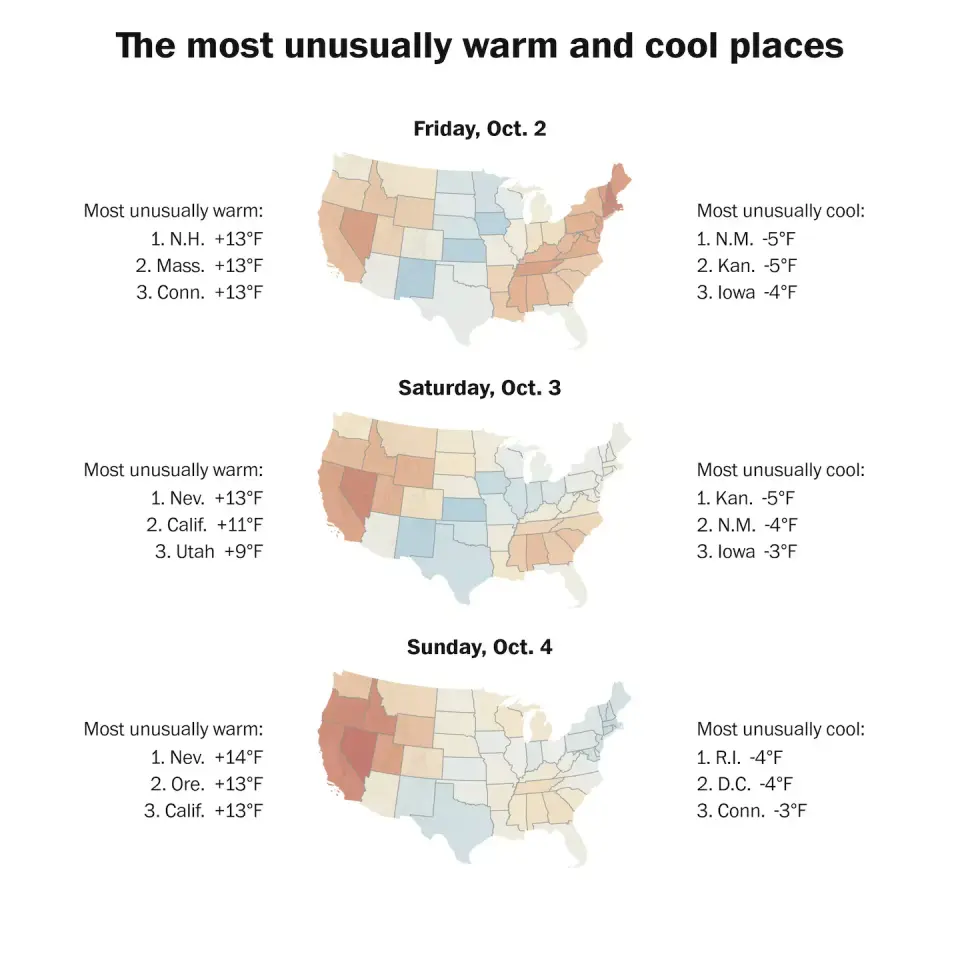
A prolonged heat dome is bringing summer-like temperatures to Southern California in early October, with highs near 100 degrees in Los Angeles and over 105 degrees in some areas. The National Weather Service warns of a dangerous, long-lasting event that may extend beyond the second week of October. While fire risk remains elevated due to gusty Santa Ana winds, officials note that current drought-free conditions may prevent the extreme dryness typically associated with red flag warnings. Residents are advised to stay hydrated, use cooling centers, and monitor vulnerable populations, as nighttime lows remain unusually high due to warm coastal waters.
Key points
- Los Angeles is forecast to experience highs near 100 degrees for a week, significantly above the early October average of 80 degrees.
- The National Weather Service issued an extreme heat warning for the greater Los Angeles area from Friday through at least next Thursday, with forecasts suggesting the heat may last longer.
- Temperatures are expected to be 15 degrees above average, with some areas reaching over 105 degrees, creating life-threatening conditions for those without air conditioning.
- Santa Ana winds are expected to bring gusts up to 50 mph, increasing fire risk, though officials note that current moisture levels may prevent the extreme dryness seen in previous years.
- Nighttime lows are forecast to remain in the mid-to-upper 70s due to warmer-than-average coastal sea temperatures and higher humidity, offering little relief from the heat.
- Public health officials urge residents to stay hydrated, limit outdoor activities to early mornings, and check on vulnerable groups, including the elderly, children, and those with chronic conditions.
Background
This heat wave follows the warmest and most humid September on record for the contiguous United States, highlighting a trend of increasingly extreme late-season heat events. Southern California experienced a record-breaking 10-day heat wave in the summer of 2022, which serves as a benchmark for the current event's potential duration and impact. The current event underscores the growing frequency of unusual heat patterns in the region, driven by climate change and shifting atmospheric conditions.
How outlets are covering it
The Washington Post emphasizes the unprecedented nature of the heat wave, noting that Los Angeles is expected to experience highs near 100 degrees for a week, a significant deviation from the typical early October average. LAist focuses on the duration of the event, with meteorologist Ryan Kittell stating that this may be the longest heat wave of the season, potentially extending beyond the second week of October. ABC News highlights the fire risk, noting that while conditions may not meet the threshold for red flag warnings, the risk of large and fast-moving fires remains high due to gusty winds. All three sources agree on the severity of the heat and the need for public health precautions, but they differ in their emphasis on duration, fire risk, and the impact on vulnerable populations.
Why it matters
This heat wave poses significant risks to public health, particularly for vulnerable populations such as the elderly, children, and those with chronic conditions. The prolonged nature of the event, combined with high nighttime temperatures, increases the risk of heat-related illnesses, including heat exhaustion and heat stroke. Additionally, the elevated fire risk due to Santa Ana winds could lead to large and fast-moving fires, potentially causing significant damage to property and infrastructure. The event also highlights the growing impact of climate change on extreme weather patterns, with late-season heat waves becoming more frequent and intense.
What to watch
Forecasters expect the heat wave to continue through at least October 8, with some predicting it may extend beyond the second week of October. Residents are advised to stay hydrated, use cooling centers, and monitor vulnerable populations. Fire officials will continue to monitor conditions, with the potential for red flag warnings if wind speeds and dryness increase. Public health officials will provide updates on heat-related illnesses and recommend precautions for those at risk.
- Where it’s about to feel like summer in October The Washington Post
- It’s going to be a really hot October — and it’s going to last awhile LAist
- CA weather with Dirk & Heather: How long is the October heat here? KCRA
- Southern California under extreme heat warning, increased fire risk ABC News - Breaking News, Latest News and Videos
- Cooling center hours extended in San Diego ahead of extreme heat cbs8.com
Want the full story? Read the original reporting
Read on The Washington Post