
Indonesia’s Flores Earthquake Death Toll Rises to 53 Amid 995 Aftershocks
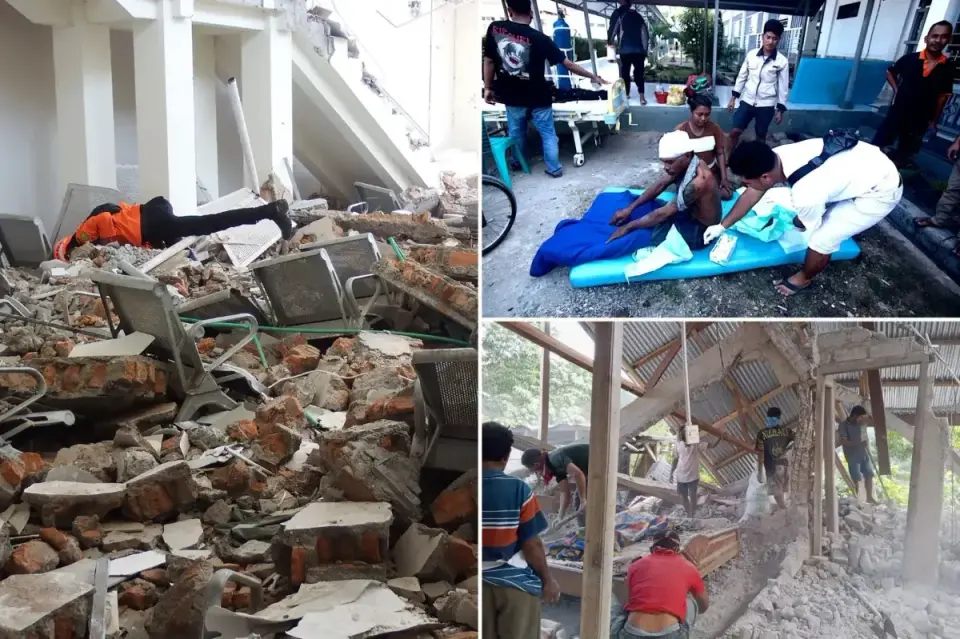
A magnitude 7.7 earthquake struck off the coast of Indonesia’s Flores region on August 15, 2026, killing at least 53 people and injuring over 130. The quake triggered a brief tsunami warning, which was later lifted, and caused widespread building collapses and landslides that cut off major highways. Nearly 1,000 aftershocks followed, with the largest measuring 6.2 magnitude, forcing thousands into temporary shelters as rescue efforts continue in the archipelago.
Key points
- The earthquake occurred at 5:58 a.m. local time with an epicenter 42 miles north-northwest of Ende in East Nusa Tenggara province.
- At least 53 people have died, with 130 injured; the death toll is expected to rise due to landslides cutting off remote villages.
- Nearly 995 aftershocks were recorded, though only 46 were felt by residents; the largest aftershock measured 6.2 magnitude.
- Over 900 homes were destroyed and 450 damaged in East Nusa Tenggara, displacing approximately 5,000 people.
- A tsunami warning was issued but lifted after monitoring showed no significant sea-level changes.
- Landslides severed the Trans-Flores highway, a 435-mile road spanning Flores Island, complicating rescue logistics.
Background
Indonesia sits on the Pacific 'Ring of Fire,' making it prone to seismic activity. The 1992 Flores earthquake killed about 2,500 people, while the 2018 Palu quake killed over 4,400. This event follows a recent 7.4-magnitude earthquake in Colombia in August 2026 that killed 265, highlighting recent seismic volatility in the region.
How outlets are covering it
The New York Post initially reported 38 deaths, while The New York Times cited 47. CBS News, citing later updates from the National Disaster Management Agency, confirmed the toll rose to 53 after additional bodies were recovered on August 16. All outlets agree on the 7.7 magnitude and the initial tsunami warning, but emphasize different aspects: The Post highlights the collapse of the Ritapiret Seminary, The Times notes the quake as the largest in decades for the region, and CBS focuses on the scale of aftershocks and infrastructure damage.
Why it matters
The event underscores the ongoing seismic risks in Indonesia’s archipelago, where complex geography hampers rescue operations. The high number of aftershocks and infrastructure damage, including severed highways and power outages, poses significant challenges for emergency response and long-term recovery in East Nusa Tenggara.
What to watch
Rescue teams are continuing to search for survivors in remote areas cut off by landslides. Authorities expect the death toll to rise as access improves. The focus is now on providing shelter for the displaced and restoring critical infrastructure, including the Trans-Flores highway and power grids.
- At least 38 dead, buildings toppled after magnitude 7.7 earthquake strikes off Indonesia’s coast New York Post
- At Least 47 Dead as 7.7-Magnitude Earthquake Rocks Indonesia nytimes.com
- Earthquake in Indonesia kills 38; Catholic festival cancelled Vatican News
- 2nd earthquake hits Indonesia following powerful magnitude 7.7 quake ABC News - Breaking News, Latest News and Videos
- Two powerful earthquakes hit Indonesia in one day, killing at least 38 CBS News
Want the full story? Read the original reporting
Read on New York Post