
Brazil’s Presidential Race Goes to Runoff as Flávio Bolsonaro Defies Polls to Lead Lula
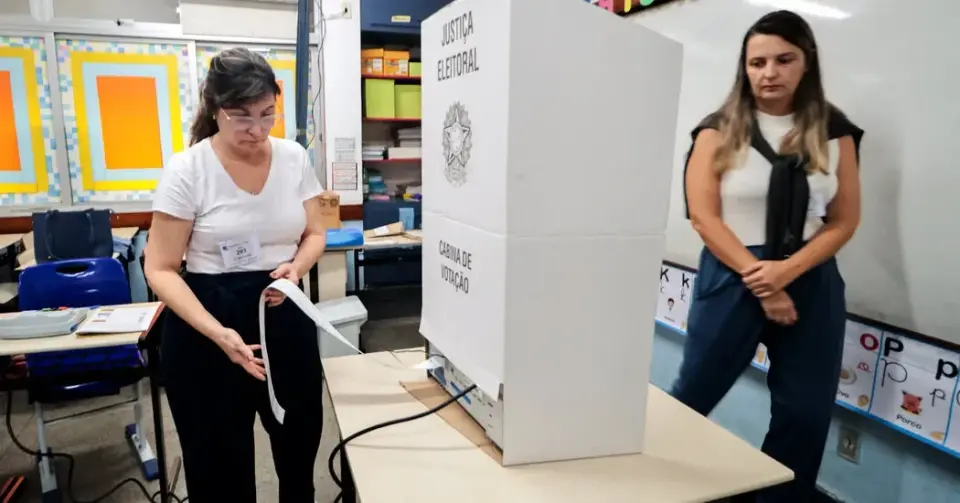
Brazil’s 2026 presidential election has moved to a runoff after neither incumbent Luiz Inácio Lula da Silva nor challenger Flávio Bolsonaro secured the required majority. Flávio Bolsonaro, son of former president Jair Bolsonaro, led the first round with 47% of the vote, narrowly ahead of Lula’s 45%. The second round is scheduled for October 25, 2026. The race is defined by deep polarization, economic anxiety, and tensions with the United States, with Flávio Bolsonaro campaigning on security and alignment with Washington, while Lula emphasizes sovereignty and social spending. Voter fatigue and corruption scandals, including the Banco Master case, have contributed to a muted but highly consequential contest.
Key points
- Flávio Bolsonaro led the first round with 47% of the vote, narrowly ahead of incumbent Luiz Inácio Lula da Silva, who received 45%.
- Neither candidate secured the 50% majority required to win outright, forcing a runoff on October 25, 2026.
- Flávio Bolsonaro’s victory defied pre-election polls, which had predicted Lula would lead the first round.
- The race is defined by deep polarization, economic anxiety, and tensions with the United States, with Flávio Bolsonaro campaigning on security and alignment with Washington, while Lula emphasizes sovereignty and social spending.
- Voter fatigue and corruption scandals, including the Banco Master case, have contributed to a muted but highly consequential contest.
Background
This election follows the 2022 contest, in which Lula narrowly defeated Jair Bolsonaro. Jair Bolsonaro is now serving a 27-year prison sentence under house arrest after being convicted of plotting to overturn the 2022 election. Flávio Bolsonaro has pledged to carry on his father’s legacy, while Lula is seeking a fourth nonconsecutive term. The 2022 runoff saw a sharp uptick in political violence, raising concerns about the current contest.
How outlets are covering it
The New York Times emphasizes the narrow margin and the potential for sweeping consequences, noting that Flávio Bolsonaro’s lead defied polls. Oregon Public Broadcasting highlights the broader rightward shift in Brazilian politics, with the Bolsonaro camp performing strongly across the country and in Congress. CNN focuses on the campaign’s focus on crime, corruption, and Trump, noting that Flávio Bolsonaro’s alignment with Washington and his father’s legacy are central to his appeal. All three outlets agree on the narrow margin and the runoff date, but differ in emphasis: The New York Times and Oregon Public Broadcasting focus on the domestic political shift, while CNN highlights the international dimensions, particularly the US-Brazil relationship and the role of Trump.
Why it matters
The outcome will determine Brazil’s direction on domestic and foreign policy, including its relationship with the United States and its stance on global issues. A Flávio Bolsonaro victory could cement a rightward shift in Latin America, while a Lula victory would maintain his pursuit of a multipolar foreign policy and social spending. The runoff will also test the resilience of Brazil’s democratic institutions amid deep polarization and voter fatigue.
What to watch
The second round is scheduled for October 25, 2026. Both candidates will have three weeks to campaign, with Flávio Bolsonaro seeking to consolidate the right-wing vote and Lula aiming to rebuild his coalition, including among younger voters. The campaign will likely focus on security, the economy, and the US-Brazil relationship, with the potential for increased political violence as in 2022.
- Lula and Bolsonaro Son Head to Runoff for Brazil’s Presidency The New York Times
- Bolsonaro beats expectations in Brazil presidential vote, faces Lula in runoff Reuters
- Brazil's presidential race heads to Lula–Bolsonaro run-off as right gains ground Oregon Public Broadcasting - OPB
- Brazil election heads to runoff after campaign dominated by crime, corruption and Trump CNN
- Lula Is the Brazilian Left’s Last Hope—And Its Biggest Problem WSJ
Want the full story? Read the original reporting
Read on The New York Times