
France braces for renewed unrest as Limoges fire fuels political divide
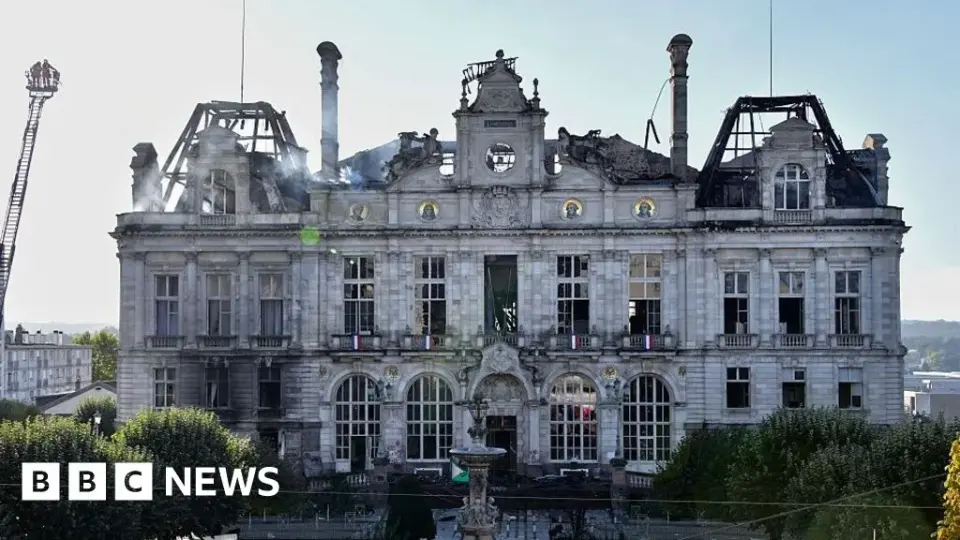
France faces a second wave of protests on October 24, 2026, following violent riots that destroyed the historic Limoges city hall. Authorities are deploying 70,000 police officers and closing major museums to prevent further disorder. While the government blames radical left groups, public opinion remains split between those mourning the cultural loss and those citing severe economic hardship. The unrest, driven by high living costs and fiscal deficits, has intensified political polarization ahead of the upcoming presidential election.
Key points
- The 19th-century Limoges city hall was largely destroyed by fire during protests on October 17, 2026, causing €500,000 in local damage and sparking national mourning.
- Two suspects, aged 34 and 66, were arrested in connection with the arson; prosecutors linked them to radical left networks, though the government faces criticism for perceived dismissiveness toward protesters.
- Approximately 70,000 law enforcement officers are being deployed across France for the October 24 demonstrations, with major Paris museums like the Louvre closing to ensure safety.
- Protests have expanded from initial student grievances over school conditions to broader anger over the cost of living, with organizers claiming 800,000 participants in the first wave.
- Political leaders are divided: Mayor Guillaume Guérin blames the hard left, while President Emmanuel Macron has not publicly supported the mayor, highlighting a rift between the centrist government and local conservative leadership.
Background
The current unrest follows weeks of escalating demonstrations that began in September 2026. Previous coverage noted that the Limoges town hall, a 143-year-old heritage site, suffered catastrophic damage, leading to calls for a reconstruction similar to Notre-Dame. Earlier reports also highlighted that over 2,500 people were arrested nationwide, and Prime Minister Sébastien Lecornu accused far-left factions of an 'insurrectionary' plan. The current situation represents a continuation of this tension, with authorities now preparing for a second major wave of protests.
How outlets are covering it
BBC emphasizes the cultural trauma in Limoges, noting that Mayor Guillaume Guérin views the destruction as a 'historical tragedy' and blames the hard left, while contrasting this with local residents who feel the government is out of touch. AP News focuses on the security response, highlighting the deployment of 70,000 officers and the closure of major cultural institutions like the Louvre and Grand Palais to prevent violence. Washington Monthly provides a ground-level perspective, distinguishing between peaceful protesters and violent actors, and criticizing police for failing to protect small businesses while cracking down on demonstrators. It also notes that while some blame the far-left, others argue that the government's dismissive attitude and economic failures are the root causes of the unrest.
Why it matters
The destruction of the Limoges city hall has become a symbol of France's deepening political polarization. The incident has intensified debates over the role of the state in managing dissent and the adequacy of police responses. With a presidential election approaching in six months, the unrest is likely to influence voter sentiment, as citizens grapple with a significant fiscal deficit and rising living costs. The government's ability to maintain order while addressing legitimate grievances will be a key factor in the upcoming political landscape.
What to watch
France is preparing for a second wave of protests on October 24, 2026, with authorities deploying significant security resources to prevent further violence. The outcome of these demonstrations will likely determine whether the unrest escalates or subsides, and could influence the tone of the upcoming presidential election. Additionally, the investigation into the Limoges fire and the broader unrest will continue, with prosecutors focusing on individuals linked to radical left networks.
- Ruins of Limoges city hall a symbol of France divided by national protests BBC
- France's Macron tightens curbs on protests, blaming hard left for unrest Reuters
- The Yellow Vests Are Back on the Streets of France in Test for Government WSJ
- Louvre and other museums closing for Saturday protests as French authorities deploy 70,000 officers AP News
- What I Saw at the French Protests Washington Monthly
Want the full story? Read the original reporting
Read on BBC