
France Imposes Curfews After Weekend Riots Cost Hundreds of Millions in Damage
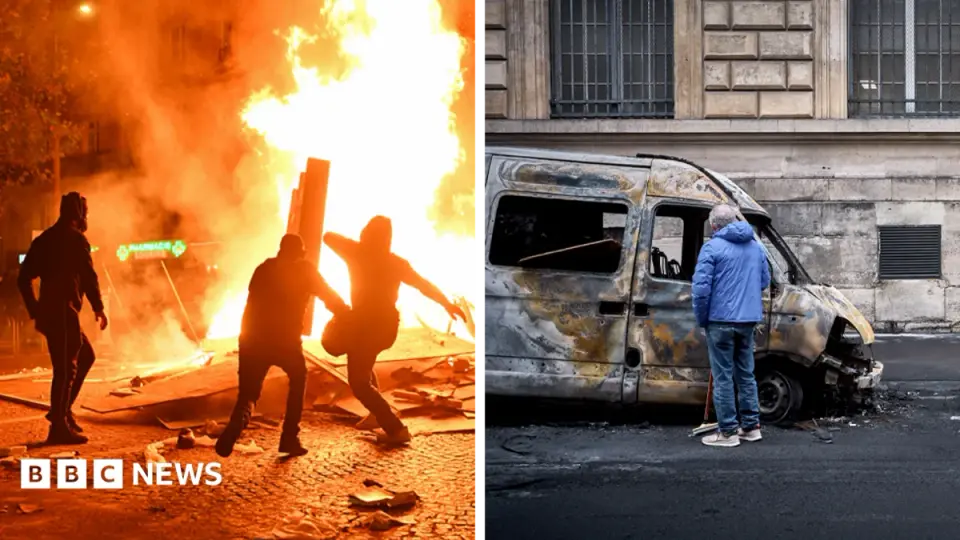
Following a weekend of violent riots that resulted in over 2,400 arrests and hundreds of millions of dollars in property damage, French authorities have imposed partial curfews in major cities including Paris, Nice, and Lyon. Prime Minister Sébastien Lecornu blamed far-left groups for the chaos, while Interior Minister Laurent Nuñez offered his resignation. The unrest, which began with student protests over education, has escalated into a broader political and economic crisis ahead of the 2027 presidential election.
Key points
- Overnight curfews were imposed in central Paris, Nice, Lyon, and several northern cities, including Lille and Douai, to restore order after widespread rioting.
- The unrest, which started with student protests over education standards, escalated into nationwide violence involving looting, arson, and clashes with police, resulting in over 2,400 arrests.
- Prime Minister Sébastien Lecornu blamed 'ultra-left radical groups' for the chaos, while far-right candidate Marine Le Pen blamed the violence on delinquents from poor urban areas.
- Interior Minister Laurent Nuñez offered his resignation over the police's failure to contain the rioting, and President Emmanuel Macron condemned the violence but did not propose specific solutions.
- The riots have exacerbated France's economic and political crisis, with rising government debt, stagnating investment, and a deepening sense of national decline ahead of the 2027 presidential election.
Background
The unrest began in early October with student protests over crumbling schools, teacher shortages, and poor job prospects. These demonstrations, which resulted in over 6,000 arrests and the damage of more than 100 schools, escalated into nationwide riots on the weekend of October 17-18, 2026. The violence included the destruction of historic landmarks, such as the city hall in Limoges, and widespread looting in major cities. The crisis has been compared to the 1968 riots that led to the resignation of President Charles de Gaulle.
How outlets are covering it
BBC News emphasized the immediate security response, highlighting the imposition of curfews and the personal accounts of residents affected by the violence. CNN, in contrast, focused on the broader political and economic implications, framing the riots as a symptom of a deeper crisis involving political fragmentation, rising debt, and a sense of national decline. While both outlets agreed on the scale of the unrest, CNN placed greater emphasis on the long-term consequences for France's economy and political stability, whereas BBC News focused on the immediate aftermath and the government's response.
Why it matters
The riots have exposed the fragility of France's political and economic stability, with rising government debt and a deepening sense of national decline. The unrest has also highlighted the growing polarization between the far-left and far-right, with both sides blaming each other for the chaos. The crisis has raised concerns about a broader European wave of unrest, with similar protests emerging in Belgium, Portugal, Italy, and Albania. The 2027 presidential election is now seen as a critical moment for France's future, with the potential for a government that may struggle to address the country's deepening problems.
What to watch
More demonstrations are scheduled for next weekend, and labor unions plan to strike in November. The French government will need to address the economic and political crisis, including rising debt and stagnating investment, while also preparing for the 2027 presidential election. The outcome of the election will be crucial in determining the future direction of France's political and economic policies.
- French riots: Overnight curfews announced in parts of Paris and Nice BBC
- The rioting across France is a symptom of a much larger public and political crisis CNN
- The Failures of Emmanuel Macron The New York Times
- France in turmoil after riots and looting: What we know Reuters
- Rioting in France: What’s Fueling the Violence and What Happens Next WSJ
Want the full story? Read the original reporting
Read on BBC