
France Imposes Curfews as Riots Escalate and US Leaders Blame Immigration
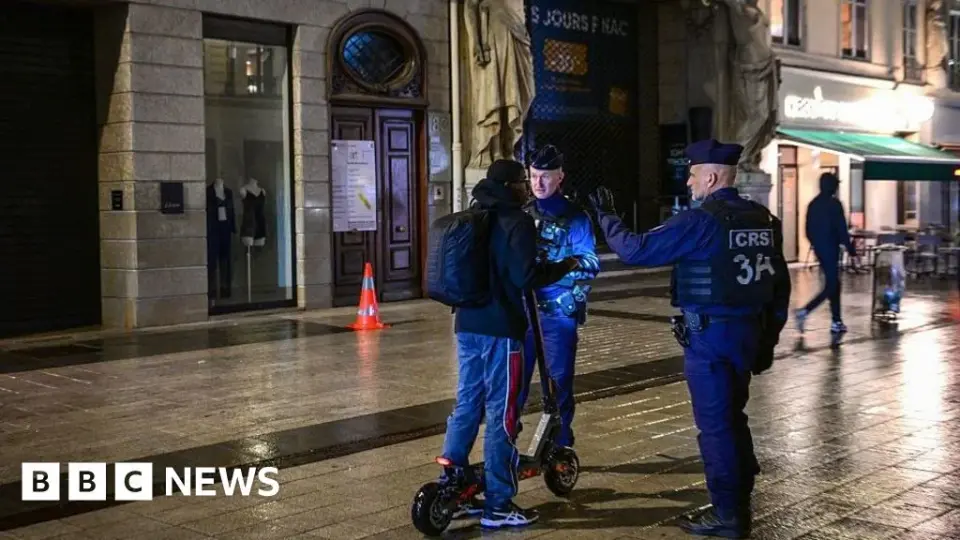
French authorities imposed overnight curfews in Paris and other major cities following a weekend of violent riots and looting. The unrest, which began as student protests over education and cost of living, has resulted in over 2,500 arrests and hundreds of millions of euros in damage. While French officials focus on domestic security and economic recovery, US leaders have framed the chaos as evidence against open-border policies, intensifying the political debate ahead of upcoming elections.
Key points
- Curfews were enforced between 23:00 and 06:00 in central Paris, including Place de la République and Les Halles, with similar restrictions in Marseille, Bordeaux, Nice, Lyon, and Lille.
- More than 2,500 people were arrested, and approximately 1,000 police officers were injured during the unrest, which included arson and looting.
- Interior Minister Laurent Nuñez admitted police lost control in some areas and offered his resignation, but President Emmanuel Macron rejected it, citing the need for continued command of law enforcement.
- Prime Minister Sébastien Lecornu authorized local mayors to implement curfews and announced funding for affected areas, with costs to be recovered from those responsible for the damage.
- The unrest began with student demands for better school conditions but expanded to include trade unions and concerns over fuel prices and public services, drawing over 550,000 demonstrators over the weekend.
- The historic city hall in Limoges was gutted by fire, and over 2,000 shops were impacted, with damage estimated in the hundreds of millions of euros.
Background
Recent archive coverage confirms the escalation of unrest in France, noting that the protests started as student strikes over education funding but evolved into nationwide violence involving looting and arson. Previous reports highlighted the resignation offer of Interior Minister Laurent Nuñez and the authorization of curfews by Prime Minister Sébastien Lecornu. The current situation reflects a broader European wave of unrest, with similar protests emerging in Belgium, Portugal, Italy, and Albania, though the French crisis has drawn particular attention due to its scale and the political reactions it has provoked.
How outlets are covering it
BBC and The Guardian present differing emphases on the causes and implications of the French unrest. BBC focuses on the domestic response, highlighting the government's efforts to restore order through curfews, the admission of police failure by Interior Minister Laurent Nuñez, and the economic impact on businesses. It also notes the political tensions, with Prime Minister Sébastien Lecornu blaming far-left groups for the chaos. In contrast, The Guardian emphasizes the international dimension, particularly the US reaction, where President Donald Trump and Vice President JD Vance blamed the riots on immigration and open-border policies. The Guardian notes that this rhetoric echoes France's far-right National Rally and adds pressure on President Emmanuel Macron ahead of the April presidential election. While BBC highlights the domestic political and economic fallout, The Guardian frames the unrest as a tool in the US political debate, linking it to the upcoming midterm elections and contrasting it with similar protests in other European countries that did not receive the same level of attention from Washington.
Why it matters
The French riots have significant implications for domestic stability and the upcoming presidential election, with the government facing pressure to restore order and address economic grievances. The international reaction, particularly from the US, highlights the global debate over immigration and its perceived impact on social stability. The unrest also underscores the vulnerability of public infrastructure and the economic costs of prolonged disorder, with hundreds of millions of euros in damage and thousands of arrests. The political fallout, including the resignation offer of Interior Minister Laurent Nuñez and the blame game between political factions, reflects the deep divisions in French society and the challenges of managing public discontent. Additionally, the US framing of the riots as evidence against open-border policies adds to the broader geopolitical tensions and the debate over immigration policies in Europe and the US.
What to watch
The French government is expected to continue enforcing curfews and implementing measures to restore order, including the use of CCTV footage to identify ringleaders. The announcement of funding for affected areas and the potential recovery of costs from those responsible for the damage suggest a focus on economic recovery and accountability. Politically, the unrest may intensify the debate over immigration and public services, with the upcoming presidential election likely to be influenced by the government's response to the crisis. Internationally, the US framing of the riots as evidence against open-border policies may continue to shape the political debate in the US, particularly ahead of the midterm elections. The situation in France may also serve as a cautionary tale for other European countries facing similar protests and economic challenges.
- French PM calls for cities to impose curfews after violent weekend protests BBC
- Opinion | The French Fantasy Is Coming to an End The New York Times
- Trump borrows from far right to blame unrest in France on immigration The Guardian
- Rioting in France: What’s Fueling the Violence and What Happens Next WSJ
- France in turmoil after riots and looting: What we know Reuters
Want the full story? Read the original reporting
Read on BBC