
Nepal officials express hope for survivors in Rasuwagadhi tunnels as death toll exceeds 1,200
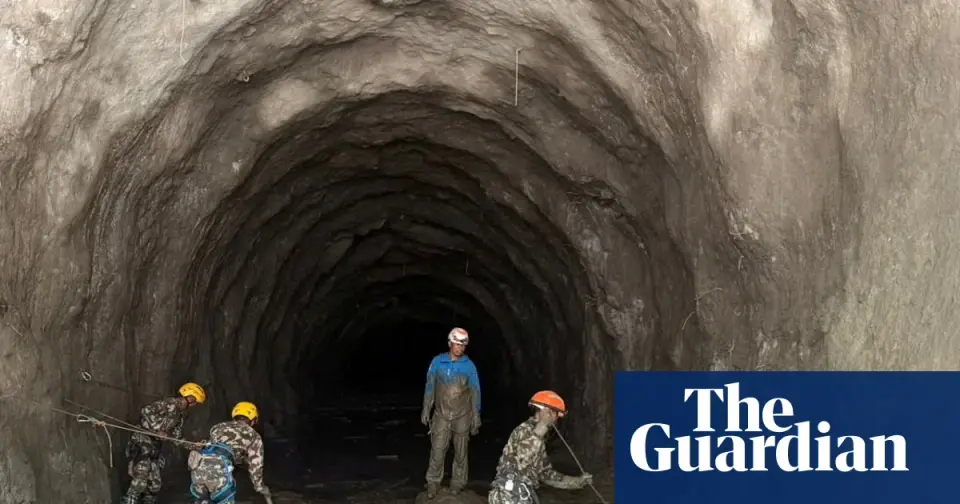
Nepal authorities believe 46 workers trapped in a tunnel at the Rasuwagadhy hydropower plant may still be alive after a week, citing available food and water. While 279 people have been rescued from hydropower sites, 639 remain missing. The disaster, triggered by a glacial collapse, has killed over 1,200 people and left more than 4,200 missing across Nepal and Tibet.
Key points
- Nepal electricity authority official Amhsu Kiran Shahi stated that 46 people are trapped in a room-like structure at the Rasuwagadhi hydropower plant and are likely alive due to stored supplies.
- Rescue teams from Nepal, India, China, Korea, and Australia are using advanced technology to access tunnels at four major hydropower projects, including Upper Trishuli 3A.
- The UN Development Programme estimates the flood generated 2.2 million tonnes of debris, equivalent to six Empire State Buildings, complicating recovery efforts.
- Authorities have confirmed 1,204 deaths and 4,200 missing persons, with 279 people already rescued from hydropower projects.
- Families in Kathmandu have held symbolic funerals for the missing to provide spiritual closure, as bodies are being buried in temporary graves pending DNA identification.
Background
This disaster began on August 26, 2026, when a glacier collapse near the Nepal-Tibet border triggered unprecedented flash floods. Earlier coverage noted that rescue teams faced significant challenges, including barrier lakes and thick mud, while attempting to reach over 900 missing workers at hydropower sites. The death toll and missing count have risen steadily since the initial impact, with international teams coordinating air and supply drops into inaccessible tunnels.
How outlets are covering it
The Guardian emphasizes the optimistic outlook for survivors at the Rasuwagadhi site, highlighting the presence of food and water as key factors for survival. In contrast, Al Jazeera focuses on the cultural and emotional response of families, detailing symbolic funerals held at Pashupatinath Temple to liberate the souls of the missing. While the Guardian notes fading hope for survivors in other areas, it underscores the continued international effort, whereas Al Jazeera highlights the bureaucratic process of identifying remains through DNA and facial features. The AP News source, though largely obscured by technical code in the provided text, is referenced in the context of ongoing relief supply distribution and temporary river crossings for survivors.
Why it matters
The ongoing rescue operations highlight the critical infrastructure vulnerabilities in the Himalayan region, where hydropower projects are central to energy production but pose significant risks during glacial events. The international coordination required for this rescue underscores the transnational nature of the disaster, affecting both Nepal and Tibet. The symbolic funerals and temporary burials reflect the profound social and cultural impact of the disaster on families and communities, as well as the logistical challenges in identifying and returning the deceased.
What to watch
Rescue teams will continue to attempt to access the Rasuwagadhi tunnel, where the army previously failed to locate the trapped room. Efforts will also focus on breaking into the Upper Trishuli 3A tunnel, where a dry space is suspected. Authorities will continue to scour the mountainside along the China border for survivors, though the hope of finding more is decreasing. DNA testing and identification processes will continue to match recovered bodies with missing persons, potentially leading to the release of more temporary graves.
- Dozens of trapped hydropower tunnel workers in Nepal could still be alive, official says The Guardian
- Nepal must rebuild thousands of homes, no let-up in search for missing Reuters
- Trading food for medicine and crossing the river by zip line are part of life in Nepal flood zone AP News
- China Censors and Punishes to Shape Narrative on Floods in Tibet, a Contrast to Nepal nytimes.com
- Photos: Symbolic funerals held in Nepal for missing flood victims Al Jazeera
Want the full story? Read the original reporting
Read on The Guardian