
Trump, Xi, and Putin sign vague peace declaration in Shenzhen, omitting Ukraine and Iran
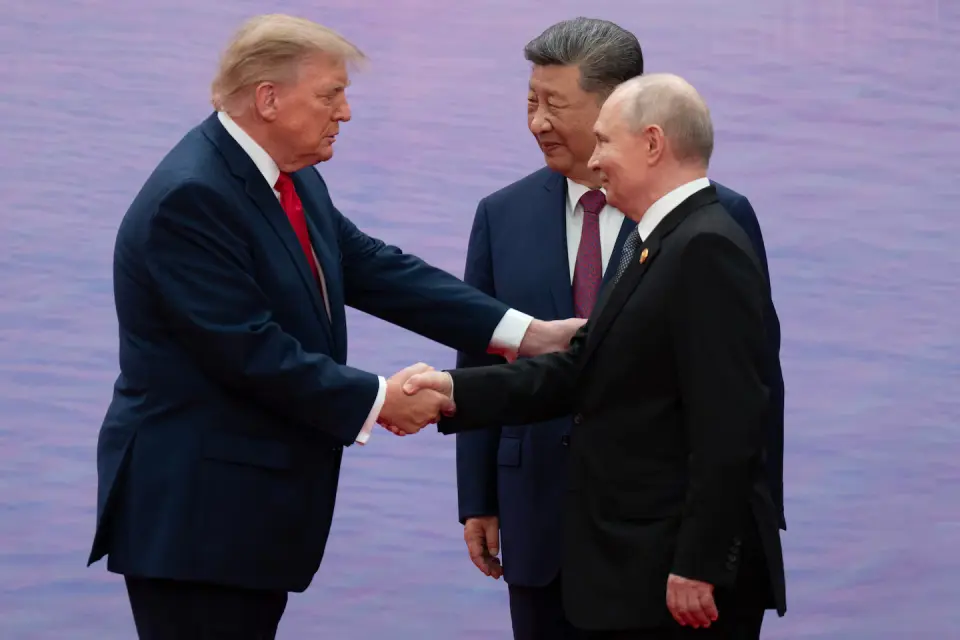
US President Donald Trump, Chinese President Xi Jinping, and Russian President Vladimir Putin held a rare trilateral meeting in Shenzhen, China, on November 19, 2026. The leaders issued a joint declaration emphasizing nuclear peace and UN reform but omitted specific references to the ongoing wars in Ukraine and Iran. Critics argue the summit prioritized optics over substance, while Trump framed the engagement as a historic diplomatic breakthrough.
Key points
- The trilateral meeting lasted approximately 80 minutes at the Kylin Villa in Shenzhen, with no joint press conference held afterward.
- The resulting declaration called for nuclear weapons to be 'completely banned and completely destroyed' but did not propose a concrete framework for denuclearization.
- The statement included a clause protecting the diplomatic immunity of state officials, a point of particular significance for Putin, who faces an International Criminal Court arrest warrant.
- The declaration omitted any mention of the wars in Ukraine and Iran, despite Trump’s earlier statements that he intended to discuss ending the conflict in Ukraine.
- Trump and Xi discussed trade and tariffs in a separate bilateral meeting, with Trump noting that a US-China tariff truce is set to expire on January 10, 2027.
Background
This meeting follows a period of escalating tensions, including a tit-for-tat trade war between the US and China that saw tariffs exceed 100% in 2025. Trump had previously confirmed his openness to a trilateral summit in October 2026, a move that sparked concerns among European allies and Ukrainian officials about a potential 'Yalta-style' negotiation excluding Kyiv. The summit also occurred amid a scandal involving former Nvidia CEO Jensen Huang and allegations of AI chip diversion to China, which intensified scrutiny over US technology exports.
How outlets are covering it
The Washington Post frames the meeting as a potential vulnerability, suggesting Trump’s willingness to engage authoritarian leaders could allow them to exploit his appetite for adoration. CBS News highlights the logistical details, noting that Trump immediately left for the airport after the meeting and that the Kremlin described the atmosphere as 'good.' The Guardian emphasizes the lack of substantive outcomes, with analysts describing the summit as a symbolic photo-op that failed to address the wars in Ukraine or Iran. CNN focuses on the divergent objectives of the leaders, noting that Xi used the event to project diplomatic power without making concrete commitments, while Trump sought to validate his 'friend' relationship with Putin despite the lack of breakthroughs on the Ukraine war. European leaders, including Polish Prime Minister Donald Tusk, expressed indignation at the optics, stating that Putin is not a friend and will never be one.
Why it matters
The summit signals a potential shift in US foreign policy toward prioritizing personal diplomacy with authoritarian leaders over multilateral alliances. The omission of Ukraine and Iran from the declaration raises concerns that the US may be willing to negotiate peace terms without the direct participation of the affected nations. Additionally, the joint declaration on nuclear weapons and UN reform could set a precedent for future international security frameworks, potentially challenging the authority of institutions like the International Criminal Court.
What to watch
The US and China are expected to continue negotiations on trade and AI policy, with the tariff truce expiring on January 10, 2027. The Kremlin is set to publish a full readout of the trilateral discussions. Analysts will monitor whether the three nations follow through on their stated commitment to discuss nuclear risk reduction, though China has historically been reluctant to join such talks with the US and Russia. The outcome of the US-China relationship will also be watched closely as Trump enters the final leg of his term and a new Congress takes office.
- Trump calls Putin and Xi friends. They have other plans. The Washington Post
- Trump, Xi and Putin sit down for a rare 3-way meeting in China, but appear to achieve little CBS News
- China, Russia and US agree peace declaration with no mention of Ukraine and Iran wars The Guardian
- Cartoon: The meeting of Donald Trump, Xi Jinping and Vladimir Putin The Economist
- Strongman ‘friends,’ AI’s potential and other takeaways from Trump’s China trip and sitdown with Putin and Xi CNN
Want the full story? Read the original reporting
Read on The Washington Post