
Witkoff praises Putin as 'humanitarian' after release of US citizen, signals new talks
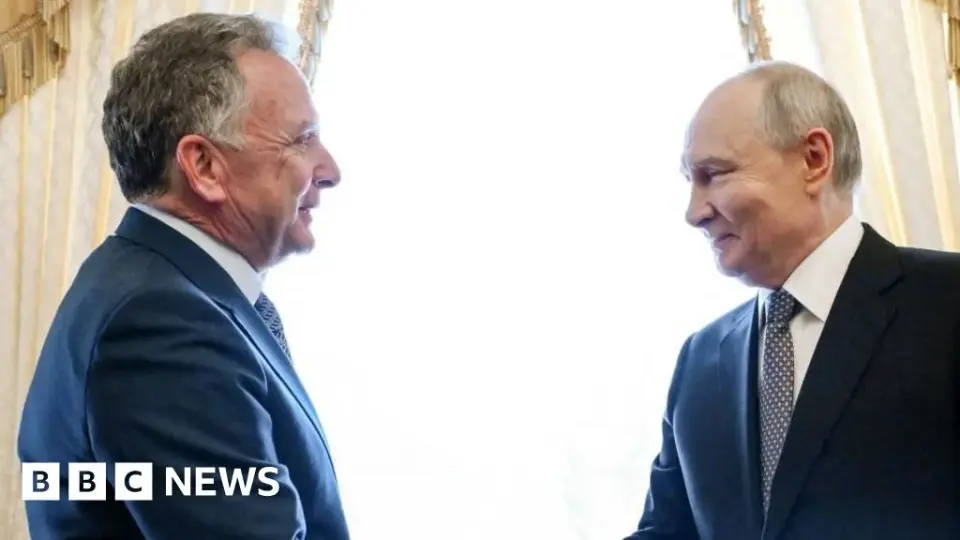
US envoy Steve Witkoff met Russian President Vladimir Putin in St. Petersburg on Wednesday, praising the Russian leader as a 'humanitarian' for releasing American Stephen Hubbard. Kremlin aide Yuri Ushakov stated Russia is ready to resume peace talks with the US and Ukraine, potentially in Abu Dhabi next month. This diplomatic thaw follows recent tensions, including a dispute over US intelligence sharing and Ukrainian strikes on Russian energy targets.
Key points
- US special envoy Steve Witkoff met with Russian President Vladimir Putin in St. Petersburg on October 21, 2026.
- Witkoff publicly praised Putin as a 'humanitarian' for releasing 74-year-old American Stephen Hubbard, who had been detained in Russia for over four years on mercenary charges.
- Kremlin aide Yuri Ushakov announced that Russia is 'ready in principle' to resume peace talks with the US and Ukraine, suggesting a potential meeting in Abu Dhabi around November 10.
- Ukrainian President Volodymyr Zelensky insisted in Oslo that any negotiations regarding Ukraine's future must include Kyiv, stating 'Nothing about Ukraine without Ukraine.'
- The talks come amid rising tensions, including Trump's criticism of Zelensky and disputes over US intelligence sharing and energy infrastructure strikes.
Background
This development follows a period of stalled negotiations and renewed military strikes. In September 2026, a three-day ceasefire expired without breakthroughs, leading to renewed Russian airstrikes on Kyiv. Recent days saw a dispute over US intelligence sharing regarding Russian missile attacks, which Zelensky confirmed had resumed after talks in Oslo. Ukraine has also faced challenges with interceptor shortages and drone defense, complicating its security posture.
How outlets are covering it
The New York Times and CNBC highlighted Witkoff's praise of Putin as a 'humanitarian' for the release of Stephen Hubbard, framing it as a diplomatic gesture to build goodwill with the Trump administration. The BBC reported that while Russia signaled readiness for talks, it dismissed the ideas from the Oslo meeting as not 'useful' and emphasized its battlefield 'strategic initiative.' The Washington Post noted the apparent progress in US-Ukraine relations but highlighted ongoing tensions, including Trump's criticism of Zelensky and disputes over sanctions and energy strikes. All sources agreed on the release of Hubbard and the potential for new talks, but differed in emphasis on the diplomatic tone and the underlying military and political tensions.
Why it matters
The release of Hubbard and the signal of resumed talks represent a potential shift in the US-Russia-Ukraine dynamic, especially amid rising tensions and military stalemate. It could pave the way for a new round of negotiations, though significant disagreements remain over security guarantees, battlefield realities, and the role of Kyiv in the talks. The outcome will influence the trajectory of the war and US-Europe relations.
What to watch
A trilateral meeting at the technical level between the US, Russia, and Ukraine is proposed, potentially in Abu Dhabi around November 10. The outcome of these talks will depend on whether Russia accepts the inclusion of Ukraine and the focus on post-conflict security. Continued military strikes and diplomatic disputes over intelligence and energy may further complicate the process.
- Russia ready to resume talks with Ukraine and US to end war BBC
- Russia Releases American Stephen Hubbard From Prison, State Media Reports The New York Times
- Putin agrees to resume 3-way peace talks with Ukraine and US Reuters
- Witkoff calls Putin a 'humanitarian' at Russia peace talks without Ukraine CNBC
- What you need to know to start your day The Washington Post
Want the full story? Read the original reporting
Read on BBC