
Rear-end collision halts Madrid-Andalusia high-speed rail line
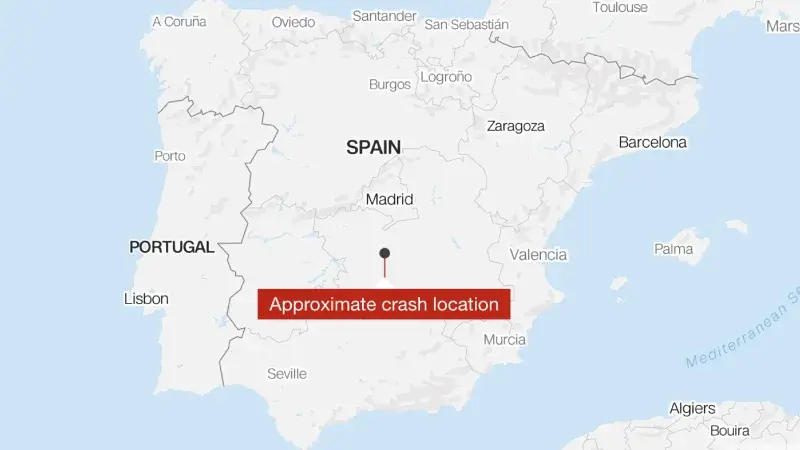
Two high-speed trains collided in central Spain on October 28, forcing the suspension of the Madrid-Andalusia rail line. The incident occurred shortly after 9 a.m. local time between Los Yebenes and Urda in Toledo province, resulting in numerous injuries and two rail cars leaving the tracks.
Key points
- Rail operator Adif confirmed a rear-end collision between two high-speed trains, leading to the immediate suspension of traffic on the Madrid-Andalusia line.
- The accident took place shortly after 9 a.m. local time between the towns of Los Yebenes and Urda in the province of Toledo.
- Witnesses reported numerous injuries, and emergency medical teams were dispatched to the scene.
- Two of the involved rail cars reportedly left the tracks and fell down an embankment.
- Adif provided no further details regarding the cause of the collision or the specific number of casualties in its initial statement.
Background
This incident highlights the ongoing safety scrutiny surrounding high-speed rail networks in Europe. While recent developments in Italy and the US have focused on infrastructure expansion and funding challenges, such as the completion of tunnel segments in Italy and the bankruptcy of Brightline in the US, accidents like this in Spain draw attention to operational risks. The Madrid-Andalusia line is a critical artery for Spain's high-speed network, connecting the capital to the southern region. The suspension of this line will likely disrupt travel for thousands of passengers, as alternative routes may be limited or significantly longer. The incident also follows a period of increased focus on rail safety and maintenance across Europe, with various authorities reviewing operational protocols to prevent similar occurrences.
Why it matters
The collision disrupts a major transportation corridor in Spain, affecting thousands of daily commuters and travelers. It raises questions about the safety and maintenance of high-speed rail infrastructure, which is crucial for reducing carbon emissions and providing efficient long-distance travel. The incident may lead to increased scrutiny of rail operators and potential regulatory changes to enhance safety standards. Additionally, the suspension of the line could have economic implications for businesses and tourism in the affected regions, as travel times and costs may increase due to the need for alternative transportation methods.
What to watch
Investigations into the cause of the collision are expected to begin, with Adif and other authorities likely to release more details in the coming days. The Madrid-Andalusia line may remain suspended for several days or weeks, depending on the extent of the damage and the time required for repairs. Passengers may be advised to seek alternative routes or modes of transportation, and there could be temporary increases in demand for bus services or flights. The incident may also prompt a review of safety protocols and maintenance practices across Spain's high-speed rail network to prevent similar accidents in the future.
Want the full story? Read the original reporting
Read on CNN