
Ramesses II Lintel Discovery at Tell Abu Seifi Strengthens Case for Lost City of Mesen
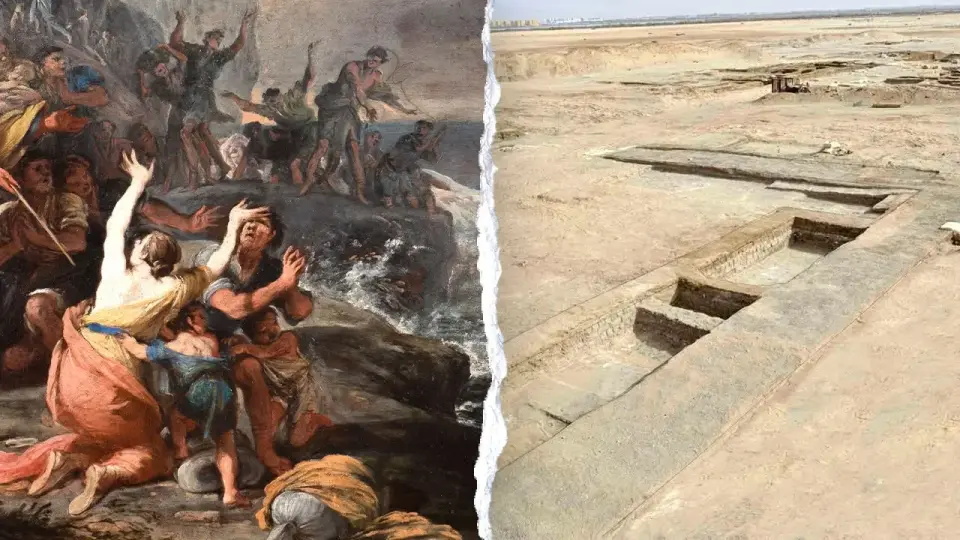
Egyptian authorities announced the discovery of a massive sandstone lintel bearing the titles of Ramesses II at Tell Abu Seifi in northern Sinai. The inscription references the restoration of a statue of Horus, 'Lord of Mesen,' strengthening the hypothesis that the site is the long-lost New Kingdom city of Mesen. The excavation also revealed a fortified temple complex, storage rooms, and dual stone roads dating to the Ptolemaic and Roman periods. While Fox News emphasizes the biblical Exodus connection, Archaeology Magazine and Archaeology News Online focus on the archaeological identification of the city and the site's evolution from a religious center to a military barracks and limestone quarry. The find is part of a broader trend of Ramesses II-related discoveries in Egypt this year, including a statue in the Nile Delta and a settlement in Wadi Tumilat.
Key points
- The Egyptian Ministry of Tourism and Antiquities announced the find on August 15, 2026, at Tell Abu Seifi near the Sinai Peninsula.
- The key artifact is a broken sandstone lintel inscribed with Ramesses II's titles and a text about restoring a statue of Horus, 'Lord of Mesen.'
- Archaeologists uncovered a mudbrick enclosure wall, gates, storage rooms, and a sanctuary, indicating a fortified temple complex.
- The site features two stone roads: an older Ptolemaic road and a later Roman road built above it, showing changing access patterns.
- The site was repurposed as a Roman military barracks in the 3rd century AD and later as a limestone quarry in the late Roman period.
- Fox News links the site to the biblical Exodus route, while other outlets focus on the identification of the lost city of Mesen.
Background
This discovery follows earlier archaeological finds in Egypt this year, including a massive Ramesses II statue at Tel Pharaoh in the Nile Delta and an ancient settlement at Tell el-Koua in Wadi Tumilat, both linked to biblical Exodus debates. Dinesh D'Souza's book 'The Stones Cry Out,' released in October 2026, argues that such archaeological findings support the historicity of the Bible, though skeptics remain. The site's location on the Horus Military Road, a strategic route connecting Egypt to Sinai and Canaan, has led some scholars to link it to the 'way of the land of the Philistines' mentioned in the Book of Exodus.
How outlets are covering it
Fox News emphasizes the biblical Exodus connection, noting that the site lies along a route some scholars link to the 'way of the land of the Philistines' in Exodus. Archaeology Magazine and Archaeology News Online focus on the archaeological identification of the lost city of Mesen, highlighting the lintel's inscription and the site's evolution from a temple to a military barracks and quarry. Qazinform provides a concise summary of the finds, including the Horus Temple and Ramesses II artifacts, without emphasizing the biblical connection. The outlets agree on the core facts but differ in emphasis, with Fox News leaning toward the biblical narrative and the others focusing on the archaeological and historical significance of the site.
Why it matters
The discovery of the Ramesses II lintel at Tell Abu Seifi provides strong evidence for the identification of the long-lost city of Mesen, a key site in New Kingdom Egypt. The find also sheds light on the strategic and cultural role of the region in protecting Egypt's eastern borders, as noted by Minister Sherif Fathy. The site's evolution from a religious center to a military barracks and quarry illustrates the changing uses of ancient sites over time. The discovery contributes to ongoing debates about the biblical Exodus route and the historicity of biblical narratives, though it primarily strengthens the archaeological case for the city of Mesen.
What to watch
Archaeologists will continue excavating and studying the site in coming seasons to test the Mesen identification and trace more of the temple, defenses, roads, and later Roman structures. Further work is needed to definitively settle the question of whether Tell Abu Seifi is the site of Mesen. The findings may also lead to new insights into the Horus Military Road and its role in Egypt's eastern defense system.
- Lost city in area tied to biblical Exodus may have finally been discovered in Egypt Fox News
- News - New Discoveries Link Sinai Site with Lost Egyptian City Archaeology Magazine
- Lost city of Mesn: Ramesses II find strengthens case for its location in Egypt Archaeology News Online Magazine
- Egypt unearths remains of Horus Temple, Ramesses II artefacts in Ismailia Qazinform
- Egypt’s Lost City Of Masn May Have Been Found; Archaeologists Reveal Details curlytales.com
Want the full story? Read the original reporting
Read on Fox News