
Egyptian Farmer’s Accidental Dig Unveils Colossal Ramses II Statues in Nile Delta
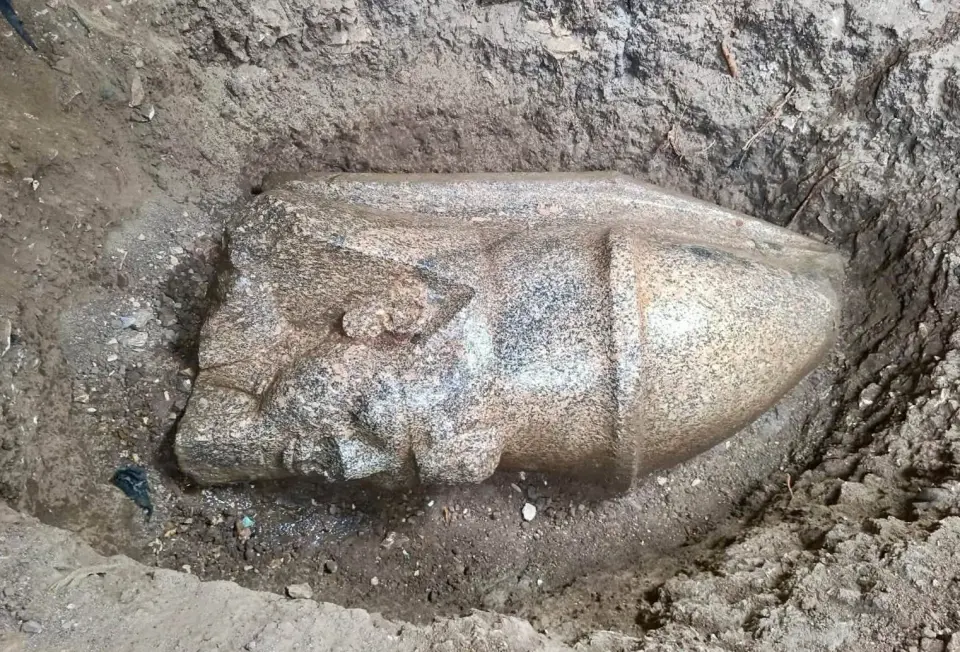
A farmer in Gharbia province, Egypt, accidentally uncovered a cache of colossal statues belonging to Pharaoh Ramses II while tilling land near his home. The discovery, confirmed by the Supreme Council of Antiquities, includes a massive head and a smaller royal figure, offering new insights into the Nile Delta’s ancient history.
Key points
- A villager in Behbeit El Hagar, Gharbia province, discovered a carved stone block while tilling his land, prompting a report to local antiquities officials.
- The Supreme Council of Antiquities excavated the site and found a head over 5 feet tall, suggesting the full statue was nearly 30 feet high.
- A second, smaller statue under 8 feet tall was also recovered, featuring a clear face and the striped 'nemes' headdress of Egyptian pharaohs.
- A 4-foot pink granite block with hieroglyphs declaring Ramses II as 'King of Upper and Lower Egypt' and 'Son of Ra' was also unearthed.
- Egypt’s Minister of Tourism and Antiquities, Sherif Fathy, stated the find will help understand the Nile Delta’s role as an ancient political and economic stronghold.
Background
This discovery follows recent archaeological breakthroughs in Egypt, including the 2026 unearthing of a 3,000-year-old military district and horse burial in the Nile Delta, which also linked to Ramses II. The current find adds to a growing body of evidence highlighting the pharaoh’s extensive influence across the region.
How outlets are covering it
Heritage Daily and the New York Post both emphasize the accidental nature of the discovery and the scale of the statues, with the latter linking Ramses II to the biblical Exodus narrative. The Daily Beast focuses on the homeowner’s serendipitous find, framing it as a 'priceless' 3,000-year-old discovery. All sources agree on the significance of the find for understanding the Nile Delta, but the New York Post uniquely highlights the biblical connection, while Heritage Daily and The Daily Beast stress the archaeological and historical value.
Why it matters
The discovery provides tangible evidence of Ramses II’s widespread influence in the Nile Delta, a region critical to ancient Egypt’s economy and politics. It also offers new material for studying the architectural and artistic evolution of royal monuments during the New Kingdom era.
What to watch
Further studies are expected to analyze the statues and the repository’s architectural evolution. Officials hope the find will shed light on the Nile Delta’s historical significance and Ramses II’s legacy.
- Archaeologists uncover colossal statues of Ramses II in Egypt HeritageDaily
- Giant Ramesses II statues found in Behbeit El-Hagar after a villager reports a carved stone block Archaeology News Online Magazine
- Massive 28-foot statue of biblical pharaoh who enslaved Israelites unearthed — by accident New York Post
- Remnants of Two Massive Ancient Statues Unearthed in Egypt News Radio 1190 KEX
- Homeowner Makes Priceless 3,000-Year-Old Discovery in Garden The Daily Beast
Want the full story? Read the original reporting
Read on HeritageDaily