
Bayeux Tapestry's London Debut Sparks National Fever and Conservation Concerns
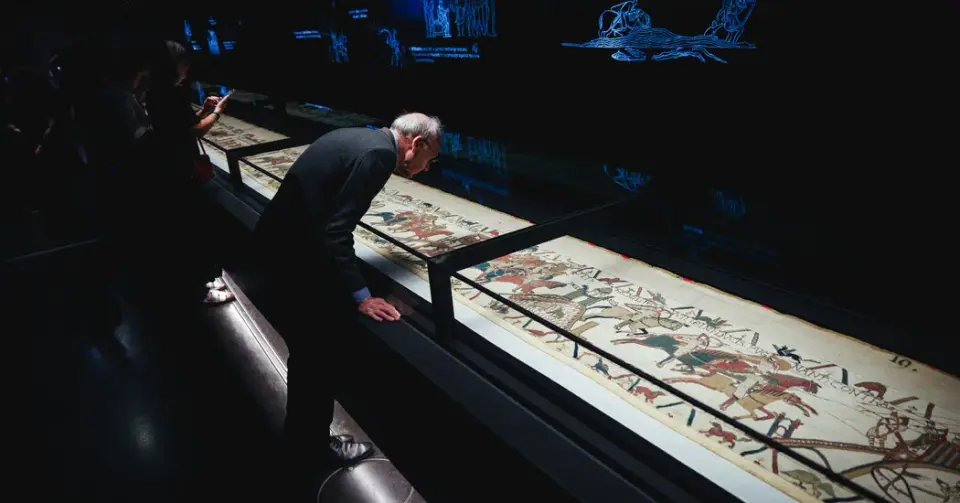
The British Museum opened its highly anticipated exhibition of the Bayeux Tapestry on September 10, 2026, marking the first time the 11th-century embroidery has returned to Britain since its creation. The 220-foot artifact, depicting the 1066 Norman invasion, has triggered a national phenomenon dubbed 'Bayeux fever,' with over 80,000 people competing for initial tickets. While the exhibition is expected to draw one million visitors and generate significant revenue for the museum's refurbishment fund, conservators have reported minor thread damage from the transit, prompting criticism from French art experts over the risks of moving such a fragile object.
Key points
- The exhibition opened on September 10, 2026, and will run until July 11, 2027.
- Over 80,000 people attempted to purchase tickets simultaneously when the first tranche went on sale.
- King Charles III attended a special early viewing, and the event was framed as a symbol of Franco-British friendship.
- Conservators discovered two new small breaks in the tapestry's threads after its arrival in London.
- The British Museum expects the show to attract approximately one million visitors, aiding its £1 billion refurbishment fund.
Background
The loan of the Bayeux Tapestry from France to the UK was finalized in early 2025 after years of diplomatic negotiations, including a notable meeting at the Cannes Film Festival. Prior to the public opening, UK and French leaders, including King Charles III, Queen Camilla, and President Emmanuel Macron, held private viewings in late August and early September 2026 to preview the artifact and reinforce diplomatic ties. The tapestry, which depicts the events leading to the Battle of Hastings, has been a subject of historical and cultural debate for centuries, with some scholars questioning its English origins and others emphasizing its role in shaping British identity.
How outlets are covering it
The New York Times highlights the intense public enthusiasm, describing it as 'Bayeux mania' and noting that the exhibition is the museum's most anticipated show in decades. It also reports on the minor damage discovered by conservators and the criticism from French art experts, such as Didier Rykner, who argued the French government took an unacceptable risk. The BBC focuses on the visitor experience, noting the 'extreme queuing' and the emotional impact of seeing the tapestry in person. It also discusses the historical significance of the Norman Conquest and its impact on British language and literature. NBC News emphasizes the 'once-in-a-millennium moment' and the seismic nature of the 1066 invasion, while The Guardian's letters section critiques the tapestry's focus on male power and violence, calling for more recognition of the women who likely created it.
Why it matters
The exhibition is a major cultural and economic event for the British Museum, expected to generate significant revenue for its £1 billion refurbishment project. It also serves as a symbol of Franco-British friendship, with leaders from both countries highlighting the 'entente amicale' during private viewings. The public's intense interest reflects a broader fascination with national history and the tangible connection to the past, while the conservation concerns raise questions about the risks of moving such fragile artifacts. The exhibition also sparks debates about the historical narrative it presents, with some critics arguing it glorifies male power and violence, while others see it as a crucial piece of British heritage.
What to watch
The exhibition will run until July 11, 2027, with tickets for 2027 slots to go on sale on October 21, 2026. The British Museum expects to attract approximately one million visitors, and the gift shop is expected to be a major revenue source, with items ranging from £15 booklets to £1,350 commemorative plates. The tapestry will return to France after the exhibition, and conservators will continue to monitor its condition. The public's enthusiasm and the diplomatic significance of the loan suggest that the Bayeux Tapestry will remain a focal point of cultural and political discussion in both the UK and France for the foreseeable future.
- British Museum Opens Bayeux Tapestry Exhibition The New York Times
- Bayeux Tapestry exhibit opens doors for first time as visitors flock to the British Museum BBC
- ‘Once-in-a-millennium moment’: Medieval masterpiece Bayeux Tapestry finally goes on show in London NBC News
- The Bayeux tapestry: why more women should be stitched into the fabric of history | Letters The Guardian
- England Welcomes the Return of the Bayeux Tapestry Bloomberg.com
Want the full story? Read the original reporting
Read on The New York Times