
Flydubai hijack attempt reveals critical gaps in international pilot vetting
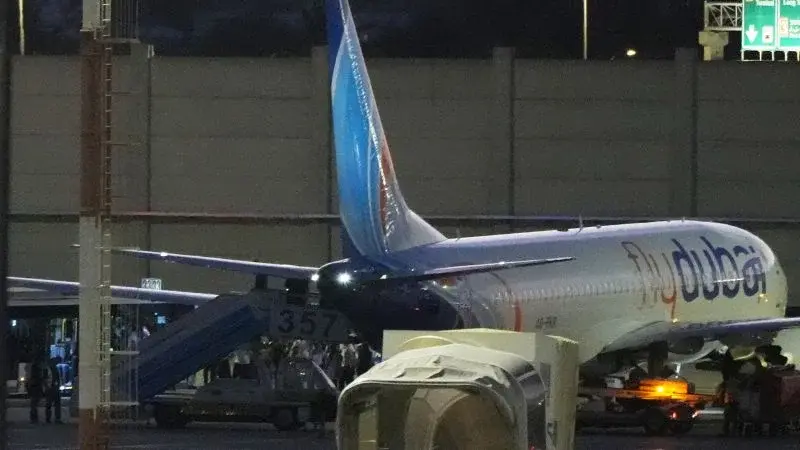
A Flydubai co-pilot attempted to hijack a flight to Israel by attacking the captain with a crash axe, but passengers and crew subdued him, allowing an emergency landing in Saudi Arabia. Investigations in the UAE, Israel, and Australia are probing how the suspect, previously dismissed for extremist views, bypassed strict security protocols.
Key points
- The suspect, identified as Omani national Hamam al-Hammami, was dismissed from Oman Air last year due to concerns about his extremist views, yet he was still permitted to fly for Flydubai.
- The flight, carrying 174 mostly Israeli passengers, was diverted to Tabuk, Saudi Arabia, after the co-pilot attacked the captain with a crash axe and attempted to seize control of the aircraft.
- Passengers and off-duty crew members entered the cockpit to subdue the attacker, preventing a crash. The captain, Indian national Smit Machchhar, was severely injured but survived.
- Early U.S. and Israeli assessments suggest the attack was a 'lone wolf' act inspired by online content, with no definitive links to a foreign state or organization, though investigations remain ongoing.
- Australian authorities are investigating al-Hammami's ties to Melbourne, where he reportedly studied at RMIT University a decade ago and allegedly visited radical mosques.
Background
This incident follows a series of earlier reports in late September and early October 2026 detailing the emergency landing in Saudi Arabia and the immediate focus on cockpit security. Previous coverage highlighted the role of the hardened cockpit door and the lack of standard international background checks for pilots. The current developments expand the investigation to include Australian intelligence and clarify the suspect's prior dismissal from Oman Air.
How outlets are covering it
CNN emphasizes the systemic failure of post-9/11 security measures, which were designed to prevent external threats but not internal ones by vetted crew members. NBC News focuses on the 'lone wolf' nature of the attack, noting that while Trump suggested Iranian involvement, U.S. officials found no evidence of state sponsorship. Al Jazeera highlights the suspect's Australian connections and the investigation into his radicalization during his time in Melbourne. AP News notes that the heroes who saved the plane remain unidentified, while UAE officials label the incident a 'terrorist act' without confirming a broader conspiracy.
Why it matters
The incident exposes significant vulnerabilities in global aviation security, particularly the lack of standardized background checks and information sharing between airlines and countries. It raises urgent questions about how individuals with known extremist views can still obtain pilot licenses and fly to sensitive destinations, prompting calls for stricter psychological screening and international cooperation to prevent future attacks.
What to watch
Investigators in the UAE, Israel, and Saudi Arabia will analyze flight data recorders and cockpit voice recorders to reconstruct the attack. Israeli Prime Minister Benjamin Netanyahu has ordered a thorough review of security protocols for foreign airlines entering Israel. Australian authorities will continue probing al-Hammami's ties to radical groups in Melbourne. The International Civil Aviation Organization (ICAO) is expected to review and potentially enhance standards for pilot vetting and background checks in response to the incident.
- Alleged Flydubai hijacking attempt exposes worrying gaps in aviation security CNN
- Early indications suggest Flydubai co-pilot acted alone in attack, officials say NBC News
- Who Were the Pilots on the FlyDubai Flight? The New York Times
- Who are the mystery men who stepped in to keep the FlyDubai plane from crashing? AP News
- Police investigating Flydubai co-pilot’s Australia ties Al Jazeera
Want the full story? Read the original reporting
Read on CNN