
EU caps Chinese hybrid car imports at 350,000 annually in four-year deal
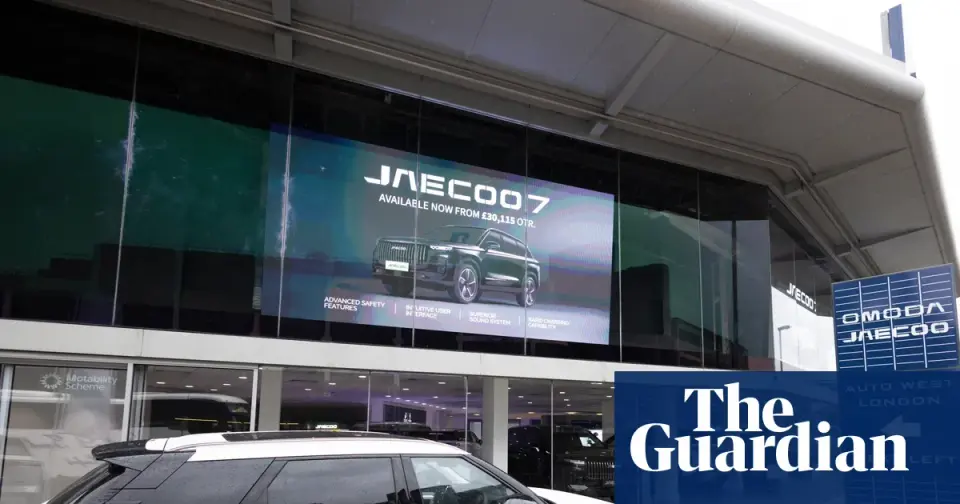
The European Commission has finalized a four-year agreement with China to limit annual imports of hybrid electric vehicles to 350,000 units, effective December. This measure aims to halve China’s current 6% market share in the EU, where sales of battery and plug-in hybrids are projected to reach 800,000 this year. The quota is implemented under World Trade Organization safeguard rules, allowing for swift enforcement without lengthy anti-dumping investigations. Vehicles exceeding the limit will remain blocked in European customs rather than facing tariffs. Chinese manufacturers assembling cars within the EU, such as in Hungary or Spain, are exempt from the cap, while EU firms producing in China remain subject to it. China has agreed to reduce tariffs on auto parts and cut duties on EU footwear, olive oil, and ice cream. The deal addresses a growing EU trade deficit with China, estimated at £1 billion per day, and marks a shift from export-focused strategies to import curbs to prevent deindustrialization.
Key points
- The EU will cap Chinese hybrid vehicle imports at 350,000 cars per year starting in December.
- The quota is expected to halve China’s current 6% market share in the EU.
- Imports of Chinese hybrids to the EU tripled to €6.7 billion in the first half of 2026.
- Vehicles exceeding the quota will be blocked in customs, not subject to tariffs.
- Chinese cars assembled in the EU are exempt from the quota, but EU cars made in China are not.
- China agreed to drop tariffs on auto parts and cut duties on EU footwear, olive oil, and ice cream.
Background
In September 2026, the EU threatened higher tariffs on Chinese hybrids after imports surged from 3,800 in late 2024 to 50,000 in mid-2026. Brussels sought a negotiated deal by October to avoid deindustrialization and address a €1 billion daily trade deficit. This latest agreement follows that pressure, formalizing a voluntary limit rather than imposing punitive tariffs. Meanwhile, Canada expanded its Chinese EV import quota to 33,397 units in a separate phase, and the US saw a shift toward hybrid vehicles after the elimination of federal EV tax credits in late 2025.
How outlets are covering it
The Guardian emphasizes the strategic shift in EU policy from increasing exports to curbing imports due to deindustrialization fears, noting that the quota is fully supported by China. It highlights the political momentum behind the deal, with officials stating it is 'by no means the end of the story' and mentioning ongoing dialogue on chemicals and renewable energy. The Financial Times, though behind a paywall, suggests the hybrid curbs may offer only a 'temporary' respite against Chinese carmakers, implying that the measure might not be a long-term solution. The Guardian also notes that Andrew Small of the European Council for Foreign Relations believes China may use the deal to drag out negotiations on other sectors, but the EU’s mood has changed, making it harder to accept such deals as easily as in the spring.
Why it matters
This agreement represents a significant escalation in EU-China trade relations, moving from diplomatic pressure to concrete import limits. It reflects a broader shift in European industrial policy toward protecting domestic manufacturing from perceived unfair competition. The use of WTO safeguard measures allows for rapid implementation, signaling the EU’s willingness to act decisively. The deal also sets a precedent for future trade disputes, potentially influencing negotiations in other sectors like chemicals and renewable energy. For Chinese automakers, the quota limits their growth in the EU market, while for European manufacturers, it provides temporary relief from price competition. The broader implications include potential retaliation from China and a reevaluation of global supply chains, as the EU seeks to diversify away from Chinese dependence in critical industries.
What to watch
The quota will take effect in December 2026, with monitoring mechanisms in place to ensure compliance. EU leaders are scheduled to discuss a French-German proposal for a 'kill switch' that would allow Brussels to block access to the single market for certain goods in response to harmful developments, such as bans on rare earths. Further dialogue between the EU and China is expected on other sectors, including chemicals, renewable energy, and furniture. The EU will also continue to surveil imports to identify surges and potential deindustrialization risks. Chinese manufacturers may accelerate production within the EU to bypass the quota, while EU firms may face increased scrutiny on their supply chains. The outcome of these negotiations could shape future trade policies and industrial strategies in both regions.
- EU to limit Chinese hybrid vehicle imports to 350,000 a year The Guardian
- EU Aims to Put Brakes on Chinese Hybrid-Vehicle Market Share With Import Cap WSJ
- EU’s China Trade Imbalances Go Beyond Autos, Dombrovskis Says Bloomberg.com
- EU hybrid curbs to offer only ‘temporary’ respite against Chinese carmakers Financial Times
- China's $7.5 billion EU hybrid boom faces new curbs under China-EU deal Reuters
Want the full story? Read the original reporting
Read on The Guardian