
Scientists Link Nepal Flood Catastrophe to Compound Climate and Geological Failures
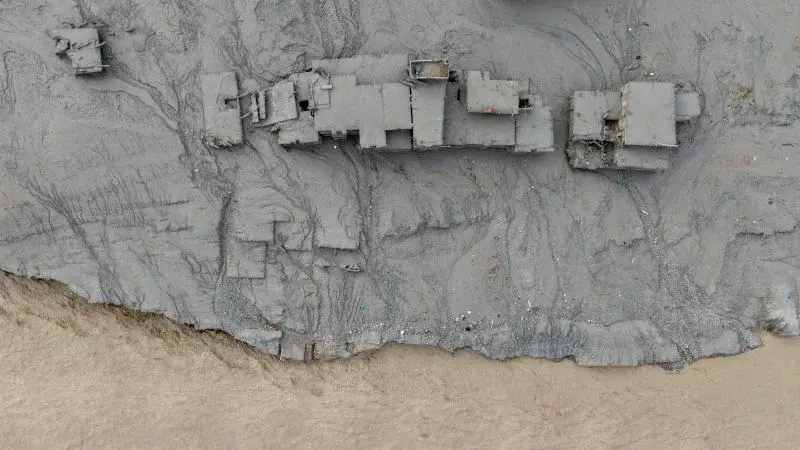
A team of over 20 international scientists from World Weather Attribution (WWA) has concluded that the August 2026 flash floods in Nepal, which killed at least 1,300 people and left over 5,000 missing, were caused by a complex cascade of factors rather than a single event. The disaster began when a massive section of rock and glacier ice, approximately 2,000 feet wide, sheared off Langtang Lirung mountain. This collapse released energy equivalent to a magnitude 5.2 earthquake, triggering a debris flood that traveled over 200 miles downstream. While the event was fundamentally different from typical riverine floods, researchers found that human-induced climate change significantly weakened the mountain’s stability. Key factors included rising temperatures that degraded permafrost, accelerated glacier thinning, and record-breaking warmth in July and August 2026. The report notes that no existing early warning system could have provided sufficient lead time for such an unprecedented event, highlighting the limits of current adaptation strategies in the Himalayas.
Key points
- The August 26, 2026, disaster involved a rock-ice avalanche from Langtang Lirung that dropped approximately 1,400 meters, releasing energy equivalent to a magnitude 5.2 or 5.5 earthquake.
- The resulting debris flood traveled at average speeds of 188 km/h, reaching the Rasuwagadhi border within seven minutes and continuing 200 km downstream to Devghat.
- Human-induced climate change has raised the freezing threshold in the Himalayas by approximately 100 meters per decade, weakening permafrost and increasing meltwater pressure in rock fractures.
- The Langtang-Lirung glacier has experienced accelerated thinning since 2010, with recession rates increasing from 0.5% to 1-2.3% per annum, reducing the stability of adjacent rock walls.
- The 2015 magnitude 7.8 earthquake may have preconditioned the slope for failure, though its specific contribution to the 2026 collapse remains unconfirmed.
- Nepal has requested financial support from the UN loss and damage fund, arguing that the disaster is linked to global fossil fuel emissions.
Background
Initial reports in late August 2026 identified the event as a glacial collapse rather than an earthquake, as confirmed by the US Geological Survey. Rescue operations in early September focused on tunnel survivors along the Trishuli River, with death tolls climbing past 1,200. Earlier coverage emphasized the rapid rise of floodwaters, which surged 7-9 meters in 30 minutes, overwhelming monitoring stations and cutting off communities. The current analysis builds on these immediate reports by providing a long-term scientific attribution for the event's occurrence.
How outlets are covering it
CNN and The Guardian both highlight the role of climate change in preconditioning the disaster, citing WWA findings. However, The Guardian emphasizes the political dimension, noting Nepal’s demand for responsibility from top emitting nations like China and India. WWA’s official report provides the most detailed technical breakdown, distinguishing between the fundamental geological cause and the destabilizing role of climate change. While CNN focuses on the 'unprecedented' nature of the event, WWA stresses that such hazards are exceeding adaptation limits, requiring a rapid transition away from fossil fuels. All sources agree that the event was a compound crisis involving multiple interacting factors, but they differ in emphasis: CNN and The Guardian focus on the human cost and climate attribution, while WWA focuses on the mechanical and hydrological processes.
Why it matters
This event demonstrates that climate change is creating new types of hazards that existing infrastructure and early warning systems cannot mitigate. The findings suggest that as warming continues, similar 'compound' disasters may become more frequent in high-mountain regions, posing significant risks to vulnerable populations and critical infrastructure like hydropower plants. The inability to adapt to such extreme events underscores the urgent need for global emission reductions and international financial support for recovery in affected nations.
What to watch
Nepal is in the process of rebuilding and seeking international financial aid through the UN loss and damage fund. Scientists are calling for improved high-mountain earth observation and hazard monitoring to better understand these complex cascading events. However, experts warn that without rapid global cuts to fossil fuel emissions, similar disasters of this scale are inevitable in the coming years.
- Here’s what one team of scientists thinks happened in Nepal’s deadly flood wave CNN
- Human-Caused Warming Played ‘Very Strong’ Role in Himalayan Floods, Report Finds The New York Times
- How climate change worsened Nepal's deadly mountain collapse dw.com
- Climate crisis likely behind devastating Nepal-Tibet floods that killed more than 1,300, first study finds The Guardian
- Rapid Warming in the Himalaya Exacerbates Geohazard Cascades Beyond Adaptation Limits World Weather Attribution
Want the full story? Read the original reporting
Read on CNN