
Indonesia deploys 1,500 troops and 72 arrests as Super El Niño drives record Borneo fires
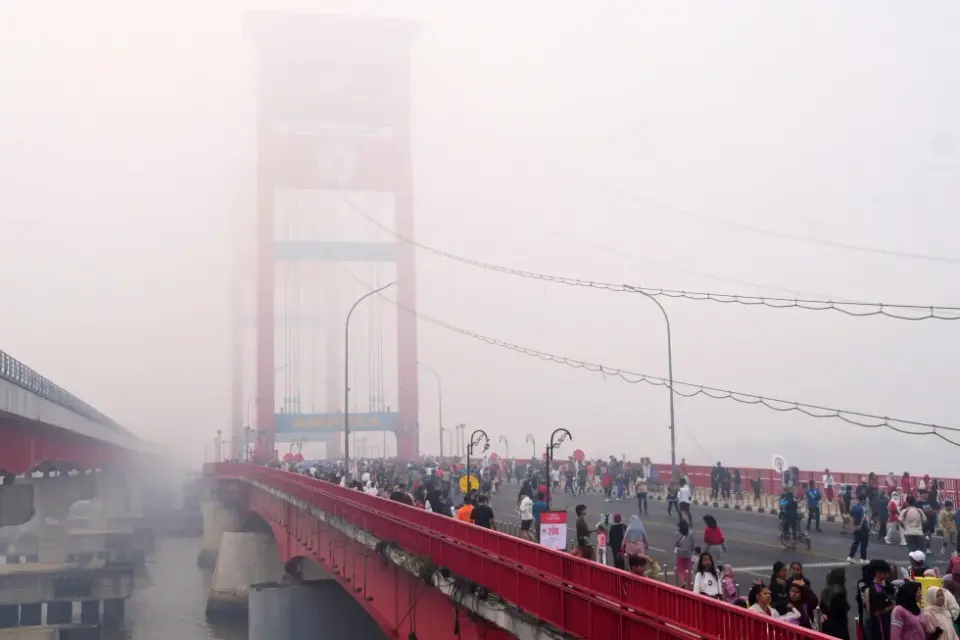
Indonesia has deployed 1,500 additional soldiers and 52 helicopters to combat wildfires that have burned over 200,000 hectares in Borneo and Sumatra this year. Authorities arrested 72 suspects for starting fires, while smoke has closed nearly 600 schools in Malaysia. The crisis is driven by a 'Super El Niño' that could produce carbon emissions comparable to the 1997 and 2015 events, with peatland fires proving difficult to extinguish without rainfall.
Key points
- Indonesia’s Environment Ministry recorded over 3,700 hot spots in Borneo and 1,700 in South Sumatra on Sunday, with visibility dropping to 10 meters in some areas.
- President Prabowo Subianto ordered 1,500 additional troops and six additional helicopters to Kalimantan to support water-bombing and aerial patrol missions.
- Authorities arrested 72 individuals on suspicion of starting forest fires, according to AP News.
- Smoke from the fires has forced the closure of nearly 600 schools in Malaysia’s Sarawak state, affecting approximately 200,000 students.
- The current El Niño event is forecast to exceed 3°C above normal sea surface temperatures, potentially matching the carbon emissions of the 1997 and 2015 El Niño years.
Background
Indonesia has experienced severe wildfire seasons during previous El Niño years, including 1997, 2015, 2019, and 2023. The 2015 event, during a particularly strong El Niño, resulted in an estimated 1.5 gigatonnes of CO2 emissions, while the 1997-1998 event emitted up to 2.5 gigatonnes. Peatlands in Kalimantan and Sumatra are particularly vulnerable because dried peat can burn underground, making fires difficult to suppress without sufficient rainfall. The current crisis is occurring amid a developing 'Super El Niño' that the UK Met Office describes as unprecedented in intensity.
How outlets are covering it
AP News emphasizes the immediate response, highlighting 72 arrests and the deployment of 52 helicopters for cloud-seeding and water-bombing. Al Jazeera focuses on the military escalation, noting President Prabowo’s order to send 1,500 additional troops to Kalimantan and the total burned area of 200,000 hectares. New Scientist and Copernicus Atmosphere Monitoring Service (CAMS) provide the scientific context, warning that the current El Niño could produce emissions comparable to the 1997 and 2015 events. CAMS notes that while 2026 global fire emissions are slightly below average to date, regional haze in Indonesia is consistent with previous El Niño years. All sources agree that peatland fires are difficult to extinguish and that the smoke is affecting neighboring countries, particularly Malaysia.
Why it matters
The wildfires are not only a local crisis but a global climate issue. If the Super El Niño intensifies as forecast, Indonesia’s fires could release carbon dioxide levels comparable to the worst historical El Niño events, significantly impacting global CO2 levels. The smoke is already affecting air quality in Malaysia and Singapore, leading to school closures and health advisories. The difficulty in extinguishing peatland fires without rainfall underscores the long-term environmental and economic costs of deforestation and climate change in the region.
What to watch
Authorities are continuing cloud-seeding operations and monitoring the situation closely. The effectiveness of the response will depend on rainfall to rewet peatlands and fully suppress fires. If the El Niño intensifies as forecast by the UK Met Office, fire activity and emissions could increase significantly in the coming months. International monitoring agencies, including CAMS, are tracking emissions and smoke transport to assess the global impact.
- Indonesian police arrest 72 people suspected of starting forest fires AP News
- Indonesia prioritises Kalimantan region as wildfire hotspots rise Reuters
- Indonesia bolsters troop numbers to combat Borneo wildfires Al Jazeera
- Super El Niño could lead to mega CO2 emissions from fires in Indonesia New Scientist
- Smoke transport in the Arctic and intense seasonal fires in Indonesia Copernicus Atmosphere
Want the full story? Read the original reporting
Read on AP News