
Thunberg Returns to COP31 to Demand Structural Shifts Amid Turkey's Fossil Fuel Expansion
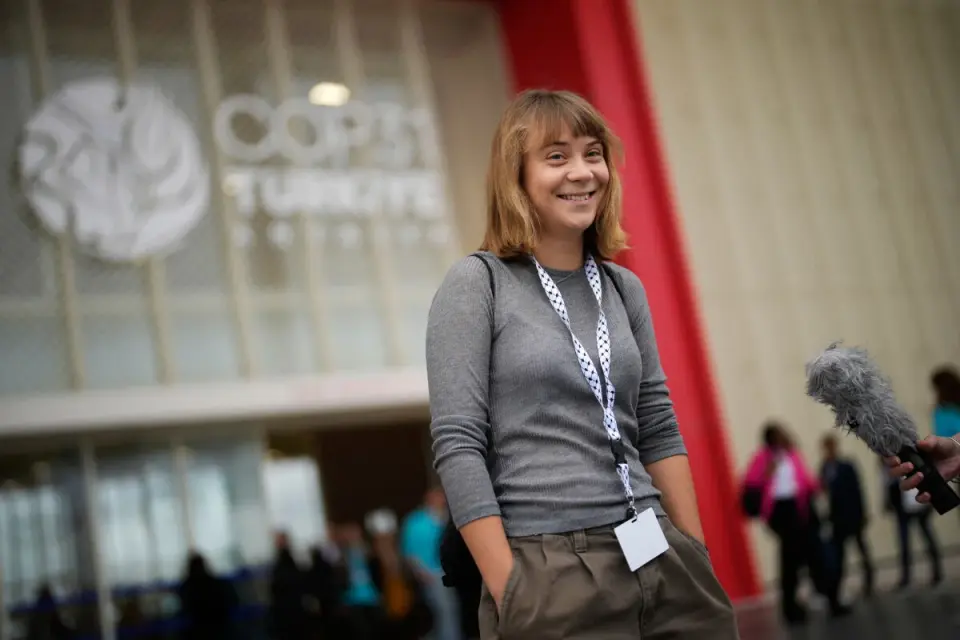
Greta Thunberg has returned to UN climate talks, marking her first appearance since 2021, to criticize the structural integrity of the negotiations. Speaking at COP31 in Antalya, Turkey, she condemned the event as hypocritical, arguing that current political and economic systems prioritize profit over human survival. While the summit focuses on global electrification and renewable energy targets, the host nation simultaneously celebrated the discovery of new oilfields and plans to expand fossil fuel production. Thunberg urged leaders to prioritize people and the planet over geopolitical power and industry lobbying, warning that the current status quo is 'extremely violent.'
Key points
- Thunberg arrived at COP31 in Antalya, Turkey, on November 10, 2026, her first UN climate summit attendance since Glasgow in 2021.
- She criticized the conference as a platform for 'whitewashing' by host countries and noted that negotiations are heavily influenced by lobbyists from destructive industries.
- Turkey, the co-host with Australia, aims for electricity to account for 35% of global energy consumption by 2035, up from 23% today.
- Despite climate goals, Turkey celebrated the discovery of two new oilfields and plans to expand fossil fuel production, a move critics call contradictory.
- Scientists reported that fossil fuel emissions flatlined in 2026, largely due to energy shocks from the Iran war, though emissions remain too high to meet the 1.5C target.
- Youth activists and organizations, including the Alliance of Small Island States, rallied around Thunberg, calling for meaningful action and accountability from decision-makers.
Background
This summit follows a year of severe climate-related disasters, including heat waves and floods, as well as an energy shock caused by the Iran war. Thunberg’s return to the UN stage comes after a period of activism outside the formal climate arena, including her involvement in French student protests over education funding in late 2026. Previous COP hosts, such as Brazil and the UAE, have also been major oil producers, highlighting a recurring tension between hosting nations' fossil fuel interests and their climate commitments.
How outlets are covering it
AP News focuses on Thunberg’s critique of the structural hypocrisy of the talks and the influence of industry lobbyists, emphasizing her call to prioritize people over profits. The Guardian provides a broader context of the summit's contradictions, highlighting Turkey’s simultaneous celebration of new oilfields and its climate pledges, while also noting the flatlining of emissions due to the Iran war. The Guardian also highlights the role of China in leading clean energy adoption, a point not emphasized in the AP report. Both sources agree on the tension between the summit's goals and the host nation's fossil fuel expansion, but The Guardian places more weight on the geopolitical implications of China's leadership and the 'just transition' demands from global south organizations.
Why it matters
Thunberg’s return signals a renewed push for structural change in climate negotiations, challenging the status quo of fossil fuel dependence and industry influence. The contradiction between Turkey’s climate goals and its fossil fuel expansion highlights the ongoing struggle to balance economic interests with environmental imperatives. As emissions flatline due to external shocks like the Iran war, the summit’s ability to drive long-term, structural change rather than relying on temporary disruptions will be critical for meeting global climate targets.
What to watch
COP31 will continue in Antalya until November 20, 2026, with world leaders expected to deliver interventions. The focus will be on the 'Belém-Antalya Mechanism' for a just transition and the implementation of renewable energy targets. COP32 is scheduled for Addis Ababa, Ethiopia, in November 2027.
- Greta Thunberg arrives at UN climate talks saying ‘everything we love is at stake’ AP News
- Greta Thunberg returns to UN climate summit after years of pro-Palestinian activism Ynetnews
- ‘Everything we love at stake’: Greta Thunberg arrives at UN climate talks South China Morning Post
- Cop31 as it happened: ‘Everything and everyone we love is at stake,’ Greta Thunberg warns The Guardian
- Greta Thunberg Returns to UN Climate Summit After 5 Years Away Bloomberg.com
Want the full story? Read the original reporting
Read on AP News