
St. Petersburg car blast kills Russian lieutenant colonel, injuring spouse
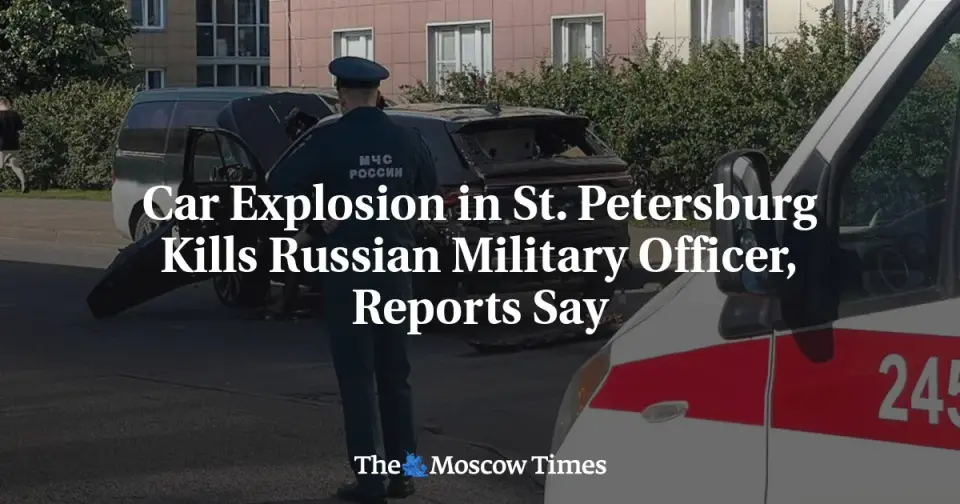
A Russian military lieutenant colonel died and his wife was hospitalized after a car exploded in St. Petersburg on August 27. Russian investigators described the incident as a 'vehicle fire' rather than an explosion, while local media and Ukrainian sources reported it as a targeted car bomb attack. The Investigation Committee opened a criminal case, and the incident follows a recent pattern of attacks on Russian officers linked to the war in Ukraine.
Key points
- A Russian lieutenant colonel was killed in a car explosion in St. Petersburg's Shushary district on August 27 at approximately 10:00 a.m. local time.
- The officer's wife, who was also in the vehicle, was hospitalized with serious injuries; early reports suggested both victims lost legs, though official confirmation is limited.
- Russian investigators described the event as a 'vehicle fire' rather than an explosion, despite local media and eyewitness accounts describing an improvised explosive device.
- The Investigation Committee confirmed the victim's military status and opened a criminal probe into the incident.
- The attack occurred near a supermarket and a Defense Ministry housing complex, with nearby vehicles and a shop building reportedly damaged by the blast.
Background
This incident follows a similar attack in annexed Crimea earlier in August, where a Russian military officer was killed in a bomb attack and a woman was arrested. Russia has accused Ukraine of carrying out several assassinations of military officers since the full-scale invasion began, with Ukrainian sources claiming responsibility for some attacks while denying others. The broader context includes ongoing tensions and cross-border security concerns related to the Russia-Ukraine conflict.
How outlets are covering it
The Moscow Times reported the incident as a car bomb killing a military officer, citing local media and investigators. Ukrainian Pravda detailed the explosion as a targeted attack on a lieutenant colonel from the Air Force and air defense units, noting the wife's critical condition and the location near a military housing complex. The Telegraph source was inaccessible due to a security block, providing no additional perspective. UNITED24 Media confirmed the death of a Russian lieutenant colonel in a suspected car bomb explosion but provided limited additional details. Russian authorities downplayed the event as a 'vehicle fire,' while local and Ukrainian sources emphasized the explosive nature and potential targeting.
Why it matters
The attack highlights the continued risk of targeted violence against Russian military personnel on home soil, reflecting the spillover effects of the Russia-Ukraine conflict. It underscores the ongoing tensions and the potential for asymmetric attacks, even as official narratives attempt to minimize the incident's significance. The lack of immediate comment from Kyiv leaves the attribution uncertain, but the pattern of such attacks suggests a broader strategy of destabilization.
What to watch
The Investigation Committee will continue its criminal probe into the incident, potentially leading to arrests or further evidence. Russian authorities may seek to link the attack to Ukrainian intelligence or proxies, though no immediate confirmation has been provided. The incident may influence public sentiment and security measures in St. Petersburg, particularly in areas with military housing. Further updates on the wife's condition and any official statements from Kyiv or Moscow will be critical in determining the incident's attribution and broader implications.
- Car Bomb Kills Military Officer in St. Petersburg The Moscow Times
- Russian serviceman killed in explosion in St. Petersburg, media reports Reuters
- Lieutenant colonel reportedly killed in car explosion in Russia's St Petersburg Українська правда
- Car bomb kills senior Russian officer in St Petersburg The Telegraph
- Russian Lieutenant Colonel Killed in Suspected Car Bomb Explosion in St. Petersburg UNITED24 Media
Want the full story? Read the original reporting
Read on The Moscow Times