
Yemeni Forces Launch Red Sea Offensive to Retake Mocha and Threaten Sanaa
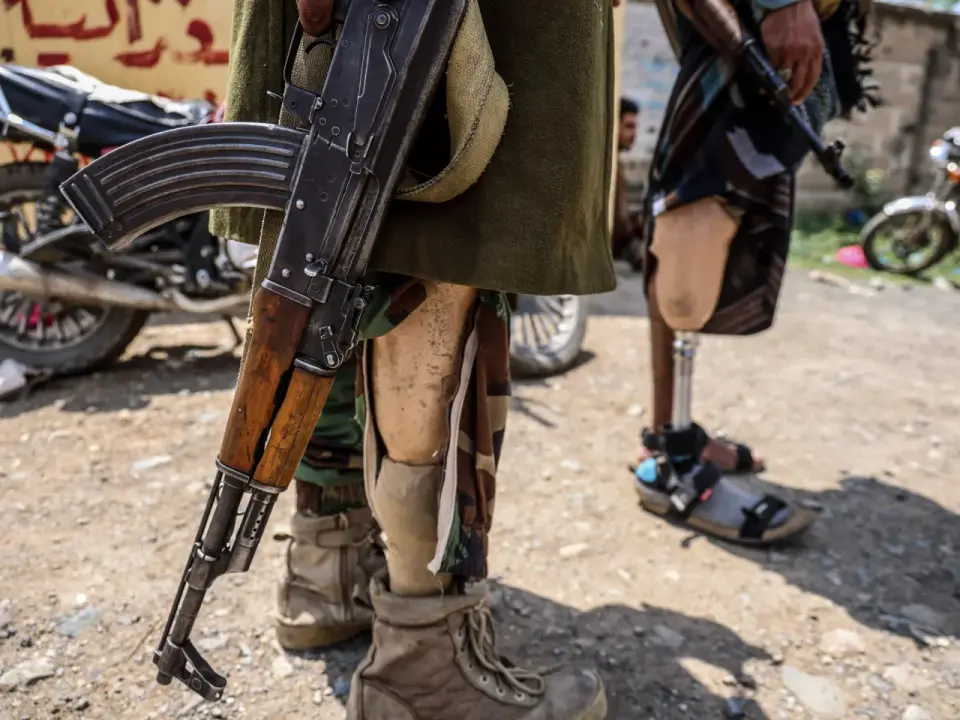
Yemeni government forces, backed by Saudi Arabia, have launched a major offensive to retake territory from the Houthis, including the port city of Mocha and the Bab al-Mandeb Strait. While government forces claim advances along the Red Sea coast, the Houthis dispute these claims and continue to push in other areas like Taiz. Analysts suggest a full military victory is unlikely, pointing instead toward a future negotiated settlement.
Key points
- Rashad al-Alimi, head of Yemen’s Presidential Leadership Council, announced a strategic offensive to capture all territories lost to the Houthis, including the capital Sanaa.
- Government forces claim to have retaken Dhubab Airport and the port city of Mocha, though the Houthis dispute these claims.
- The Houthis, an Iranian-allied group, have held Sanaa since 2014 and recently expanded their control along the Red Sea coast.
- The conflict has escalated after a period of relative calm, with fighting flaring in July and a major Houthi offensive in September.
- Analysts note that government forces are large but scattered and equipped with old gear, limiting their ability to push Houthis out of mountain strongholds.
Background
This latest escalation follows a series of recent developments in Yemen. In early September, the Houthis made sweeping gains along the Red Sea coast, including the port city of Mocha and Bab al-Mandeb. Prior to this, in September, government forces had seized key districts near Hodeidah and Taiz, but faced significant setbacks in August, including a costly rout on the west coast that led to the retreat of up to 30,000 fighters. The current offensive is part of a broader effort by the internationally recognized government, backed by Saudi Arabia, to reverse Houthi gains and restore control over strategic areas.
How outlets are covering it
Al Jazeera emphasizes the government’s strategic offensive and its aim to capture Sanaa, while noting the challenges of divisions within the anti-Houthi camp. The New York Times highlights the Saudi-led coalition’s military campaign and its parallels to previous interventions, focusing on the escalation and its regional implications. Both outlets agree on the complexity of the situation but differ in emphasis: Al Jazeera focuses on the military and political dynamics within Yemen, while The New York Times places more emphasis on the broader regional context and Saudi Arabia’s role.
Why it matters
The conflict in Yemen has significant implications for regional stability and global trade, given the strategic importance of the Bab al-Mandeb Strait. The escalation could lead to further humanitarian crises and disrupt oil supplies, affecting global energy markets. Additionally, the involvement of Saudi Arabia and Iran underscores the broader geopolitical tensions in the Middle East.
What to watch
The next steps will likely involve continued military engagements along the Red Sea coast and in key cities like Taiz and Sanaa. Analysts predict that a full military victory is unlikely, and a negotiated settlement may emerge, potentially involving power-sharing arrangements and security guarantees for Saudi Arabia. The outcome will depend on the ability of government forces to coordinate their efforts and the Houthis’ capacity to maintain their gains.
- Yemeni gov’t forces aim for Sanaa, but Houthi defeat will be a challenge Al Jazeera
- Yemeni government forces drive Houthis from Bab el-Mandeb Strait Reuters
- Iran war updates: Turkiye, Pakistan back troop deployment to Saudi Arabia Al Jazeera
- Why Saudi Arabia’s Last War in Yemen Turned Into a Quagmire The New York Times
- Yemen launches major military operation against Houthis DW.com
Want the full story? Read the original reporting
Read on Al Jazeera