
France's top court splits ruling: Assisted dying upheld, teen social media ban struck down
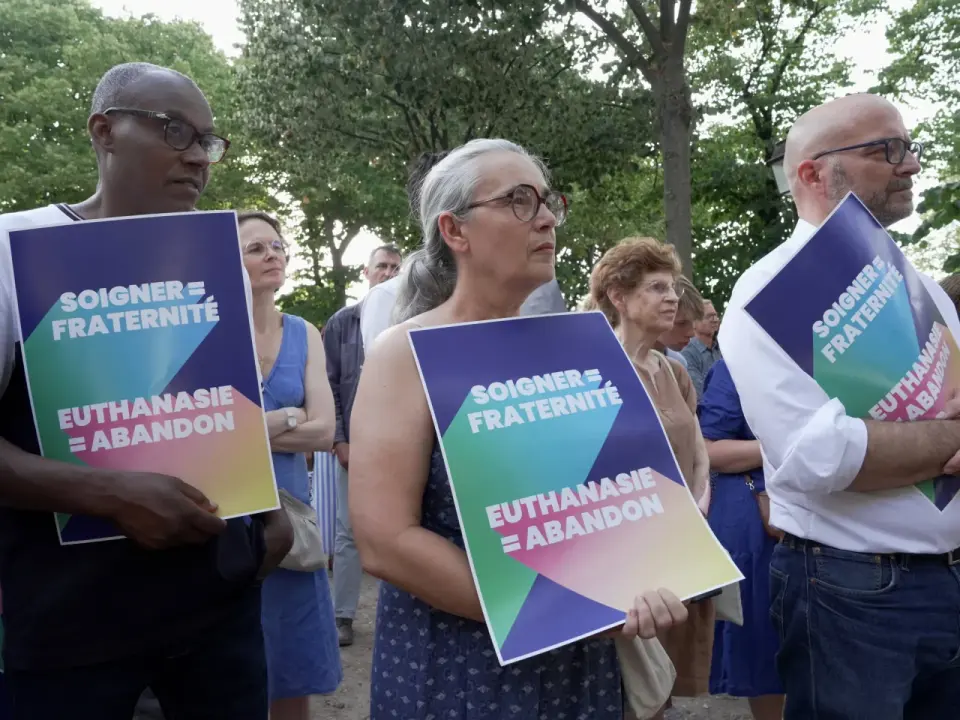
France's Constitutional Council upheld a law legalizing assisted dying for terminally ill patients while striking down a bill banning social media for under-15s. The court found the social media ban violated freedom of expression and privacy, forcing President Macron to draft a new version before spring 2027.
Key points
- The Constitutional Council upheld the assisted dying law, allowing citizens with incurable, terminal illnesses to request medical help to end their lives under strict conditions.
- The court struck down the social media ban for under-15s, ruling it was too broad, ignored individual maturity, and violated privacy by requiring age verification for all users.
- President Macron, who championed both policies, was tasked with drafting a new, legally robust social media ban by spring 2027.
- The assisted dying law passed parliament in July with 291 votes in favor and 241 against, joining Belgium, Germany, and Luxembourg in legalizing the practice.
- The court clarified that pharmacists and treatment centers can refuse to participate in assisted dying based on conscience or mission, and that the welfare guardian's opinion must be considered for protected patients.
Background
France has been navigating end-of-life and digital safety policies amid global debates. Australia's under-16 social media ban, implemented in December 2025, faced criticism for weak enforcement, with over 80% of teens remaining online after three months. Meanwhile, experts and teens have debated the efficacy of blanket bans, with some advocating for platform regulation instead. France's previous attempts to balance these issues have been contentious, with Macron pushing for swift legislative action before the 2027 presidential election.
How outlets are covering it
Al Jazeera emphasizes the assisted dying law as a culmination of democratic effort, highlighting the 'strict and protective framework' and the conscience clause. CNN focuses on the social media ban's failure, noting the court's view that the ban was 'too broad' and 'disproportionate' to the goal of protecting children. The New York Times underscores the setback for Macron, framing the ruling as a 'stinging' blow to his legislative agenda, while noting the court's concern that the ban ignored individual maturity and family situations. All sources agree that Macron will attempt to revise the social media ban, but they differ in emphasis: Al Jazeera highlights the assisted dying victory, while CNN and NYT focus on the social media ban's constitutional flaws.
Why it matters
The rulings signal a shift in France's approach to end-of-life care and digital safety. The upheld assisted dying law aligns France with other European nations, while the struck-down social media ban may prompt a more targeted, privacy-compliant approach. The outcome affects millions of French citizens and sets a precedent for how governments can balance protection with constitutional rights.
What to watch
Macron's government will draft a new social media ban by spring 2027, aiming to address the court's concerns about proportionality and privacy. The assisted dying law will take effect, with strict conditions for eligibility. Public and political debate will continue over the efficacy of the new social media measures and the implementation of assisted dying.
- Top French court upholds assisted dying law, rejects teen social media ban Al Jazeera
- France's top court blocks social media ban for under-15s Reuters
- France’s top court blocks bill banning social media for under-15s CNN
- World in Brief: French court blocks social-media ban; Luigi Mangione pleads guilty to federal charges The Economist
- France’s Top Court Strikes Down Ban on Social Media for Children nytimes.com
Want the full story? Read the original reporting
Read on Al Jazeera