
Dutch Professor Identifies Lost 3rd-Century Odyssey Fragment in Utrecht Library
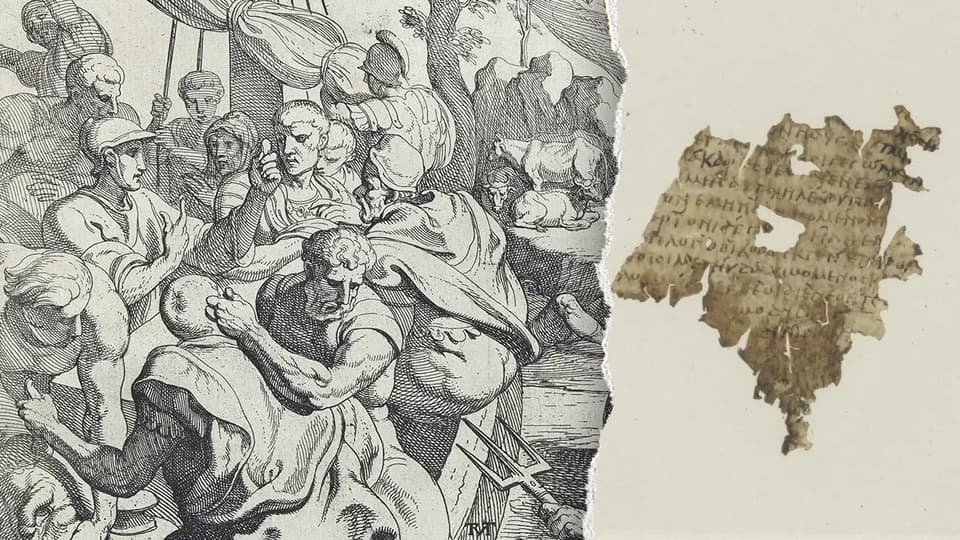
A damaged parchment fragment of Homer's 'Odyssey' was identified in the special collections of Utrecht University in the Netherlands after remaining unnoticed for decades. Discovered by Mark de Kreij, an assistant professor at Radboud University, the fragment dates to the third or fourth century A.D. and contains verses from Book 12, specifically the scene where the sun god Helios demands vengeance after Odysseus' crew killed his sacred cattle. While Utrecht University describes the find as part of a rare 'pocket edition' of the complete epic, experts debate whether it belonged to a full copy or a smaller anthology. The discovery highlights the widespread popularity of Homer in the ancient Mediterranean and underscores the challenges of dating ancient manuscripts through handwriting analysis.
Key points
- Mark de Kreij, an assistant professor of Ancient Greek and Papyrology at Radboud University, identified the fragment while reviewing Greek manuscripts in Utrecht University's special collections.
- The fragment had been previously misclassified among Coptic Christian texts, likely causing it to be overlooked during earlier research on the collection.
- The parchment dates to the third or fourth century A.D. and is believed to have originated from a reader in Egypt's Fayum Oasis, southwest of modern-day Cairo.
- Utrecht University states that only approximately 30 similar fragments of this type exist worldwide, making the discovery exceptionally rare.
- The fragment preserves text from Book 12 of the 'Odyssey,' detailing the episode where Helios discovers that Odysseus' crew killed and ate his sacred cattle.
- De Kreij argues the fragment belongs to a complete 'pocket edition' of the epic, citing nearly contiguous passages on both sides of the parchment.
Background
This discovery follows earlier reports in September 2026 regarding a similar tiny 'Odyssey' fragment found in the same Dutch library, which measured roughly 2.6 by 3 inches and was also dated to around A.D. 300. That earlier report noted the fragment may have survived because it was located in the middle of a pocket edition, shielded by surrounding pages. Additionally, the cultural relevance of Homer's 'Odyssey' has been heightened recently by the global success of Christopher Nolan's film adaptation, which has grossed over $1.684 billion worldwide and helped Universal Pictures reach $3 billion in overseas box office revenue in 2026. The film's depiction of the Helios cattle incident, which is also preserved in the newly identified fragment, has drawn public attention to the ancient text.
Why it matters
The identification of this fragment provides tangible evidence of how ancient readers interacted with classical literature, offering insights into the physical formats and educational uses of Homer's works in the late third and fourth centuries. The debate between scholars regarding whether the fragment belonged to a complete codex or a smaller anthology highlights the ongoing challenges in papyrology and the interpretation of ancient manuscript formats. Furthermore, the discovery underscores the potential for significant historical finds to remain hidden in plain sight within existing institutional collections, suggesting that other universities may hold similar unidentified treasures.
What to watch
Utrecht University plans to document the fragment in a forthcoming book detailing its collection. Researchers will likely continue to analyze the handwriting and material features to refine the dating of the manuscript. The academic community may also revisit other similar fragments in global collections to determine if they belong to complete editions or anthologies, potentially reshaping our understanding of how ancient texts were compiled and distributed.
Want the full story? Read the original reporting
Read on Fox News