
Fire Ant Expands Espionage to Cisco Routers and TACACS Servers
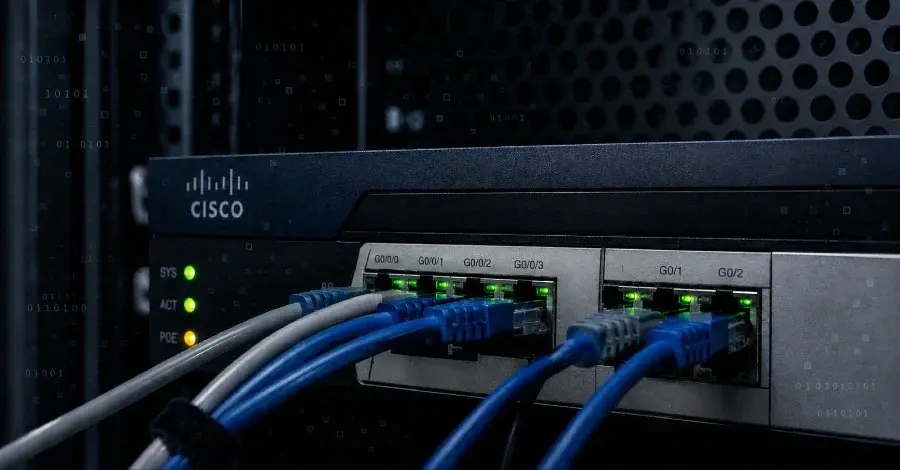
Sygnia reports that the China-nexus actor Fire Ant has expanded its espionage campaign beyond VMware hypervisors to compromise Cisco IOS XR routers, TACACS authentication servers, and Linux management hosts. The group uses purpose-built malware to capture network traffic, harvest credentials, and suppress logging to hide its presence. While activity against critical infrastructure remains limited to scanning, the compromise of trusted network infrastructure provides attackers with a vantage point to explore paths to high-value environments.
Key points
- Sygnia identified Fire Ant compromising Cisco IOS XR routers using custom malware that manipulates the control plane, including a component that filters out log messages not containing the string 'Health'.
- The actor deployed a tool named TacTap to inject malicious libraries into running TACACS daemons, capturing live session handles and obfuscating credentials with a single-byte XOR key.
- Fire Ant used a backdoor called BridgeAgent, disguised as a Zabbix monitoring agent, to maintain persistence and communicate via TLS on port 443.
- The group actively suppressed evidence by disabling SELinux, rewriting login history, and removing privileged command entries from system logs.
- Sygnia assesses the activity strongly overlaps with UNC3886 but notes distinct technical artifacts, while Mandiant has previously found no overlap between UNC3886 and Salt Typhoon or Volt Typhoon.
Background
This development follows Sygnia's July 2025 disclosure of Fire Ant's exploitation of VMware ESXi and vCenter environments. The current campaign represents an expansion into network and management layers, building on earlier findings that the group targets virtualization platforms. It also parallels a 2025 CISA-led advisory attributing similar router and TACACS+ traffic collection to Salt Typhoon, a separate Chinese espionage cluster.
How outlets are covering it
Sygnia emphasizes the strategic value of controlling routers for gaining perspective over trusted network paths, while CSO Online highlights the challenge of trusting compromised evidence sources. Cybersecurity Dive focuses on the long-term espionage nature of the campaign, and Security Affairs details the specific technical evasion tactics, such as the 'Health' log filter and the Zabbix-masquerading backdoor. All sources agree that the activity overlaps with UNC3886 but differ in emphasis on the attribution certainty and the specific technical artifacts involved.
Why it matters
The compromise of trusted network infrastructure like routers and TACACS servers undermines the reliability of security logs and telemetry, making it difficult for defenders to reconstruct attacks. This highlights the need to treat network and authentication infrastructure as Tier-0 assets and to validate evidence against multiple independent sources.
What to watch
Defenders should monitor for the specific indicators of compromise provided by Sygnia, including the TacTap injector and BridgeAgent persistence mechanisms. Organizations should also centralize router authentication and network telemetry outside of managed devices to prevent evidence manipulation and ensure that logs are cross-checked against memory, disk, and network telemetry.
- China-Linked Fire Ant Hijacks Cisco Routers to Steal Credentials and Blind Security Logs The Hacker News
- China-linked hackers turn Cisco routers into covert attack infrastructure csoonline.com
- Sygnia Reveals New Activity by China-Nexus Threat Actor Fire Ant Targeting Trusted Infrastructure Eagle-Tribune
- State-linked actor targets Cisco routers for espionage Cybersecurity Dive
- China-linked Fire Ant Hides Inside Trusted Infrastructure Security Affairs
Want the full story? Read the original reporting
Read on The Hacker News