
Japan and Australia Advance Hypersonic Testing and Laser Cooperation Amid Strategic Shift
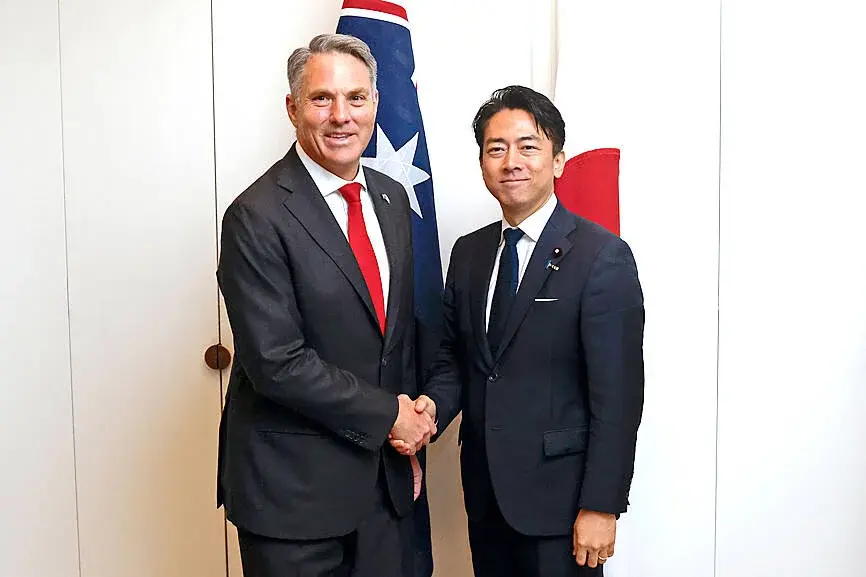
Japanese and Australian defense ministers confirmed plans for Japan to test hypersonic missiles on Australian soil over the next decade. The agreement, part of a broader shift toward closer alliance status, includes the joint development of a high-energy laser system known as Project Boobook and the acquisition of stealth frigates.
Key points
- Japan will use Australian missile ranges to test standoff weapons, including hypersonic missiles, a move described as groundbreaking by Tokyo.
- Australia and Japan successfully field-tested a co-developed high-energy laser system, Project Boobook, designed for land and naval platforms.
- The deal follows a A$10 billion agreement for Australia to purchase three Mogami-class stealth frigates, with the first delivery expected in December 2029.
- Defense ministers emphasized that this cooperation provides strategic depth for Japan and enhances Australia's defense industrial base.
Background
This development follows a series of regional security tensions, including North Korean missile tests and Russian naval deployments in the Baltic. In August 2026, North Korea escalated rhetoric after Japan tested US-made Tomahawk missiles, highlighting the region's growing focus on advanced strike capabilities. Additionally, Australia and Japan have been strengthening ties since a joint statement in May 2026 described their relationship as increasingly vital for mutual strategic depth.
How outlets are covering it
The Taipei Times and Breaking Defense focus on the technical and logistical aspects of the new defense partnership, highlighting the hypersonic testing and the laser project. The Guardian contextualizes the visit within diplomatic tensions, noting that the meeting occurred after a controversy involving Australian PM Anthony Albanese’s comments about a gift of melons from Japanese PM Sanae Takaichi, which briefly strained relations. The Strategist offers a broader geopolitical analysis, arguing that Japan is transitioning from a 'quasi-ally' to a full ally of Australia, driven by shared concerns over China and the need to demonstrate burden-sharing to the United States. While all sources agree on the deepening military cooperation, The Strategist emphasizes the potential for a future collective defense treaty, whereas The Guardian highlights the diplomatic fragility that still exists between the two governments.
Why it matters
This agreement signals a significant shift in Indo-Pacific security architecture, moving beyond traditional bilateral exercises to deep industrial and technological integration. By allowing Japan to test advanced weapons on Australian soil, the two nations are creating a more resilient defense network that can withstand potential disruptions in the Western Pacific. This cooperation also reinforces the Quad framework, as both nations seek to maintain US engagement in the region while addressing shared threats from China and North Korea.
What to watch
Australia and Japan will accelerate discussions to finalize the access arrangements for Japanese missile testing. Mitsubishi Electric is set to invest A$70 million in new manufacturing facilities in Sydney to support the laser technology. The first of the three stealth frigates is expected to be delivered to Australia in December 2029, with potential future acquisitions by New Zealand and other regional partners.
- Japan to test hypersonic missiles in Australia Taipei Times
- Japan and Australia tout progress on high-energy laser and missile range tests The Japan Times
- Japan’s defence minister heads to Australia to meet Marles in wake of melon-gate controversy The Guardian
- Australia, Japan test co-developed high-energy laser Breaking Defense
- Koizumi’s in Australia again. Japan is becoming less quasi, more ally The Strategist | ASPI's analysis and commentary site
Want the full story? Read the original reporting
Read on Taipei Times