
Germany and France pivot to separate fighter paths after FCAS collapse, prioritizing industrial sovereignty
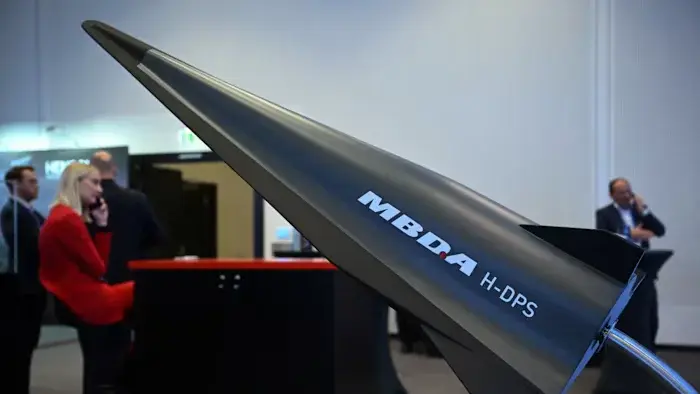
German and French defense ministers met in Berlin on November 9, 2026, to discuss the collapse of the Future Combat Air System (FCAS) and future cooperation. Germany is evaluating the Global Combat Air Programme (GCAP) and an Airbus-led European alternative, targeting a decision in early 2027. France is proceeding with a national fighter program, aiming for a demonstrator flight by 2031-2032. Both nations emphasized the need for a sovereign European defense industry, though they remain divided on nuclear deterrence roles.
Key points
- German Defense Minister Boris Pistorius blamed industrial disagreements and excessive 'ideology' for the FCAS failure, absolving governments of responsibility.
- France and Germany are pursuing separate fighter paths: Germany is weighing GCAP and an Airbus-led 'Team Gen 6' initiative, while France advances its national New Generation Fighter (NGF) program.
- Germany aims to decide on its fighter path by the first quarter of 2027, with an operational target for the early 2040s for the Airbus-led option.
- French Defense Minister Catherine Vautrin argued that European defense funding should prioritize domestic suppliers to avoid new dependencies.
- Both nations agreed to deepen cooperation on satellite-based early-warning systems and long-range precision weapons, despite diverging views on nuclear deterrence.
Background
The FCAS program, launched in 2019, aimed to develop a next-generation fighter for France, Germany, and Spain. It collapsed in June 2026 after years of disputes between lead contractor Dassault Aviation and Airbus over governance, intellectual property, and operational requirements. France had required a nuclear-capable, carrier-capable fighter, while Germany had no such requirements. The program's failure highlighted broader tensions in European defense industrial policy and the challenge of aligning national capabilities with joint projects.
How outlets are covering it
Pistorius (Germany) blamed industrial partners and 'ideological superstructure' for the FCAS collapse, arguing that governments were not responsible. Vautrin (France) declined to label FCAS a failure, emphasizing continued cooperation on networked combat capabilities. Emil Archambault (German Council on Foreign Relations) argued that insufficient political direction allowed industrial disputes to persist. Pistorius and Vautrin agreed on the need for a sovereign European defense industry but differed on nuclear deterrence: Vautrin advocated for European involvement in France's forward deterrence initiative, while Pistorius stressed that the US remained Europe's principal nuclear ally and that control over French nuclear weapons would remain exclusively in French hands. Japan’s cautious stance on GCAP, fearing delays to its 2035 entry into service, contrasts with the UK’s openness to German participation.
Why it matters
The FCAS collapse signals a shift in European defense strategy from large, ideologically driven joint programs to more pragmatic, nationally led initiatives with selective cooperation. Germany’s evaluation of GCAP and an Airbus-led alternative, alongside France’s national fighter push, reflects a growing emphasis on industrial sovereignty and rapid capability development. This divergence may impact Europe’s ability to present a unified defense posture, particularly regarding nuclear deterrence and interoperability with NATO allies. The focus on domestic industrial capacity and avoiding off-continent purchases could reshape European defense procurement and industrial policy.
What to watch
Germany is expected to decide on its fighter path by the first quarter of 2027. France is advancing its national NGF program, with a second demonstration phase starting in 2027 and full-scale development in 2029. Both nations will continue to cooperate on satellite-based early-warning systems and long-range precision weapons, while navigating diverging views on nuclear deterrence and European defense industrial policy.
- France pressures Germany over nuclear risks of long-range missiles Financial Times
- Pistorius blames FCAS collapse on industry, ‘too much ideology AeroTime
- France, Germany seek closer defense ties, cite early-warning systems, long-range weapons Anadolu Ajansı
- Paris and Berlin strive for a more competitive European arms industry Yahoo
- France seeks joint rules with Germany for strikes on Russia amid nuclear war fears — FT RBC-Ukraine
Want the full story? Read the original reporting
Read on Financial Times