Tag

Nuclear Deterrence

All articles tagged with #nuclear deterrence

Russian Nuclear Bombers Deploy to Vietnam Ahead of Shenzhen Summit
geopolitics6 days ago

Russian Nuclear Bombers Deploy to Vietnam Ahead of Shenzhen Summit

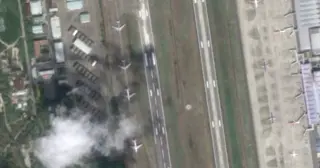
Russian President Vladimir Putin arrived in Shenzhen, China, for the Asia-Pacific Economic Cooperation (APEC) summit and a trilateral meeting with US President Donald Trump and Chinese President Xi Jinping. Ahead of these high-level talks, two Russian Tu-95MS strategic nuclear bombers landed at Da Nang Airport in Vietnam, marking the first such deployment since the Soviet era. The move coincided with a series of airspace incidents in the region, where Japan, South Korea, and Taiwan reported Russian military aircraft entering their respective air defense identification zones or territorial airspace, prompting emergency scrambles of fighter jets. This display of military presence underscores Russia’s global reach and nuclear capabilities just before the leaders convene to discuss nuclear non-proliferation and regional security.
France Urges Germany to Define Missile Doctrine to Prevent Nuclear Escalation
geopolitics13 days ago

France Urges Germany to Define Missile Doctrine to Prevent Nuclear Escalation

French officials have warned Germany that its new long-range missile program could accidentally trigger a nuclear war with Russia if usage protocols are not clearly defined. Paris is pushing for a joint doctrine to ensure conventional strikes are not misinterpreted by Moscow as nuclear threats, particularly given France's 'forward deterrence' policy. While Berlin agrees on the need for shared escalation rules, some allies argue the risks are currently overstated.

Germany and France pivot to separate fighter paths after FCAS collapse, prioritizing industrial sovereignty

Germany and France pivot to separate fighter paths after FCAS collapse, prioritizing industrial sovereignty

German and French defense ministers met in Berlin on November 9, 2026, to discuss the collapse of the Future Combat Air System (FCAS) and future cooperation. Germany is evaluating the Global Combat Air Programme (GCAP) and an Airbus-led European alternative, targeting a decision in early 2027. France is proceeding with a national fighter program, aiming for a demonstrator flight by 2031-2032. Both nations emphasized the need for a sovereign European defense industry, though they remain divided on nuclear deterrence roles.

Iran Threatens Nuclear and Infrastructure Strikes as US Weighs Post-Midterm Attacks
geopolitics1 month ago

Iran Threatens Nuclear and Infrastructure Strikes as US Weighs Post-Midterm Attacks

Iran has issued explicit threats to strike civilian infrastructure, energy pipelines, and potentially use nuclear weapons if the US launches a new military campaign. These warnings coincide with rising oil prices and stalled diplomatic efforts, as US officials indicate the conflict could persist for another year.

Putin Rejects Ceasefire at Valdai, Warns of Nuclear Escalation Over Kaliningrad
geopolitics1 month ago

Putin Rejects Ceasefire at Valdai, Warns of Nuclear Escalation Over Kaliningrad

Vladimir Putin rejected a proposed mutual ceasefire on energy and naval strikes at the Valdai Forum, calling the idea 'absurd.' He warned that any threat to the Russian exclave of Kaliningrad would trigger a nuclear response, while acknowledging that Ukrainian attacks on refineries have cost Russia 1% of its GDP. The speech follows a September meeting between Trump and Zelenskyy, where Kyiv proposed halting strikes on Russian oil facilities in exchange for Moscow stopping attacks on Ukrainian energy infrastructure.

France Launches Upgraded M51.3 Missile from Submarine in First Test
defense1 month ago

France Launches Upgraded M51.3 Missile from Submarine in First Test

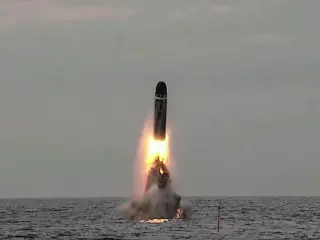
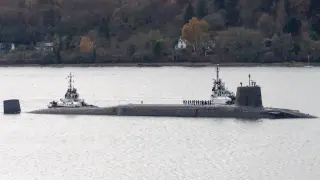
France conducted the first live-fire test of its upgraded M51.3 strategic ballistic missile from the submarine Le Vigilant on October 6, 2026. President Emmanuel Macron observed the launch from a warship, describing it as a critical step for strategic credibility. The missile, which entered service in October 2025, was fired without a nuclear warhead and impacted in the North Atlantic. This test validates the submarine's return to full operational status after a major overhaul and coincides with heightened tensions regarding Russian nuclear threats.

France Validates New M51.3 Submarine Missile in First Live Test
defense1 month ago

France Validates New M51.3 Submarine Missile in First Live Test

France successfully test-fired its new M51.3 nuclear-capable ballistic missile from the submarine Le Vigilant on October 6, 2026. President Emmanuel Macron observed the launch from a warship, calling it a vital step for strategic credibility. The missile, which entered service in October 2025, was launched without a warhead and impacted in the North Atlantic. The test coincides with heightened tensions over Ukraine and Russia's nuclear threats.

Pentagon Expands Nuclear Arsenal to Give President More Limited Strike Options
national-security1 month ago

Pentagon Expands Nuclear Arsenal to Give President More Limited Strike Options

The Pentagon is expanding the U.S. nuclear arsenal to provide President Trump with more limited strike options, a move that has gone largely unnoticed by the media despite being disclosed to the Senate. Undersecretary of War Elbridge Colby argues that these new capabilities, including lower-yield bombs and sea-launched missiles, are necessary to deter threats from Russia, China, and Iran without resorting to total annihilation. While the Senate Armed Services Committee has been briefed, public debate remains absent, raising concerns about democratic oversight of nuclear policy.

Putin Threatens Nuclear Response to Kaliningrad Threats at Valdai Forum
geopolitics1 month ago

Putin Threatens Nuclear Response to Kaliningrad Threats at Valdai Forum

Vladimir Putin warned that the world faces a 'fatal point of no return' regarding nuclear escalation, specifically threatening to use all weapons, including nuclear ones, if NATO attacks the Russian exclave of Kaliningrad. Speaking at the Valdai Forum, he claimed Russia has no plans to attack Europe but would respond to aggression. He also acknowledged that Ukrainian strikes on oil refineries cost Russia 1% of its GDP and expressed openness to a trilateral meeting with US and Chinese leaders.

Pyongyang fires two missiles after rejecting U.S. diplomatic overtures
geopolitics2 months ago

Pyongyang fires two missiles after rejecting U.S. diplomatic overtures

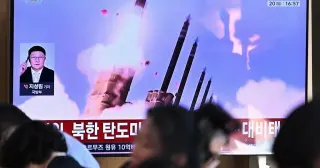
North Korea launched two short-range ballistic missiles toward the sea on September 20, 2026, from the Wonsan area. The first traveled approximately 280 miles, while the second covered over 370 miles. These launches follow recent threats by Pyongyang to bolster its nuclear deterrent in response to U.S. military activities. South Korea and the U.S. are analyzing the weapons' specifications, while Seoul has urged Pyongyang to halt launches banned by U.N. resolutions. This escalation occurs despite President Trump’s recent decision to scale back joint military exercises with South Korea, a move Pyongyang dismissed as insufficient to change the 'provocative' nature of U.S. policy.

North Korea Commissions Second Choe Hyon-Class Destroyer Amid Trilateral Drills
defense2 months ago

North Korea Commissions Second Choe Hyon-Class Destroyer Amid Trilateral Drills

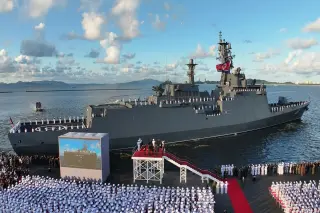
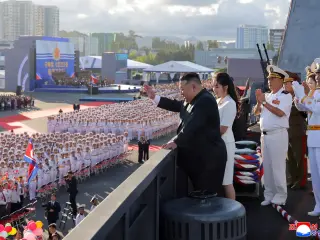
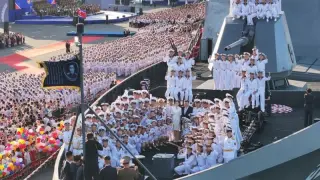
North Korea has commissioned its second Choe Hyon-class guided-missile destroyer, the Kang Kon, in a significant expansion of its naval capabilities. The 5,000-ton vessel, which previously capsized during its launch in May 2025, was officially added to the fleet in Wonsan on September 6, 2026, in the presence of leader Kim Jong Un. This development coincides with the start of the Freedom Edge trilateral military exercise involving the US, South Korea, and Japan. Kim Jong Un framed the commissioning as a critical step in establishing a reliable nuclear deterrent and transforming the navy into a blue-water force. The destroyer features advanced electronic warfare systems and a massive vertical launch system capable of carrying nuclear-capable missiles. While the US and allies describe their drills as defensive, Pyongyang views them as provocative, using the new warship to signal its growing leverage in regional security negotiations.

international-security2 months ago

North Korea commissions second nuclear-capable destroyer as trilateral drills begin

North Korea has commissioned its second 5,000-ton guided-missile destroyer, the Kang Kon, in a ceremony attended by Kim Jong Un and his daughter. The vessel, which previously capsized during its initial launch in May 2025, is equipped with nuclear-capable missiles. This move coincides with the start of the five-day Freedom Edge military exercise involving the US, South Korea, and Japan. Kim stated the new ship enhances Pyongyang's nuclear deterrent and vowed to demonstrate further naval advancements within eight months.

North Korea commissions second nuclear-capable destroyer amid trilateral drills
geopolitics2 months ago

North Korea commissions second nuclear-capable destroyer amid trilateral drills

North Korea has officially commissioned its second 5,000-tonne guided-missile destroyer, the Kang Kon, at Wonsan Port. Kim Jong Un declared the vessel part of a new nuclear response system, emphasizing its role in maritime deterrence. The ceremony occurred just before the start of the Freedom Edge military exercise involving the US, South Korea, and Japan. The ship, which previously capsized during its initial launch in 2025, is equipped with missiles capable of carrying nuclear payloads, marking a significant expansion of Pyongyang's naval capabilities.

North Korea commissions second nuclear-capable destroyer amid trilateral drills
world2 months ago

North Korea commissions second nuclear-capable destroyer amid trilateral drills

North Korea has officially commissioned its second Choe Hyon-class guided-missile destroyer, the Kang Kon, marking a significant expansion of its naval capabilities. The vessel, which capsized during its initial launch in May 2025, was repaired and entered service in September 2026. Kim Jong Un framed the commissioning as a critical step in establishing a reliable nuclear deterrent, emphasizing the navy’s new role in maritime defense. This move coincides with the start of the five-day Freedom Edge military exercise involving the United States, South Korea, and Japan, which Pyongyang views as a direct security threat.