
DIA Report Warns China May Deploy Orbital Directed Energy Weapons by Late 2020s
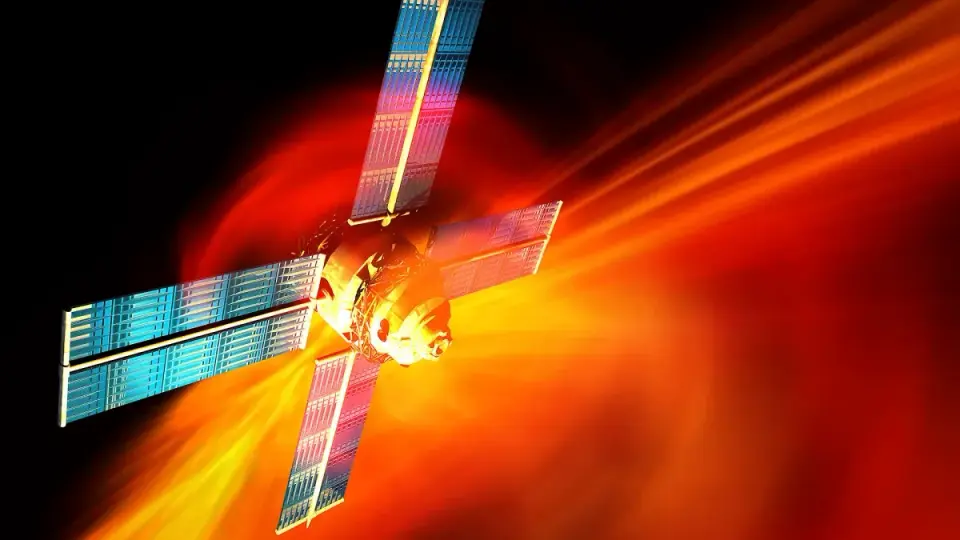
The Defense Intelligence Agency (DIA) released its 2026 'Challenges to Security in Space' report on October 26, warning that China could deploy space-based directed energy weapons (DEWs) by the end of the decade. The assessment highlights Beijing’s rapid expansion of its intelligence, surveillance, and reconnaissance (ISR) satellite fleet, which has tripled since 2018 to over 510 systems. While the report details potential reversible and non-reversible attacks on satellites, it notes that attribution of such strikes remains difficult. The findings coincide with recent U.S. admissions of its own orbital weapons capabilities and growing concerns over space congestion and adversarial cooperation.
Key points
- The DIA report, based on open-source data with a July 2026 cutoff, predicts China may field space-based DEWs and higher-powered ground-based systems capable of threatening satellites in higher orbits by the late 2020s.
- China’s ISR satellite fleet has more than tripled since 2018, reaching over 510 systems as of July 2026, with many dual-use commercial satellites potentially supporting military-civil fusion policies.
- The report distinguishes between reversible attacks, such as jamming or blinding optics, and non-reversible attacks, which include permanent damage via lasers, high-power microwaves, or physical tampering.
- Attribution of directed energy attacks in space is inherently difficult due to the vacuum environment and the potential for satellites to engage multiple targets, complicating response times and escalation management.
- The assessment also addresses threats from Russia, Iran, and North Korea, noting that Russia possesses ground-based laser systems capable of affecting U.S. satellites, while Iran and North Korea continue to build jamming capabilities.
Background
This report is the third iteration of the DIA’s unclassified assessments on space threats, following versions in 2019 and 2023. It arrives shortly after U.S. Air Force Secretary Troy Meink confirmed in September 2026 that the U.S. has deployed orbital weapons for 'space control' missions. Recent incidents, including a Russian satellite passing within 26 meters of a U.S.-registered commercial satellite in October 2026, have heightened concerns about close approaches and potential hostile actions in orbit.
How outlets are covering it
While the TWZ and SpaceNews outlets emphasize the specific timeline for Chinese space-based DEWs, Breaking Defense focuses on the quantitative growth of China’s ISR fleet. Breaking Defense notes a discrepancy in data interpretation, citing AEI’s Todd Harrison, who argues that while China’s satellite count has risen, the rate of increase has leveled off, and the U.S. is currently expanding its ISR fleet faster. Conversely, the DIA and TWZ highlight the dual-use nature of Chinese commercial satellites and the strategic implications of military-civil fusion. SpaceNews provides a broader view of the report’s scope, including threats from Russia and emerging powers, whereas Breaking Defense critiques the lack of clarity in the DIA’s satellite counting methodology.
Why it matters
The potential deployment of space-based directed energy weapons by China could fundamentally alter the strategic balance in space, threatening critical U.S. and allied infrastructure. As space becomes a contested warfighting domain, the difficulty in attributing attacks and the risk of accidental escalation pose significant challenges for international stability. The report underscores the need for robust countermeasures and diplomatic frameworks to manage the growing complexity and congestion of the orbital environment.
What to watch
The U.S. is expected to continue expanding its own space-based weapon capabilities, potentially including directed energy systems, to counter emerging threats. Analysts will closely monitor China’s spaceplane developments and any new satellite launches for signs of weaponization. International discussions on space norms and attribution mechanisms may intensify as the threat landscape evolves, with a focus on preventing accidental conflicts and ensuring the safety of commercial and civil space assets.
- U.S. Intel Warns China's Space-Based Directed Energy Weapons Could Soon Threaten Satellites TWZ
- DIA Releases Challenges to Security in Space DIA.mil
- China has tripled its satellite fleet since 2018 as expansion continues: DIA Breaking Defense
- US Defence Intelligence warns of expanding Chinese and Russian counterspace threats space & defense
- China could field directed-energy weapons in orbit by late 2020s, U.S. intelligence says SpaceNews
Want the full story? Read the original reporting
Read on TWZ