
US Army Commander Argues Armor Remains Vital Despite Drone Threats
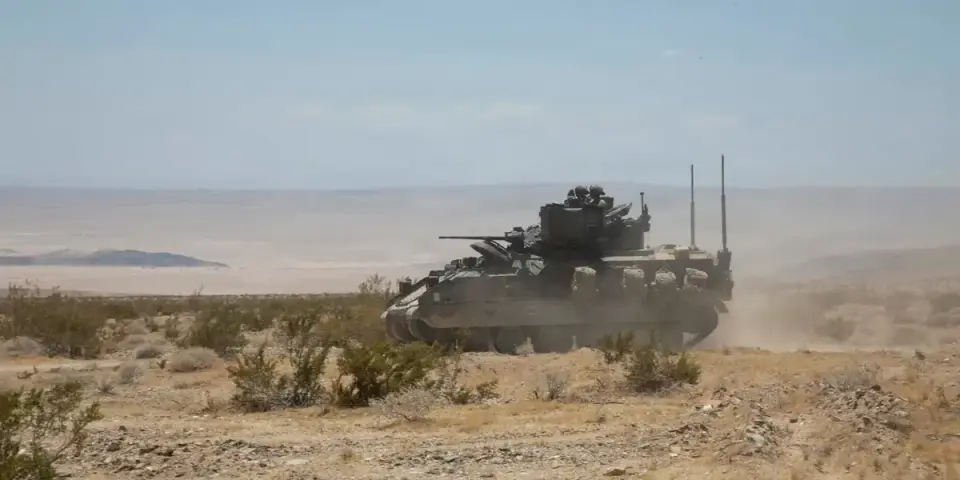
A US Army commander argues that tanks and infantry fighting vehicles remain effective on modern battlefields, provided troops adapt their tactics to counter drone surveillance. Capt. Allan W. Watson described a recent training exercise in Germany where his unit faced a Ukrainian opposition force experienced in drone warfare. Although US soldiers lost armored vehicles during the simulation, Watson emphasized that armor still provides essential mobility and protection. He noted that while drones exposed movements, enemy forces still required ground troops to exploit that intelligence. Watson concluded that armor is not obsolete but must be used with awareness of the drone threat.
Key points
- Capt. Allan W. Watson, commander of Blackhawk Company, 2nd Battalion, 7th Cavalry Regiment, published an op-ed in Task and Purpose detailing lessons from an April training exercise.
- The exercise took place at the Hohenfels Training Area in Germany, pitting US soldiers against the 1st Battalion, 4th Infantry Regiment, supported by the Ukrainian Unmanned Systems Force's 412 Regiment, known as 'Nemesis'.
- Watson reported that his troops adapted to persistent drone surveillance by hiding Bradley fighting vehicles in gullies and among trees, using terrain to mask maneuvers, and avoiding predictable routes.
- Despite these adaptations, Watson acknowledged that US forces lost Bradleys and tanks during the high-pressure exercise, which was designed to resemble real armed conflict.
- Watson argued that these losses did not render armor irrelevant, stating that armored vehicles remained mobile, protected, and dangerous when used with the drone threat in mind.
- The op-ed counters the prevailing debate that cheap drones have made heavy armor obsolete, suggesting instead that the threat requires tactical flexibility rather than abandonment of armored assets.
Background
This development follows ongoing debates since the start of the Ukraine war regarding the viability of heavy armor against uncrewed systems. Video footage from the front lines has frequently shown drones destroying tanks, leading some analysts to question the future relevance of armored vehicles. Watson's account adds a new perspective to this discussion, emphasizing adaptability over obsolescence.
Why it matters
The findings from this training exercise provide concrete evidence for military planners debating the role of armor in future conflicts. As drones become more prevalent, the ability to integrate traditional armored units with new tactics is crucial for maintaining battlefield effectiveness. Watson's insights suggest that the US Army can continue to rely on armor if it evolves its operational methods to counter drone surveillance and attack capabilities.
What to watch
The US Army is likely to incorporate these lessons into future training exercises and doctrine updates. Expect further analysis on how to integrate counter-drone capabilities with armored units to enhance survivability and effectiveness on the modern battlefield.
Want the full story? Read the original reporting
Read on Business Insider