
China Confirms First GJ-21 Stealth Drone Launch from Type 076 Amphibious Ship
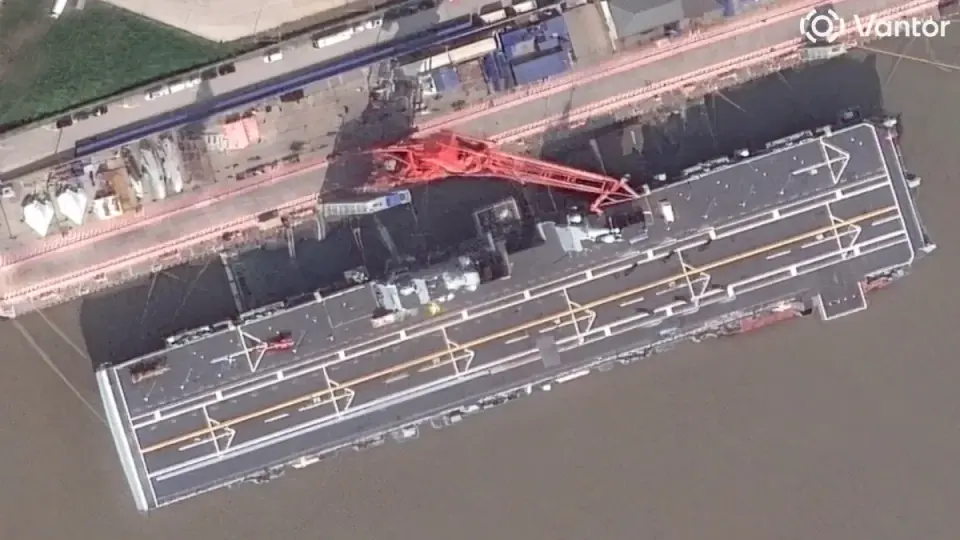
China’s People’s Liberation Army Navy confirmed on October 30, 2026, that the GJ-21 stealth unmanned combat aerial vehicle successfully completed its first takeoff and landing aboard the Type 076 amphibious assault ship, the Sichuan. This milestone marks the world’s first operational deployment of a large, fixed-wing stealth strike and reconnaissance drone from an amphibious platform. The Sichuan, launched in December 2024, features electromagnetic catapult and arresting systems, enabling the GJ-21 to operate with a combat radius comparable to manned fighters like the J-20. Analysts highlight the drone’s low cost, reusability, and superior stealth as key advantages over traditional hypersonic missiles, potentially transforming amphibious warfare by allowing non-contact suppression of enemy defenses before ground troops land.
Key points
- The GJ-21 stealth drone successfully launched and recovered from the Type 076 amphibious assault ship Sichuan, confirmed by the PLA Navy on October 30, 2026.
- The Sichuan is the world’s first amphibious assault ship equipped with an electromagnetic catapult and arresting system for fixed-wing drones.
- The GJ-21 is described as the world’s first large stealth strike and reconnaissance drone capable of operating from an amphibious assault ship.
- The drone’s flying-wing design and S-shaped intake provide superior stealth, potentially outperforming in-service stealth fighters.
- The GJ-21 offers a substantial combat radius comparable to manned fighters like the J-20, despite its smaller airframe.
- The drone is low-cost and reusable, offering greater fire-delivery efficiency and cost control compared to hypersonic missiles.
Background
The Type 076 amphibious assault ship Sichuan was launched and named on December 27, 2024, and has been undergoing sea trials since November 2025. The GJ-21 is a navalized version of the land-based GJ-11 Mysterious Dragon, which entered limited operational service in 2025. The U.S. Navy previously pursued carrier-based UCAVs but shifted focus to the MQ-25 Stingray unmanned aerial refueler. The GJ-21’s development reflects China’s broader investment in stealthy flying-wing drones, contrasting with the U.S. military’s public avoidance of such designs.
How outlets are covering it
TWZ emphasizes the lack of visual confirmation and the significance of the Type 076’s unique design, noting that the U.S. military has largely avoided flying-wing UCAVs. Global Times highlights the GJ-21’s three core strengths: superior stealth, substantial combat radius, and low cost/reusability, with expert Zhang Xuefeng calling it a 'global first.' Interesting Engineering focuses on the Type 076 as the world’s first catapult-capable drone carrier, stressing its potential to transform amphibious assault ships into versatile platforms for maritime surveillance and strike missions. The Aviationist notes the comparison to the U.S. Navy’s X-47B program, which was canceled, and highlights the GJ-21’s potential to operate from China’s Fujian carrier, expanding carrier strike group capabilities.
Why it matters
This development marks a significant shift in naval warfare, as amphibious assault ships are now being repurposed to support large-scale drone operations. The GJ-21’s stealth and combat radius allow it to perform 'door-kicking' suppression missions, clearing air defenses and airfields before ground troops land. This capability could provide the PLAN with added flexibility for operations closer to the mainland, including potential interventions in Taiwan or defending territorial claims in the South China Sea. The integration of unmanned platforms into naval strategy also signals a broader transformation in military planning, where drones are increasingly becoming a critical component of power projection and strategic deterrence.
What to watch
The PLA may release official images or videos of the GJ-21’s flight operations to confirm the milestone. Future operations from conventional aircraft carriers, such as the Fujian, are expected, potentially expanding the GJ-21’s role in carrier strike groups. The development of additional navalized drone variants for the Type 076 and other PLAN vessels is likely, further integrating unmanned systems into China’s naval strategy. The U.S. Navy may reassess its own unmanned aviation programs, such as the MQ-25 Stingray, in response to China’s advancements.
- Stealthy GJ-21 Drone Has Launched And Recovered From Type 076 Amphibious Assault Ship, China Claims TWZ
- China says stealth attack drone makes first takeoff, landing on amphibious ship Reuters
- China's GJ-21, world's first operational large armed reconnaissance stealth UAV on amphibious assault ship, boasts three core strengths: expert Global Times
- China showcases world’s first catapult-capable drone carrier; stealth UAV completes takeoff, landing Interesting Engineering
- China Claims GJ-21 Naval UCAV has Flown from Type 076 Sichuan LHD The Aviationist
Want the full story? Read the original reporting
Read on TWZ