
Japan's FY2027 Budget Reveals ASM-3 Kai Dual-Role and Hypersonic Sea Missiles
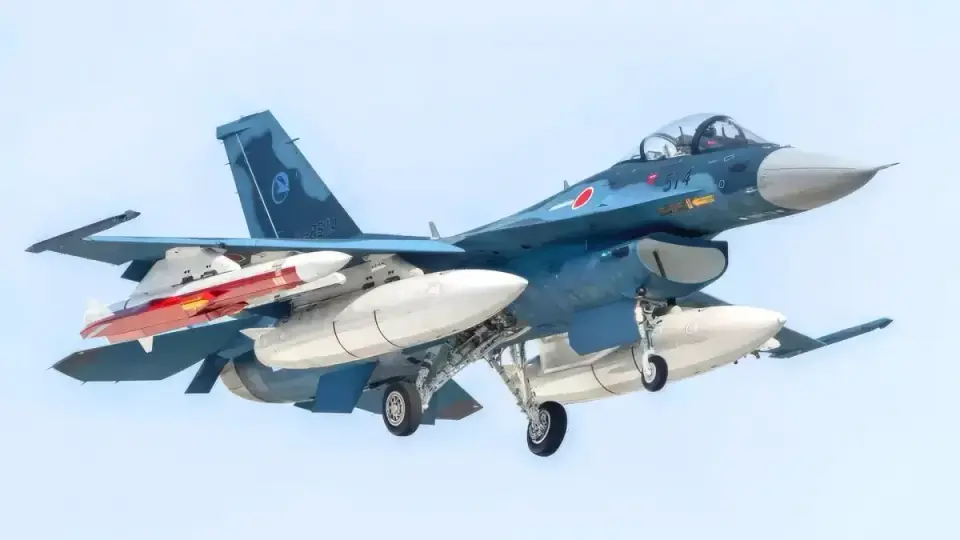
Japan's record ¥8.89 trillion FY2027 defense budget request, submitted August 31, 2026, introduces a dual-role designation for the ASM-3 Kai missile and reveals plans for an underwater-launched hypersonic weapon. The budget prioritizes standoff strike capabilities, uncrewed systems, and air defense to counter regional threats.
Key points
- The FY2027 budget request seeks ¥8.89 trillion (approx. $56 billion), marking a record increase for Japan's defense spending.
- The ASM-3 Kai is described as an 'air-to-surface/anti-air missile,' suggesting a potential expansion beyond its traditional anti-ship role.
- Japan plans to develop a derivative of the Type 25 Hyper Velocity Gliding Projectile for launch from underwater platforms, with no specific budget figure disclosed yet.
- The budget allocates JPY14.2 billion for hypersonic guided missile development and JPY167.3 billion for acquisition and ground equipment.
- The request includes funding for the AGM-88G AARGM-ER and upgrades to 10 F-2 fighters for the air-launched Upgraded Type 12 missile.
Background
This development follows North Korea's warnings in August 2026 regarding Japan's expanding long-range strike capabilities, including Tomahawk tests. It also aligns with broader regional trends, such as Russia's covert assistance to Iran in developing ramjet-powered supersonic cruise missiles, highlighting a global shift toward advanced standoff weapons.
How outlets are covering it
The War Zone emphasizes the potential air-to-air capability of the ASM-3 Kai, noting its ramjet engine and active/passive radar seeker could target high-value assets like airborne early warning aircraft. AP News focuses on the broader budget's emphasis on drones, AI, and missiles, framing the spending as a strategic shift. Janes highlights the underwater-launched hypersonic missile as a new survivable sea-based strike capability, noting the ambiguity in launch platform specifications.
Why it matters
The dual-role designation for the ASM-3 Kai and the development of hypersonic sea missiles signal a significant evolution in Japan's defense posture, moving from traditional deterrence to active counterstrike and area denial. This shift aims to counter China's expanding AEW&C fleet and anti-access capabilities, potentially altering regional power dynamics and forcing adversaries to operate further from contested airspace.
What to watch
Japan's Ministry of Defense has not clarified whether the ASM-3 Kai's anti-air designation reflects a tested capability or a budget classification error. The underwater hypersonic missile program remains in a special funding category, with no specific budget figure disclosed. Further details on the ASM-3 Kai's performance and the hypersonic missile's launch platform are expected as the budget is finalized.
- Japan’s ASM-3 Kai Supersonic Cruise Missile May Have An Air-To-Air Capability TWZ
- Japan to beef up its defense with drones, AI and missiles, defense budget plans show AP News
- Japan Seeks Record Defense Budget as Takaichi Plans Buildup Bloomberg.com
- Japan reveals plans for underwater-launched hypersonic missile Janes
- Why Japan’s hypersonic and underwater weapon plans might worry China South China Morning Post
Want the full story? Read the original reporting
Read on TWZ