
Marine Corps Seeks Nine Additional Amphibious Ships to Restore Full Expeditionary Readiness
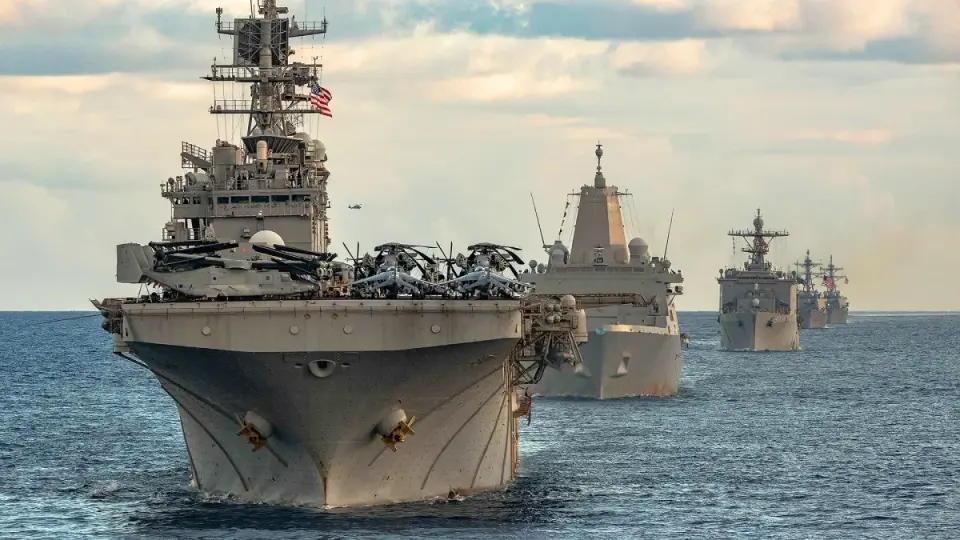
The U.S. Marine Corps and Navy have determined that 40 amphibious ships are required to maintain three simultaneous Marine Expeditionary Units, but the current fleet consists of only 31 vessels. Officials plan to lobby Congress for increased funding to build new ships and extend the service life of existing ones, though this request faces significant budgetary hurdles and a low readiness rate.
Key points
- Navy and Marine Corps leaders agree that 40 amphibious ships are needed to sustain three Marine Expeditionary Units (MEUs) at sea, compared to the current 31 vessels.
- The required fleet includes 13 large-deck amphibious assault ships and 27 amphibious transport docks, a shift from previous strategies that favored smaller vessels.
- The Marine Corps currently has only nine large-deck ships, one short of the congressional mandate, due to the scrapping of USS Bonhomme Richard in 2021.
- Vice Chief of Naval Operations Adm. James W. Kilby and Assistant Commandant Gen. Bradford J. Gering plan to approach Congress later in November to request additional funding.
- The amphibious fleet’s combat surge readiness rate stood at just 47% as of April, driven by maintenance delays and extended deployments.
- A $9.6 billion contract awarded in 2024 to HII for three new amphibious ships and one large-deck ship is underway, but no timeline exists for reaching the 40-ship goal.
Background
This push for larger amphibious ships marks a reversal of the Force Design 2030 plan introduced by former Commandant Gen. David Berger in 2019, which prioritized smaller, dispersed forces to counter anti-ship missiles. The current strategy emphasizes the utility of large-deck ships capable of hosting F-35B fighters and MV-22 tiltrotors, which can perform tasks previously reserved for carrier strike groups. The request comes amid broader Navy budget strains, including an estimated $6 billion to $8 billion shortfall for Fiscal Year 2026 related to operations in the Middle East, and a defense budget debate where Democrats are scrutinizing spending levels exceeding $1 trillion.
Why it matters
Achieving the 40-ship target is critical for the Marine Corps to fulfill its strategic goal of maintaining persistent expeditionary forces in the Pacific and other regions. Failure to secure funding could leave the service unable to meet its readiness obligations, exacerbating existing maintenance backlogs and reducing operational availability. The outcome of this budget request will also signal the direction of U.S. naval strategy in an era of rising drone threats and contested maritime environments.
What to watch
Navy and Marine Corps leaders will present their case to Congress in late November, seeking authorization for new ship construction and service-life extensions. The success of this effort depends on navigating a tight defense budget and competing priorities, including ongoing costs from Middle East operations and delays in other surface combatant programs. If approved, the procurement process will begin, but reaching the full 40-ship inventory will take years due to construction timelines and maintenance cycles.
Want the full story? Read the original reporting
Read on TWZ