
North Korea Commissions Second Choe Hyon-Class Destroyer Amid Trilateral Drills
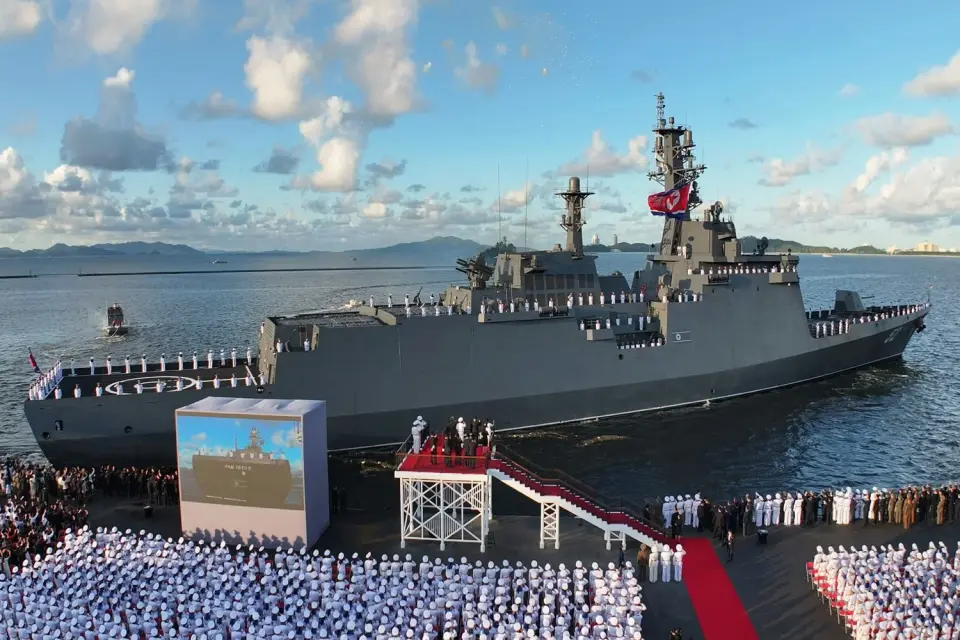
North Korea has commissioned its second Choe Hyon-class guided-missile destroyer, the Kang Kon, in a significant expansion of its naval capabilities. The 5,000-ton vessel, which previously capsized during its launch in May 2025, was officially added to the fleet in Wonsan on September 6, 2026, in the presence of leader Kim Jong Un. This development coincides with the start of the Freedom Edge trilateral military exercise involving the US, South Korea, and Japan. Kim Jong Un framed the commissioning as a critical step in establishing a reliable nuclear deterrent and transforming the navy into a blue-water force. The destroyer features advanced electronic warfare systems and a massive vertical launch system capable of carrying nuclear-capable missiles. While the US and allies describe their drills as defensive, Pyongyang views them as provocative, using the new warship to signal its growing leverage in regional security negotiations.
Key points
- The Kang Kon (52) was commissioned on September 6, 2026, in Wonsan, approximately two months after the lead ship, Choe Hyon (51).
- The destroyer displaced approximately 5,000 tons and measures 145 meters in length, making it the largest warship in North Korea's history.
- The vessel features 88 vertical launch cells for various missiles, including anti-ship, anti-aircraft, and land-attack cruise missiles, some of which are reportedly nuclear-capable.
- The Kang Kon had capsized during its launch at the Chongjin Shipyard on May 21, 2025, but was repaired and commissioned less than a year later.
- Kim Jong Un stated that the commissioning instilled fear in enemies and emphasized the need for a 'powerful and reliable nuclear war deterrent.'
- The commissioning occurred one day before the US, South Korea, and Japan began the five-day Freedom Edge military exercise off Jeju Island.
Background
This development follows the commissioning of the lead Choe Hyon-class destroyer in June 2026 and North Korea's recent missile tests in response to shortened US-South Korea drills. The broader context involves Pyongyang's efforts to modernize its navy from a coastal defense force to a blue-water fleet, including plans for nuclear-powered submarines and larger cruisers. The timing coincides with the Freedom Edge exercise, which North Korea has criticized as a 'reckless show of strength,' while the US and South Korea describe the drills as defensive measures against North Korean nuclear threats.
How outlets are covering it
Naval News emphasizes the technical specifications of the Kang Kon, highlighting its 88 vertical launch cells, advanced radar systems, and the fact that it capsized during its initial launch in May 2025 before being repaired. Politico focuses on the geopolitical timing, noting that the commissioning occurred as the US, South Korea, and Japan began the Freedom Edge exercise, and frames it as part of North Korea's effort to gain leverage after the US scaled back the Ulchi Freedom Shield drill. CNN highlights the dramatic recovery from the capsized launch, quoting Kim Jong Un's description of the incident as a 'criminal act' and his subsequent praise for the ship's completion as a result of 'self-respect, will and strong spirit.' Al Jazeera emphasizes the nuclear dimension, quoting Kim Jong Un's statement that the warship is 'capable of annihilating retaliatory strikes' and framing the naval buildup as part of Pyongyang's broader nuclear deterrence strategy against Washington and Seoul.
Why it matters
The commissioning of the second Choe Hyon-class destroyer marks a significant milestone in North Korea's naval modernization, demonstrating its ability to produce large, advanced warships despite previous setbacks. The vessel's nuclear-capable missile systems and advanced electronic warfare capabilities enhance Pyongyang's ability to project power and deter potential adversaries. The timing, coinciding with trilateral military exercises, underscores the ongoing tensions in the region and North Korea's efforts to leverage its growing military capabilities in negotiations. The development also signals a shift in North Korea's naval strategy from coastal defense to blue-water operations, potentially altering the balance of power in the region.
What to watch
North Korea is expected to continue its naval expansion, with two additional Choe Hyon-class destroyers under construction and plans for larger guided-missile cruisers. Kim Jong Un has indicated that further details of his naval buildup plan will be revealed within eight months. The US, South Korea, and Japan are likely to continue their Freedom Edge exercise, which North Korea has criticized as provocative. Analysts expect North Korea to use its growing naval and nuclear capabilities to seek concessions from the US, potentially including changes to military drills and recognition of its status as a nuclear state. The situation may lead to further missile tests or diplomatic maneuvers as Pyongyang seeks to assert its leverage in regional security negotiations.
- North Korea Commissions Second Choe Hyon-Class Guided-Missile Destroyer navalnews.com
- North Korea commissions 2nd naval destroyer as US, South Korea and Japan begin a military drill Politico
- Nuclear-capable warship that capsized when launched finally joins North Korea’s fleet CNN
- Kim Commissions Second Destroyer to Bolster Nuclear Naval Force Bloomberg.com
- North Korea deploys warship ‘capable of annihilating retaliatory strikes’ Al Jazeera
Want the full story? Read the original reporting
Read on navalnews.com