
Russian records reveal potential Iran order for 90 helicopter missile launchers
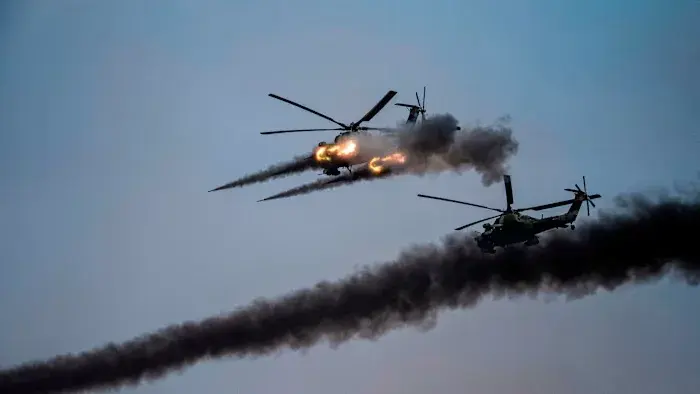
Internal Russian defense documents suggest Moscow agreed to sell Iran 90 APU-L missile launchers for Mi-28 helicopters, potentially enhancing Tehran's precision strike capabilities, though delivery remains unconfirmed.
Key points
- Financial Times investigation cites Russian production records showing an order for 90 APU-L launchers under the code name K-10, which Rosoboronexport uses for Iran.
- The launchers are designed for LMUR precision-guided missiles, a weapon widely used by Russia in Ukraine, which can engage moving targets at ranges up to 14 kilometers.
- Documents from manufacturer Vympel request accelerated component deliveries for 2024-2025, indicating active production planning despite the war in Ukraine.
- It remains unclear if the launchers were delivered or if compatible missiles were transferred, as the records only outline production schedules.
- Iran has already acquired Mi-28 attack helicopters, and integrating these launchers could expand their stand-off strike options, though modern air defenses may limit operational effectiveness.
Background
Iran previously confirmed the acquisition of Russian Mi-28 attack helicopters, with geolocated photos in January 2026 confirming their presence in Tehran. This potential launcher deal follows earlier reports of Russian military-technical cooperation with Iran, despite Moscow's heavy defense commitments in Ukraine.
How outlets are covering it
Financial Times, Army Recognition, and Caspian Post all report the existence of production records for 90 launchers but emphasize the uncertainty of actual delivery. Army Recognition highlights the tactical limitations of helicopters in contested airspace, while Caspian Post focuses on the approval of the deal. All sources agree that the documents do not confirm missile transfers or full integration into Iranian fleets.
Why it matters
The potential transfer of precision-guided missile launchers could significantly enhance Iran's rotary-wing strike capabilities, affecting regional security dynamics. It also demonstrates Russia's continued willingness to pursue arms sales to Iran despite its own military demands in Ukraine.
What to watch
Analysts will monitor for evidence of actual delivery or integration of the launchers into Iranian Mi-28 fleets. Further intelligence may reveal if compatible LMUR missiles were also transferred, which is essential for operational use.
- Russia deepened Iran support with missile launcher deal Financial Times
- Russia agreed to supply Iran with 90 advanced missile launchers - FT Iran International
- Russia's Reported Missile Launcher Deal Highlights Potential Shift in Iran's Mi-28 Helicopter Capabilities Army Recognition
- Russia has agreed to supply Iran with 90 missile launchers — FT Українські Національні Новини (УНН)
- Russia Approves Supply of 90 Missile Launchers to Iran Caspian Post
Want the full story? Read the original reporting
Read on Financial Times