
Gyirong Rescue Stalled by Geology, Politics, and Secondary Glacier Risks
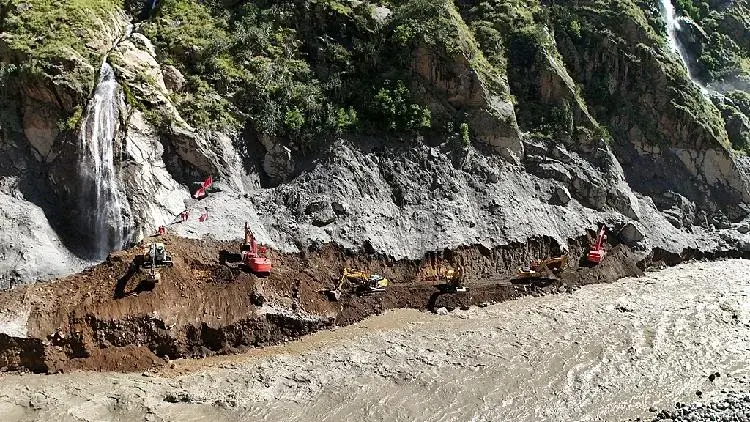
Rescue efforts at Gyirong Port are severely hampered by a massive ice-rock debris flow, difficult terrain, and ongoing glacial instability. While Chinese authorities prioritize infrastructure repair and safety, international observers highlight the strategic vulnerability of the border crossing.
Key points
- A glacier collapse in Nepal triggered a 22km debris flow into Gyirong Port on August 26, 2026, involving over 30 million cubic meters of material.
- As of August 31, 16 deaths and 546 missing persons were reported on the Chinese side, with additional casualties and missing persons on the Nepalese side.
- National Highway 216 remains partially blocked, with repair teams working to rebuild sections of the road through altered river channels.
- The Ministry of Water Resources warns that glaciers near the impact crater remain at risk of further collapse, potentially creating new barrier lakes.
- Premier Li Qiang visited the site to oversee relief, while the PLA Western Theatre Command coordinated military and police rescue units.
Background
Gyirong Port is a critical trade link between China and Nepal, handling 30% of bilateral trade. The area has faced previous glacial outburst floods, including a major event in January 2026 that killed 11 people. The current disaster has intensified scrutiny on the region's vulnerability to climate-driven geological hazards.
How outlets are covering it
Chinese state media, including CGTN and Xinhua, emphasize the technical complexity of the rescue, focusing on the cascading nature of the debris flow and the heroic efforts of engineers and soldiers to reopen National Highway 216. They highlight the use of advanced monitoring systems and the coordination between the Ministry of Water Resources and the PLA. In contrast, Le Monde frames the disaster as a strategic setback for Beijing’s Belt and Road Initiative, noting that the port is a key node for Chinese goods entering Nepal. Rediff focuses on the diplomatic and humanitarian aspects, detailing the missing foreign nationals and the Indian Embassy’s advisory. Global Times provides technical data on the shrinking barrier lake but reiterates the persistent risk of further glacial collapse. The outlets differ in emphasis: Chinese sources prioritize operational logistics and safety, while international outlets focus on geopolitical implications and casualty counts.
Why it matters
The disaster exposes the fragility of critical infrastructure in the Himalayas, where climate change is accelerating glacial melt. The prolonged rescue operation and risk of secondary disasters could disrupt trade routes and strain diplomatic relations between China and Nepal. It also highlights the challenges of managing large-scale geological hazards in remote, high-altitude regions.
What to watch
Authorities expect to fully reopen National Highway 216 within days, which will allow heavy equipment and supplies to reach the core disaster zone. Continued monitoring of glaciers and barrier lakes will be critical to prevent further disasters. International coordination on flood risk management is expected to intensify following the incident.
- Experts: What makes the Gyirong Port rescue so difficult? news.cgtn.com
- Glacier collapse risk remains around Nepal’s Cuojian River impact crater: China’s Ministry of Water Resources Global Times
- Tibet landslide undermines Xi Jinping's gamble on the Himalayas Le Monde.fr
- New CAS study reveals causes, amplification of deadly mudslide news.cgtn.com
- Chinese Premier Li Qiang visits flood-hit Gyirong township in Tibet Rediff
Want the full story? Read the original reporting
Read on news.cgtn.com