
Europe's Summer Fires Expose Massive Insurance and Economic Gaps
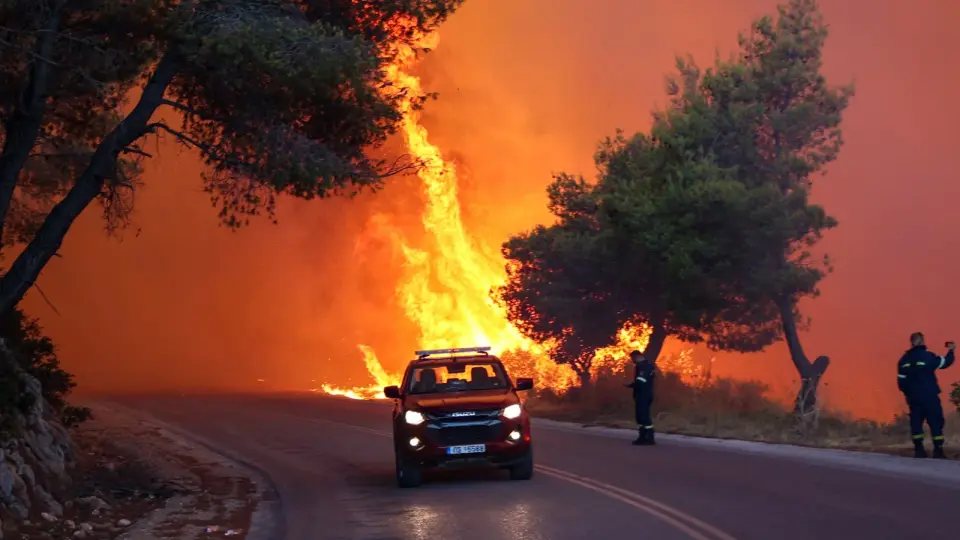
Europe faces a widening 'protection gap' as wildfire and heatwave costs outpace insurance coverage. While insurers warn that much of the continent's wealth remains uninsured, policymakers face a dilemma: climate action is being deprioritized for industrial competitiveness, even as extreme weather causes billions in economic damage.
Key points
- A massive wildfire in France and Spain has destroyed over 300,000 acres of land, with Greece also facing severe outbreaks worsened by 100 km/h winds.
- Insurers like Zurich and Swiss Re warn that Europe has a significant 'protection gap,' with much of its wealth uninsured against natural catastrophes.
- The total cost of wildfires and heatwaves in five Eurozone countries reached approximately 3.1 billion euros by July, exceeding the average annual EU impact estimate of 2.5 billion euros.
- Allianz estimates cumulative GDP losses could reach 7% between 2026 and 2030, with France alone facing potential losses of $240 billion due to productivity drops and energy costs.
- The Rhine River reached its lowest level since 1880, forcing barges to reduce loads by up to 80% and disrupting supply chains for major industries like steel and cement.
Background
Previous coverage noted that European summers are warming roughly twice the global average, yet air conditioning penetration remains low at about 20%, compared to 90% in the U.S. This infrastructure gap exacerbates the impact of heatwaves. Additionally, earlier reports highlighted that wildfire disruptions in France and Spain were already affecting travel and insurance claims, setting the stage for the broader economic crisis seen this summer.
How outlets are covering it
CNBC emphasizes the financial 'protection gap,' noting that insurers are struggling to cover the rising costs of disaster recovery, with Zurich CEO Mario Greco arguing that governments are not yet ready for the systemic intervention required. Politico, however, focuses on the political conflict between climate policy and industrial competitiveness, arguing that the EU's pivot toward economic growth is clashing with the reality of climate damage. The Current offers a distinct perspective, linking the broader issue of climate inaction to the ad tech industry's lack of 'restraint' and sustainability, suggesting that digital abundance contributes to the environmental crisis. Newswise provides a scientific context, explaining that the fires are driven by a combination of climate change, fuel buildup from decades of fire suppression, and increased development in fire-prone areas.
Why it matters
The economic damage from climate events is no longer a theoretical future risk but a present reality that is straining European economies and insurance markets. The 'protection gap' means that governments and individuals are bearing the brunt of disaster costs, potentially leading to higher taxes and reduced public services. Furthermore, the disruption to supply chains and energy production, such as the shutdown of nuclear plants in Hungary and France due to low river levels, threatens the stability of the European energy grid and industrial output.
What to watch
Insurers are pushing for systemic changes, including better risk assessment and mitigation strategies, to close the protection gap. Governments are likely to face pressure to increase investment in firefighting infrastructure and climate adaptation, though political will may be hampered by the desire to maintain industrial competitiveness. The full economic impact of the summer's extremes will take months to assess, but experts warn that without significant reductions in emissions, these damages will only worsen in the coming years.
- Wildfire costs are surging — but much of the damage in Europe isn’t insured CNBC
- Europe's getting hotter, markets are taking note Reuters
- The economic toll of Europe’s infernal summer politico.eu
- Wildfires and the restraint ad tech never learned thecurrent.com
- Are the European Wildfires a Sign of a Climate Tipping Point? | Newswise Newswise
Want the full story? Read the original reporting
Read on CNBC