
Global Student Scores Hit Record Low as Curriculum Shifts and Digital Distraction Take Toll
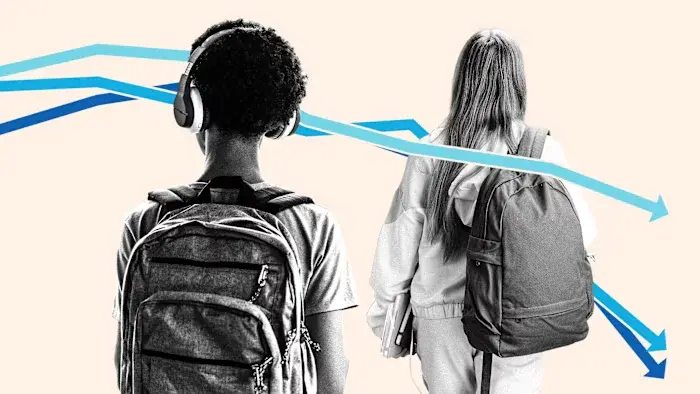
The OECD’s 2025 PISA results reveal a steepening decline in student performance, with 15-year-olds in high-income countries now roughly 1.5 years behind their 2015 peers in literacy and reasoning. While digital distraction and AI usage are cited as factors, experts argue that recent curriculum shifts away from core subject mastery toward 'transferable skills' have exacerbated the drop. Countries maintaining rigorous standards and accountability, such as England and Mississippi, have seen stable or improved scores, contrasting with declines in regions that adopted flexible, outcome-based models.
Key points
- PISA 2025, the largest assessment to date involving 760,000 students across 91 countries, shows average reading scores fell by 28 points and mathematics by 22 points between 2015 and 2025.
- One in five 15-year-olds in OECD countries is now a low performer in science, mathematics, and reading, up from 16% in 2022.
- Finland, once the top performer, has seen its scores slide to near-average levels since the 2000s, coinciding with a shift toward flexible curricula and away from standardized testing.
- In the UK, England’s strict curriculum and league tables have kept it in the top ten globally, while Scotland, Wales, and Northern Ireland, which adopted broader learning outcomes, have seen plummeting results.
- In the US, Mississippi has overtaken wealthier states like California by adopting evidence-based methods like early phonics instruction and strict accountability measures.
- Digital distraction is significant: over 25% of students report classmates being distracted by devices in science lessons, and excessive AI use for drafting text correlates with lower performance.
Background
The 2022 PISA results showed a marked drop, initially attributed to pandemic disruptions. The 2025 data confirms this was not a temporary dip but a sustained decline. Previous analyses highlighted Finland’s model as a global benchmark, but recent data suggests its success was tied to earlier, more conventional comprehensive approaches rather than its later shift to autonomy and transferable skills.
How outlets are covering it
The Financial Times (FT) argues that curriculum changes prioritizing 'transferable skills' over core subject mastery are a primary driver of the decline, citing Finland’s fall and the UK’s divergent regional outcomes. The OECD report emphasizes digital distraction and AI misuse as key factors, noting that students who use AI for drafting text perform worse, though guided AI use can help. AP News highlights the record-low scores and the widening gap between advantaged and disadvantaged students, noting that the gap narrowed only because advantaged students performed worse, not because disadvantaged students improved. All sources agree on the severity of the decline but differ on the primary cause: FT points to pedagogical shifts, while OECD and AP focus more on technological and socio-economic factors.
Why it matters
The decline in foundational skills like reading and mathematics has long-term implications for workforce readiness and economic competitiveness. As AI and digital tools become ubiquitous, the ability to critically assess information and solve complex problems depends on strong core knowledge. The data suggests that without rigorous standards and targeted support, the gap between high- and low-performing students may widen, exacerbating educational inequality.
What to watch
Further PISA analysis is scheduled for 2027, including results from the Foreign Language Assessment and the Learning in the Digital World assessment. Education systems are likely to face pressure to revert to or reinforce core subject teaching and accountability measures, while also integrating AI in a guided, purposeful manner. Policymakers may need to balance flexibility with rigor to address the declining performance and digital distraction issues.
- We are setting up a generation to fail at school Financial Times
- Are teenagers growing dimmer? The Economist
- Families' interest in their kids' education is falling around the globe as scores drop, test shows AP News
- U.S. Reading Scores Plummet on Global Exam nytimes.com
- PISA 2025: Students’ reading and mathematics performance declined sharply across the OECD OECD
Want the full story? Read the original reporting
Read on Financial Times