The OECD warns that a prolonged disruption of energy supplies from the Middle East, especially via the Strait of Hormuz, into next year could severely curb global growth, threaten jobs, and push up prices.
OECD projections frame the global economy around two scenarios tied to the Iran war: a modest slowdown if hostilities ease, with about 2.8% global growth this year and inflation easing, and a sharper hit if the conflict drags on, depressing growth to roughly 2.1% in 2026 and 1.8% in 2027 and lifting inflation, especially in energy-dependent regions. AI investment could cushion near-term growth but also increases fragility by tying activity to chokepoints in energy, semiconductors, and trade routes. The U.S. looks strongest among major economies, central banks stay cautious, and if the war persists, higher interest rates and greater reliance on fiscal policy would follow.
An OECD report warns that a prolonged disruption to energy flows from the Gulf into 2027 could push global growth to about 2.1% this year and 1.8% next, creating a “dark scenario” with higher inflation and rates and potential output scar. If the crisis ends sooner, growth could stay around 2.8% this year and 3.1% in 2027, with central banks able to keep policy rates relatively steady, though the risks remain significant.
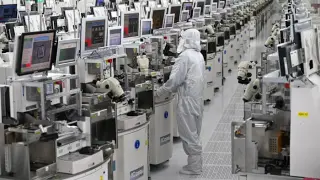
An OECD analysis finds subsidized Chinese firms have driven roughly 60% of their global market-share gains since 2005, with 2024 support for Chinese companies running eight times higher on average than OECD peers. Subsidies across 15 sectors propelled rapid gains in autos, shipbuilding, solar and especially semiconductors (Chinese firms’ subsidies reached about 10% of revenue in 2021–22). The MAGIC database tracks 525 large firms and shows global subsidies at $108bn in 2024, with 52% in China. Much of Chinese support comes as below-market loans, enabling cheap funding even for weaker firms, but the OECD warns subsidies boost market share without improving productivity or profitability, risking distortion and prompting calls for greater transparency and policy tools like tariffs or quotas.
A Voronoi visualization ranks savings rates across major economies using OECD data, showing Sweden at 16.0% as the OECD’s top saver and more than three times the U.S. rate of 4.9%. Mexico sits around 8.1%, roughly double the U.S., while New Zealand and South Africa have negative savings. The U.S., Canada, and the U.K. cluster near 5%, underscoring a wide global gap in how much households save and what that means for financial resilience.
OECD projections indicate the United States could have the highest inflation among G7 economies in 2026 (about 4.2%), driven by the Iran conflict, lingering tariffs, and energy/grocery price pressures, with GDP growth around 2% as inflation remains above the Federal Reserve's 2% target.
The OECD’s outlook says the Middle East conflict will disrupt energy markets and push U.S. inflation higher than previously forecast, with headline inflation around 4.2% this year and easing toward 1.6% by 2027. U.S. growth is expected near 2% this year but to slow thereafter, and persistent energy-price pressures could keep central banks cautious, as energy disruptions remain a key risk to global inflation and growth.
The OECD warns that ongoing Middle East conflict and a sustained energy shock could lift US inflation to about 4.2% this year, with broad global inflation and downside growth risks as energy and fertiliser supply disruptions bite. Global growth is expected to slow, US growth to around 2%, and policy paths for the Fed and ECB remain uncertain, prompting calls for targeted household support to shield vulnerable consumers from higher energy bills.
The OECD has finalized a global tax deal that exempts U.S.-based multinational corporations from paying a 15% minimum tax overseas, amid negotiations that aimed to curb profit shifting to low-tax havens, with mixed reactions from different political and advocacy groups.
The OECD has finalized a global tax deal that exempts U.S.-based multinational corporations from paying a 15% minimum tax on overseas profits, a move that has been praised by U.S. officials as protecting American sovereignty but criticized by tax transparency groups for undermining global progress on corporate taxation.
Nearly 150 countries agreed on a global tax plan to curb profit shifting by large multinationals, but the US is exempt, sparking criticism from tax transparency groups. The deal, finalized by the OECD, excludes US-based multinationals from the 15% minimum tax, which aims to prevent profit shifting to low-tax havens like Bermuda and the Cayman Islands. The US's exemption is seen as a move to preserve sovereignty and protect American companies, but critics argue it undermines efforts to combat tax avoidance and a race to the bottom in corporate taxation.
U.S.-based multinational companies are exempt from a new global tax deal finalized by the OECD, which aims to prevent profit shifting to low-tax countries, but excludes large U.S. firms from the 15% minimum tax, sparking criticism from tax transparency groups and praise from congressional Republicans.
The U.S. Treasury announced an agreement with over 145 countries to exempt U.S.-based companies from the OECD Pillar Two global tax plan, affirming U.S. tax sovereignty and protecting domestic incentives and innovation, marking a significant victory for U.S. economic interests.
The OECD's agreement to exempt the US from its Pillar 2 tax reform is criticized for undermining global tax sovereignty and costing countries billions in lost revenue, with the Tax Justice Network highlighting the shift of profits and tax abuses by US multinationals. Meanwhile, UN-led negotiations are advancing a more equitable 'pay-where-you-play' approach, challenging the US and OECD's influence on global tax rules.
The OECD/G20 Inclusive Framework has reached a historic agreement among 147 countries on a comprehensive package to implement a global minimum tax, aiming to enhance tax certainty, reduce compliance burdens, and protect tax bases, especially in developing countries, with plans for implementation support and future simplifications.