
Brazil’s October 4 Vote Ends in Dead Heat, Setting Stage for October 25 Runoff
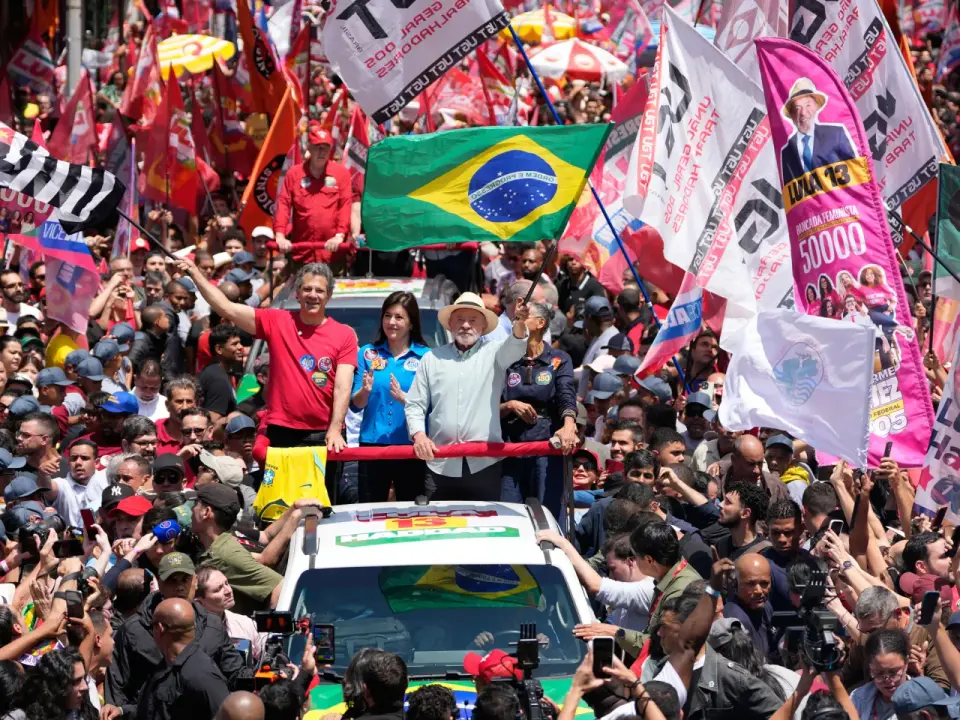
Brazil’s first-round presidential election on October 4, 2026, resulted in a deadlock between incumbent Luiz Inacio Lula da Silva and challenger Flavio Bolsonaro, forcing a runoff on October 25. Neither candidate secured the required majority, with polls showing a narrowing lead for Lula. The outcome has global implications, as a Bolsonaro victory would align Brazil with US-led right-wing blocs, while a Lula win preserves regional autonomy. Markets reacted to the uncertainty, with prediction markets favoring Bolsonaro despite Lula’s slight polling edge.
Key points
- Neither Lula nor Flavio Bolsonaro won outright in the October 4 first round, triggering a runoff on October 25.
- Lula, 80, closed his campaign in Sao Paulo, framing the vote as a choice between 'democracy and barbarism' and warning against US meddling.
- Flavio Bolsonaro, 45, campaigned in Rio de Janeiro, pledging to seek his father’s release from prison and echoing claims about electronic voting reliability.
- Polls showed Lula ahead but with a narrowing lead; prediction markets favored Bolsonaro 60% to 39%, though local sentiment may differ.
- The election outcome will influence Brazil’s stance on the US-led 'Shield of the Americas' coalition and its relationship with China and the US.
Background
This election follows a period of intense polarization in Brazil, with Lula’s 2022 victory over Jair Bolsonaro by less than two percentage points. The current race is marked by scandals, including the 'Dark Horse' film funding controversy involving Flavio Bolsonaro and the Banco Master financial scandal. Lula’s recent ban on online betting and his focus on sovereignty contrast with Flavio’s alignment with right-wing global figures. The archive notes that voter fatigue and corruption allegations have contributed to an 'apathetic polarization' among the electorate.
How outlets are covering it
Al Jazeera emphasizes the domestic framing of the election as a choice between 'democracy and barbarism' and highlights the narrowing lead for Lula. The Guardian focuses on the geopolitical implications, noting that a Bolsonaro win would align Brazil with the US-led 'Shield of the Americas' and boost the far-right agenda globally. CNBC highlights the market reaction, with prediction markets favoring Bolsonaro due to his promises of fiscal discipline, despite Lula’s slight polling edge. The outlets differ in emphasis: Al Jazeera and The Guardian focus on political and geopolitical stakes, while CNBC focuses on economic and market implications.
Why it matters
The outcome of the October 25 runoff will determine Brazil’s foreign policy alignment, its relationship with the US and China, and its domestic economic trajectory. A Bolsonaro victory could lead to a more right-wing, US-aligned region, while a Lula win preserves Brazil’s autonomy and multilateral stance. The election also has implications for global markets, with a Bolsonaro win potentially leading to a rally in Brazilian bonds, currency, and stocks due to his promises of fiscal discipline.
What to watch
The runoff between Lula and Flavio Bolsonaro is scheduled for October 25, 2026. The outcome will depend on voter turnout, campaign strategies, and the impact of international attention, particularly from the US. Markets will closely monitor the result, with potential shifts in Brazilian bonds, currency, and stocks depending on the winner. The composition of the legislature, also decided in the October 4 vote, will influence the ability to implement reforms.
- Brazil’s Lula and Bolsonaro close campaigns ahead of critical election Al Jazeera
- Lula ahead in polls for Brazil's first-round vote; runoff likely Reuters
- Deeply divided Brazil heads to polls in polarized Lula-Bolsonaro race The Times of Israel
- Brazil’s neck-and-neck election offers test for growing pro-Trump Latin American bloc The Guardian
- Lula or Bolsonaro: Wall Street braces for two wildly different results in Brazil election CNBC
Want the full story? Read the original reporting
Read on Al Jazeera