
Romania's Danube Barge Experiment Buys Time for Nuclear Plant Amid Drought
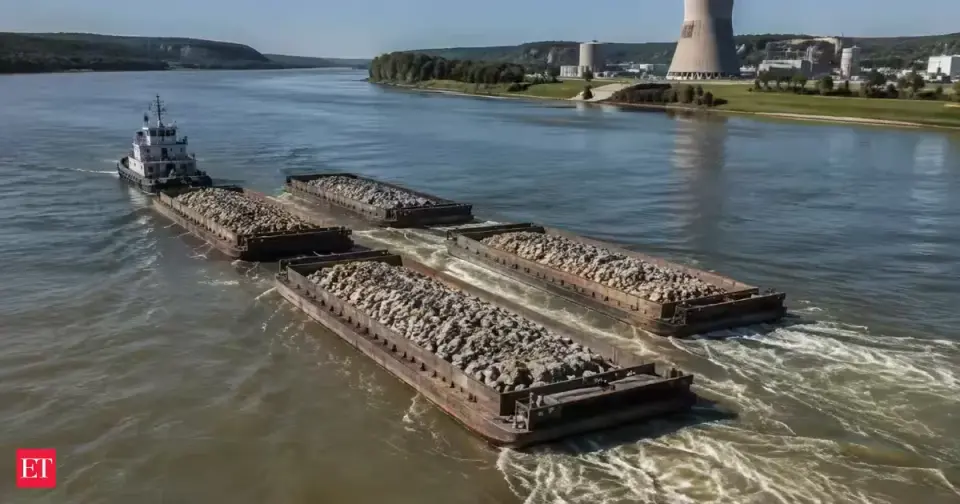
Romania deployed four rock-filled barges in the Danube to redirect water toward the Cernavodă nuclear plant, causing an unexpected 1.6-inch rise in river levels despite forecasts predicting a decline. This temporary measure aims to secure cooling water for the remaining operational reactor, which supplies 18-20% of the country's electricity, as severe drought conditions threaten energy stability across Europe.
Key points
- Romania sank four rock-filled barges into the Danube to redirect scarce water toward the Cernavodă nuclear facility, resulting in a 1.6-inch rise in river levels over 24 hours, contrary to forecasts predicting a decline.
- The intervention is expected to preserve operating conditions for at least nine days, but it is a temporary fix that cannot increase total water inflow, only redirect existing flows.
- Cernavodă's two CANDU 6 reactors generate 18-20% of Romania's electricity; Unit 1 was shut down on July 28 due to low water, while Unit 2 remains operational but faces potential shutdown if conditions worsen.
- Danube flow at Baziaș reached 49,440 cubic feet per second on August 10, far below the August average of 137,730 cubic feet per second, with low inflows anticipated through August 17.
- Authorities also dredged the riverbed, used controlled blasting, and approved seven million lei for emergency flow management, as power-plant cooling accounts for 36% of economic-sector water abstraction in the EU.
Background
This development follows earlier reports of Romania idling its second nuclear reactor in August 2026 due to drought-reduced Danube water, taking approximately 700 MW offline. Similar measures were taken by Hungary, which sank barges to raise water levels for the Paks nuclear plant amid record-low Danube flows. The current situation reflects broader European drought conditions reported by Copernicus and the European Drought Observatory in mid-2026.
Why it matters
The incident highlights the growing vulnerability of nuclear energy infrastructure to climate-driven water shortages. As power plants rely heavily on river cooling, extreme droughts can force shutdowns, threatening energy security. Romania's temporary barge solution buys time but does not address the underlying water scarcity, underscoring the need for long-term adaptation strategies in energy infrastructure.
What to watch
Authorities will closely monitor Danube water levels to determine if Unit 2 can continue operating or if a shutdown becomes necessary. The success of the barge intervention will depend on whether river flows recover or continue to decline, potentially requiring further emergency measures or alternative power sources to maintain grid stability.
Want the full story? Read the original reporting
Read on The Economic Times