
Danube Hits Record Lows, Forcing Romania to Scuttle Barges to Save Nuclear Plant
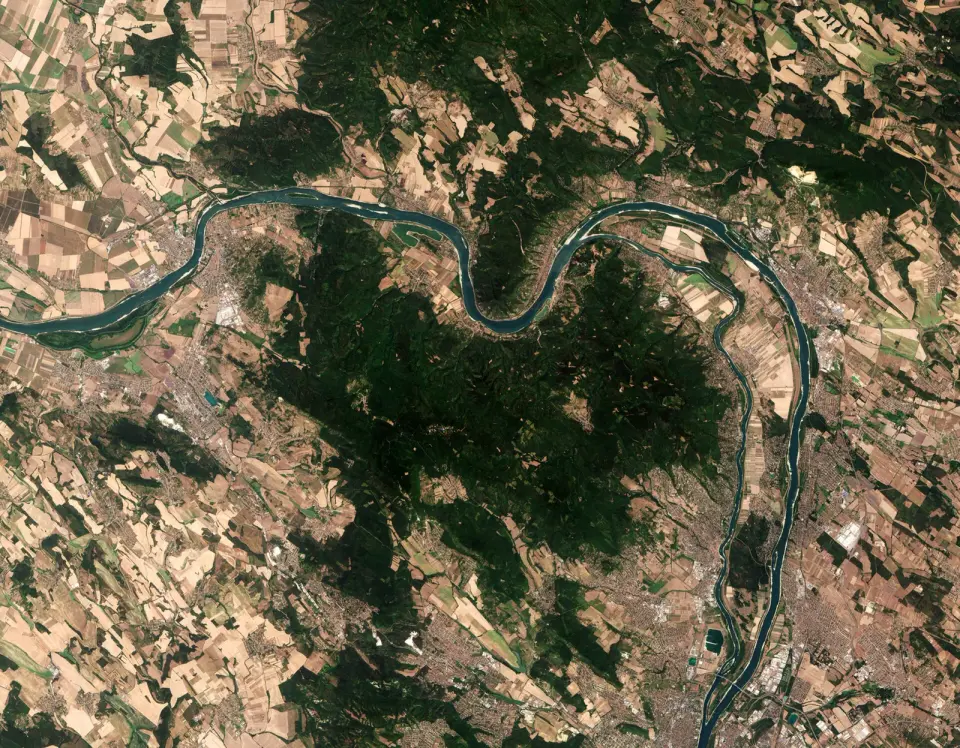
The Danube River has reached record-low water levels in Hungary and Romania due to a severe central European drought. Satellite imagery confirms a dramatic drop in water volume compared to last year, exposing sandbanks and drying surrounding landscapes. The crisis has triggered energy and water shortages in Budapest, disrupted river transport, and harmed aquatic life. In a critical response, Romania has sunk barges in the river to redirect water flow, ensuring adequate cooling for its Cernavoda nuclear power plant.
Key points
- ESA Copernicus Sentinel-2 images show the Danube near Budapest at record lows on August 4, 2026, with visible sandbanks and drier surroundings compared to August 2025.
- The drought has caused energy and water shortages in Budapest and disrupted operations for river barges and ferries.
- Low water levels have increased pollution concentration and water temperatures while reducing oxygen, threatening fish survival.
- Romania has sunk barges in the Danube to maintain water flow necessary for cooling its nuclear power plant, according to AP News.
- Record low levels have also been reported in Romania, extending the impact of the drought across the river's 2,860 km length.
Background
This development continues a trend of record-low water levels in European rivers, particularly the Danube and Rhine, observed since 2018. Previous coverage in August 2026 highlighted how heatwaves and scarce rainfall forced shipping capacity reductions of up to 80% and reduced Hungary's Paks nuclear plant to roughly 10% capacity. Earlier reports also noted Romania's efforts to divert Danube water to the Cernavoda reactor and disruptions to river cruises due to hydrological extremes.
How outlets are covering it
The European Space Agency emphasizes the visual and ecological evidence of the drought, highlighting record-low levels in Hungary and the impact on wildlife and local infrastructure. AP News focuses on the immediate, drastic human intervention required to maintain energy security, specifically detailing Romania's decision to sink barges to ensure the nuclear plant's cooling systems function. While ESA notes the perennial nature of such droughts since 2018, AP frames the current situation as an acute crisis requiring emergency measures to prevent energy failure.
Why it matters
The Danube is the EU's longest river, and its failure to maintain adequate flow threatens energy security, transport networks, and ecosystems across central and southeastern Europe. The need to sink barges to cool nuclear plants illustrates the severe intersection of climate change, energy infrastructure, and economic stability. As droughts become more frequent, the reliability of water-dependent industries and power generation faces increasing risk, potentially leading to broader regional energy shortages and environmental degradation.
What to watch
Authorities will likely continue monitoring water levels and managing flow to protect critical infrastructure. Further disruptions to shipping and energy production are possible if the drought persists. Long-term strategies for water management and climate adaptation may be accelerated in response to these recurring hydrological extremes.
- Danube’s waters fall to record lows European Space Agency
- Romania rushes to sink 4 barges in the Danube to keep a nuclear power plant's second reactor running AP News
- Ships Can’t Move and Power Plants Shut Down as Drought Saps Europe’s Rivers WSJ
- Budapest dims historic landmarks to save energy during heatwave Reuters
- Hungary Warns of Dramatic Hit From Drought, Nuclear Outage Bloomberg.com
Want the full story? Read the original reporting
Read on European Space Agency