
Aldabra Atoll’s Giant Tortoise Population Surges to 180,000, Marking a Historic Conservation Milestone
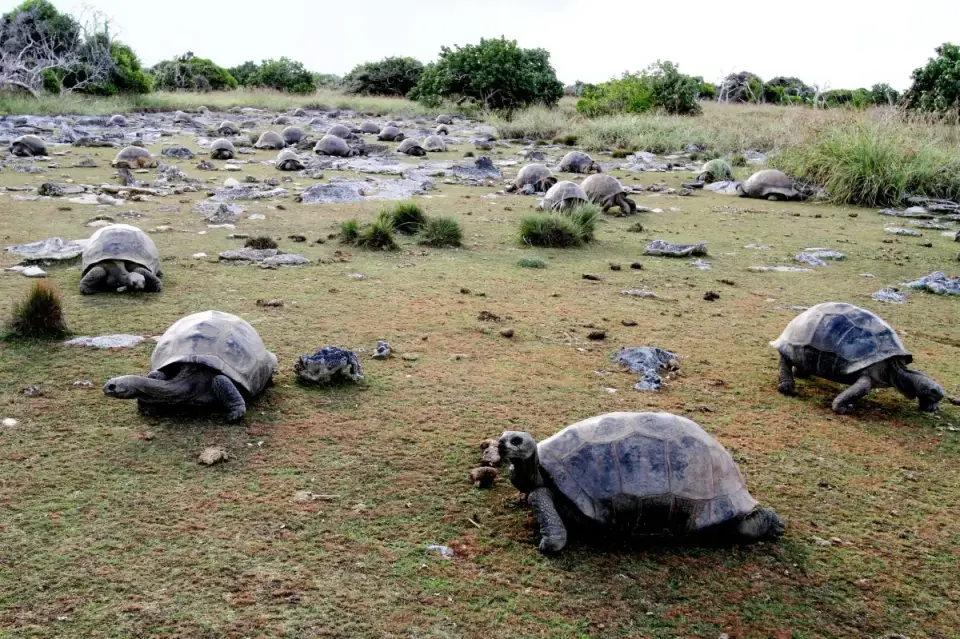
A landmark survey by the Seychelles Islands Foundation and the University of Exeter reveals that the Aldabra giant tortoise population has reached approximately 180,000 individuals, a significant increase from the 100,000 estimated in the late 1990s. This figure, based on data collected between 2018 and 2022, represents the highest count ever recorded for the species and highlights a major success in long-term conservation efforts. Despite this growth, researchers warn that climate change, invasive species, and rising sea levels pose ongoing threats to the population's stability.
Key points
- The survey, published in the journal Ecology and Evolution, estimates the population at nearly 183,000 adult and sub-adult tortoises.
- The population has grown from fewer than 1,000 in the 19th century to over 180,000 today, largely due to the island's designation as a strict nature reserve in 1981 and a UNESCO site in 1982.
- The study used modeling techniques to account for tortoises that were difficult to count due to dense vegetation, providing a more reliable baseline for future monitoring.
- Researchers emphasize that while the current numbers are a success, vigilance is required due to climate change, invasive mammals like feral cats and black rats, and rising sea levels.
- The eradication of invasive mammals is seen as a key step to allowing further population growth and enhancing resilience against future climate pressures.
Background
This development follows earlier reports on the genetic analysis of Jonathan, a 194-year-old Aldabra giant tortoise, which revealed stable mitochondrial gene regulation and unique gene variants that suppress aging. Additionally, conservation efforts in the Galápagos have seen the reintroduction of giant tortoises to Floreana Island, where the lineage had disappeared in the 19th century. These efforts highlight the broader global focus on preserving and restoring giant tortoise populations, which are critical ecosystem engineers in their respective habitats.
Why it matters
The surge in the Aldabra giant tortoise population underscores the effectiveness of long-term conservation strategies and protected area management. However, it also highlights the ongoing challenges posed by climate change and invasive species, which require continued vigilance and proactive management to ensure the species' long-term survival. This success story serves as a model for other conservation efforts worldwide, demonstrating the potential for significant population recovery when dedicated resources and scientific monitoring are applied.
What to watch
Conservation managers will use the new baseline to track future changes in the tortoise population and act early in response to emerging threats. Efforts to eradicate invasive mammals are expected to continue, aiming to remove the last barriers to further population growth. Additionally, ongoing research will focus on understanding the impacts of climate change on the tortoises' habitat and food availability, ensuring that conservation strategies remain adaptive and effective.
Want the full story? Read the original reporting
Read on New York Post