
COP31: Thunberg returns to condemn fossil fuel hypocrisy as Turkey celebrates new oilfields
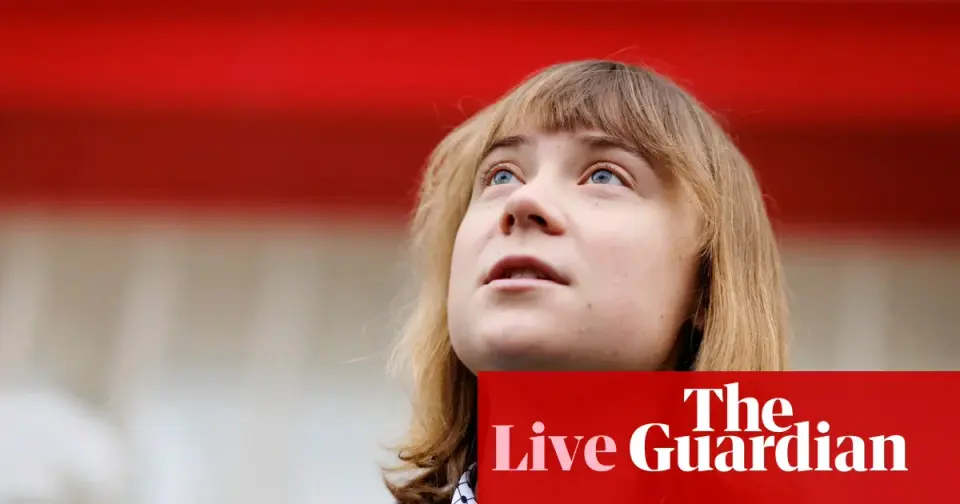
The second day of the COP31 climate summit in Antalya, Turkey, featured sharp contrasts between urgent climate warnings and host nation fossil fuel ambitions. Swedish activist Greta Thunberg, returning to a UN climate summit for the first time since 2021, warned that 'everything and everyone we love is at stake,' criticizing the event as a hypocritical platform for industries profiting from the current system. Simultaneously, Turkey celebrated the discovery of two new oilfields and plans to expand production, a move that clashes with global phase-out strategies. Scientists reported that fossil fuel emissions flatlined in 2026 due to the Iran war’s impact on energy prices, while former US Secretary of State John Kerry urged the world to follow China’s lead in accelerating clean energy adoption. The summit also saw protests over inadequate marine protections and demands for a 'just transition' mechanism to support vulnerable communities.
Key points
- Greta Thunberg arrived at COP31, condemning the talks as hypocritical and urging leaders to prioritize people over profits and geopolitical power.
- Turkey, the summit host, announced the discovery of two new oilfields and plans to expand fossil fuel production, drawing criticism for contradicting climate goals.
- Scientists reported that fossil fuel emissions flatlined in 2026, driven by the Iran war’s shock to oil and gas prices, though emissions remain too high to meet the 1.5C target.
- John Kerry stated that China is leading the global shift away from fossil fuels, with clean-tech exports surpassing $220bn in 2025, and urged other nations to follow suit.
- More than 700 groups demanded the operationalization of the Belém-Antalya Mechanism (BAM) to ensure a 'just transition' for workers and communities in the Global South.
- Greenpeace unveiled a limestone sculpture of Sir David Attenborough, dubbed the 'Attenboulder,' to protest industrial bottom trawling in the North Sea.
Background
COP31 is the 31st UN climate summit, held in Antalya, Turkey, from November 10 to 20, 2026. It follows COP30 in Brazil, where a 'just transition' mechanism was agreed upon. The summit occurs after a year of severe climate-related disasters and an energy shock caused by the Iran war. Greta Thunberg has not attended a UN climate summit since COP26 in Glasgow in 2021, where she famously criticized leaders' promises. Recent archive coverage notes Thunberg’s involvement in French student protests in October 2026, highlighting her continued activism beyond climate issues.
How outlets are covering it
The Guardian and AP News both highlight Thunberg’s return and her critique of the summit’s hypocrisy, but AP provides more detail on her specific comments regarding lobbyists and the 'violent status quo.' The Guardian emphasizes the contradiction of Turkey hosting the summit while celebrating new oilfields, a point also noted by health advocates. AP focuses on the broader geopolitical context, including China’s leadership in clean energy and the US lagging behind, a perspective supported by John Kerry’s comments in the Guardian. Both sources agree on the flatlining of emissions due to the Iran war but differ in emphasis: The Guardian links this to the need for a fossil fuel transition roadmap, while AP notes it as a temporary shock. The Guardian also covers the 'Attenboulder' protest, which AP does not mention, while AP details reactions from youth activists and small island states, which The Guardian touches on briefly.
Why it matters
COP31 is critical for determining the pace of the global transition away from fossil fuels, especially as emissions flatline due to geopolitical shocks rather than structural change. The contradiction between host nation Turkey’s fossil fuel expansion and climate goals highlights the tension between economic interests and environmental imperatives. Thunberg’s return signals renewed pressure on leaders to prioritize people over profits, while China’s dominance in clean tech exports suggests a shift in global energy leadership. The demand for a 'just transition' mechanism underscores the need to address the social and economic impacts of decarbonization on vulnerable communities, particularly in the Global South.
What to watch
The summit will continue until November 20, with world leaders expected to intervene in the coming days. Negotiations will focus on operationalizing the Belém-Antalya Mechanism for a 'just transition' and advancing Turkey’s goal of increasing electricity’s share in global energy consumption to 35% by 2035. China’s approach to the summit will be closely watched, as its 2026 five-year plan pledged to 'lead global climate governance.' COP32 is scheduled for Addis Ababa, Ethiopia, in November 2027.
- Cop31 as it happened: ‘Everything and everyone we love is at stake,’ Greta Thunberg warns The Guardian
- Greta Thunberg arrives at UN climate talks saying ‘everything we love is at stake’ AP News
- Greta Thunberg Returns to UN Climate Summit After 5 Years Away Bloomberg.com
- ‘Everything we love at stake’: Greta Thunberg arrives at UN climate talks South China Morning Post
- Greta Thunberg returns to UN climate summit after years of pro-Palestinian activism Ynetnews
Want the full story? Read the original reporting
Read on The Guardian