
Eight Orangutans Reintroduced to Borneo as Wildfire Crisis Deepens
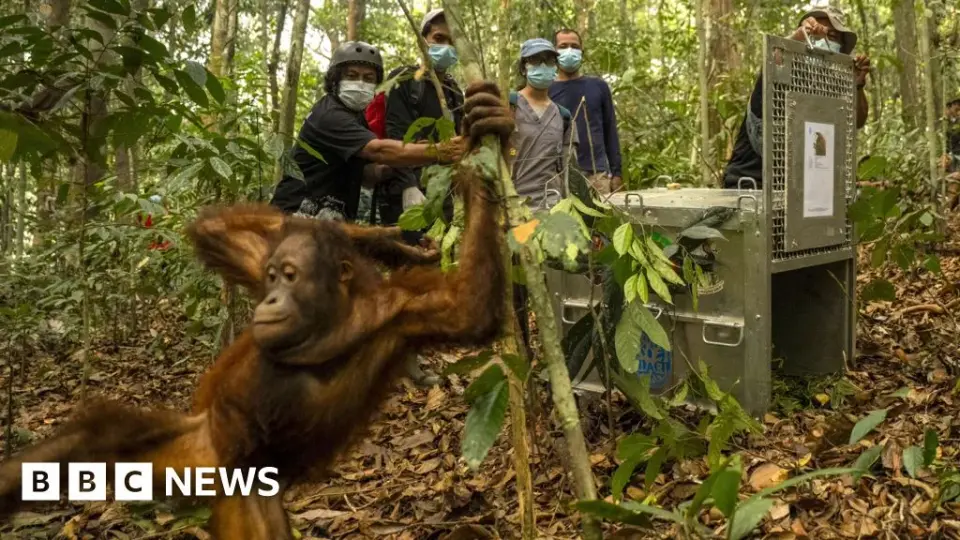
Eight orangutans were released into a Borneo reserve on Friday after being rescued from severe wildfires. Indonesian authorities have saved 46 primates since August, though the critically endangered species faces further habitat loss due to record-breaking El Niño conditions and land-clearing practices.
Key points
- International Animal Rescue Indonesia and the forestry ministry released three mothers, three daughters, and two adult males into a western Borneo reserve on Friday.
- The released apes, including Mama Nopi and her offspring, were previously stranded in plantations after fires destroyed their natural food sources and safe routes.
- Indonesian authorities rescued a total of 46 orangutans from fires in August and September, with 270 other wild animals in Kalimantan receiving aid or relocation.
- The IUCN warned that current wildfires are burning in habitats containing 52% of Borneo's orangutan population, a group that has declined from 230,000 to 104,000 over the century.
- The current El Niño event is the strongest on record, intensifying dry seasons and making weather patterns more volatile, which exacerbates fire spread and smoke drift.
Background
This release follows months of escalating fire activity in Indonesia. In September, the 'Godzilla' El Niño drove nearly 896,000 hectares of land to burn, causing a regional health crisis with 175,000 respiratory cases. Earlier reports in October highlighted 'zombie fires' in peatlands that resist extinguishing, forcing conservationists to prioritize rapid evacuation of primates like gibbons and orangutans from fragmented habitats.
How outlets are covering it
BBC emphasizes the successful reintroduction of specific families, such as Mama Nopi, highlighting the strategic choice of reserves with adequate food and water. ABC News focuses on the broader humanitarian and wildlife toll, detailing the rescue of injured individuals like Novita, who suffered burns, and Sampurna, who died after being found in a palm plantation. While BBC notes the role of land-clearing in facilitating fire spread, ABC highlights the international impact, noting that toxic haze has reached the Philippines and prompted emergency declarations in Malaysia. Both sources agree that El Niño is the primary driver of this year's intensified fire season, though ABC provides specific data on the 270 animals rescued in Kalimantan, whereas BBC focuses on the 46 orangutans saved nationwide.
Why it matters
The reintroduction of these eight orangutans represents a critical conservation effort against a backdrop of accelerating climate change. With the global population of these primates already reduced by half since 1900, the loss of habitat to fires and plantations threatens the species' survival. The current El Niño event not only destroys local ecosystems but also creates transnational health crises, demonstrating the interconnected nature of environmental degradation in Southeast Asia.
What to watch
Rescuers will monitor the released orangutans to ensure they adapt to the new reserve, which is connected to other forested areas. Conservationists expect the fire season to continue until November, with rain unlikely to fully quell the blazes. Authorities are likely to continue evacuating animals from affected zones in Kalimantan and Sumatra, while international aid, including assistance from Japan, will support firefighting efforts to mitigate further habitat loss.
- Orangutans released back into Borneo forest after devastating fires BBC
- The Race to Rescue Orangutans From Indonesia's Raging Fires National Geographic
- Indonesia moves 8 endangered orangutans to safety after Borneo fires Reuters
- Wildfires threaten Indonesia's orangutans as rescuers find injured animals ABC News - Breaking News, Latest News and Videos
- Wildfires came 'worryingly' close to animal sanctuary BBC
Want the full story? Read the original reporting
Read on BBC