
Elmbridge Council Fells Trees at Oxshott Heath to Restore Biodiversity
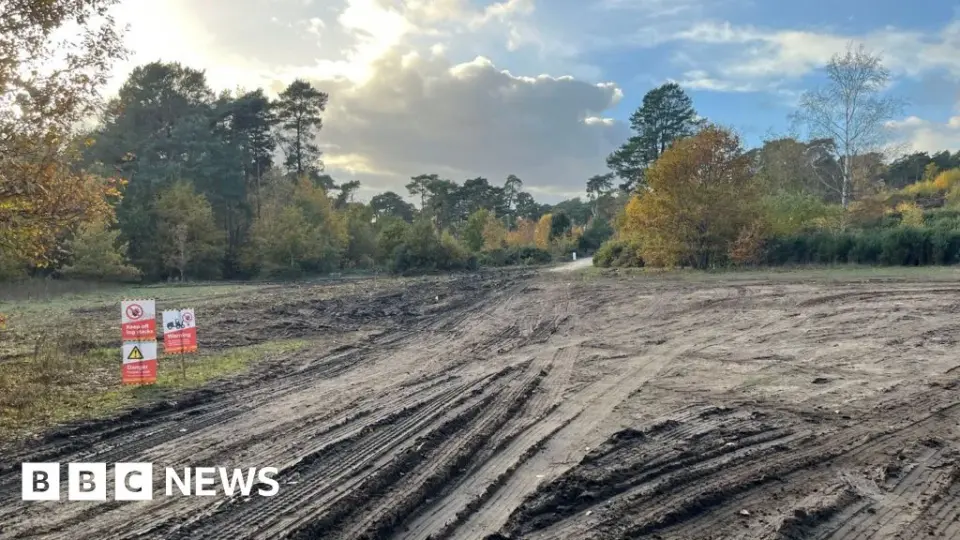
Elmbridge Borough Council is conducting tree felling operations at Oxshott Heath in Surrey as part of a 20-year management plan. The goal is to reduce tree cover by approximately one-third to allow more light to reach the ground, thereby encouraging plant growth and supporting wildlife. While some visitors expressed concern about the visual impact and blocked paths, council officials stated that the changes are temporary and necessary for long-term ecological health.
Key points
- Elmbridge Borough Council is collaborating with the Forestry Commission on a 20-year management plan for Oxshott Heath.
- The current phase involves felling trees to reduce canopy cover by about 30%, aiming to increase ground-level light and plant growth.
- Deputy council leader Simon Waugh explained that without intervention, the area would become a dense forest, killing off ground-level flora.
- Some felled trees are being retained as standing deadwood to provide habitat for insects, bats, and birds, and to prevent soil erosion.
- The final stage of the project will include repairing paths and using materials from a temporary loading bay to fix potholes in the car park.
Background
Oxshott Heath is a popular common in Surrey, frequently visited by dog walkers and nature enthusiasts. Previous coverage has highlighted concerns regarding HGV traffic in nearby villages and the importance of protecting local biodiversity, such as sand lizards and heathland bird nests. This current intervention is part of broader efforts to maintain the ecological balance of the heathland.
Why it matters
The management of Oxshott Heath illustrates the complex balance between public perception of green spaces and the scientific requirements for habitat conservation. By reducing tree cover, the council aims to prevent the heath from becoming a dense forest, which would eliminate the specific plant species that support local wildlife. This case highlights how short-term visual disruption and public concern can be part of a long-term strategy to preserve biodiversity and prevent soil erosion, demonstrating the necessity of active woodland management in urban-adjacent natural areas.
What to watch
The council expects the felled areas to recover relatively quickly as new plants grow. The final phase of the works will focus on restoring paths and repairing infrastructure, including using materials from a temporary loading bay to fix potholes in the car park. Officials have indicated that the initial damage is temporary and that the heath will return to a healthier state once the canopy reduction is complete.
Want the full story? Read the original reporting
Read on BBC