
Global Food Waste Hits 1.05 Billion Tonnes as Hunger Persists for 645 Million
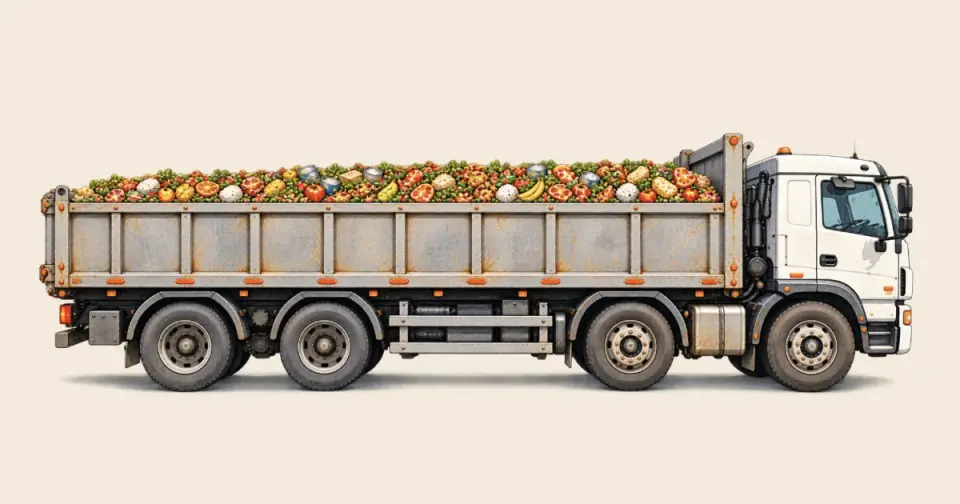
World Food Day highlights a stark global paradox: 645 million people face hunger while 1.05 billion tonnes of food are wasted annually. Households account for 60% of this waste, with the Maldives leading per capita disposal. The economic cost exceeds $1 trillion, and food waste contributes 8-10% of global greenhouse gas emissions. While hunger rates have fallen slightly, they remain above pre-pandemic levels, with Africa bearing the heaviest burden of undernourishment.
Key points
- Global food waste reached 1.05 billion tonnes in 2022, equivalent to 132kg per person annually.
- Households are responsible for 60% of food waste, followed by food services (28%) and retail (12%).
- The Maldives has the highest per capita food waste at 260kg, while Spain records the lowest at under 39kg.
- Food waste costs the global economy over $1 trillion and generates 8-10% of global greenhouse gas emissions.
- 645 million people faced hunger in 2025, a slight decrease from 2024 but still 61 million more than in 2019.
- Africa has the highest number of undernourished people, with 309 million affected, nearly half of the global total.
Background
This issue follows recent warnings about climate-driven hunger, including a record El Niño event that the UN predicts could exacerbate food insecurity for 50 million people. Additionally, earlier coverage noted local efforts to mitigate waste, such as the Minnesota State Fair donating 10,000 pounds of leftovers to hunger relief networks, illustrating the gap between systemic waste and targeted charitable responses.
How outlets are covering it
Al Jazeera and UNEP align on the core statistics, citing 1.05 billion tonnes of waste and 645 million hungry people, though UNEP emphasizes the lack of data infrastructure in low-income countries. NDTV Food focuses on practical household solutions, noting India’s specific waste of 78 million tonnes, while Al Jazeera highlights the disparity between high and low-income nations. China Daily frames the issue primarily as a climate threat, underscoring the environmental impact of rotting food in landfills. All sources agree that household behavior is the primary driver of waste, but differ in emphasis: UNEP stresses systemic policy gaps, while Al Jazeera and NDTV focus on individual consumer habits.
Why it matters
The disconnect between massive food waste and persistent hunger underscores a critical inefficiency in global food systems. With food waste costing $1 trillion and contributing significantly to climate change, reducing waste is not just an ethical imperative but an economic and environmental necessity. The data reveals that waste is not solely a 'rich country' problem, as income levels show minimal variance in waste, but rather a global challenge exacerbated by climate and infrastructure gaps. Addressing this requires coordinated action from governments, businesses, and individuals to meet Sustainable Development Goal 12.3 by 2030.
What to watch
The 2025 revision of national climate plans (NDCs) presents a key opportunity for countries to integrate food waste reduction into their climate strategies. UNEP is urging more G20 nations to establish robust data baselines to track progress toward halving food waste by 2030. Public-private partnerships are expected to expand, particularly in countries like Australia, Indonesia, and Mexico, to drive systemic changes in food supply chains and consumer behavior.
- Which countries waste the most food, and how to reduce waste at home Al Jazeera
- World squanders over 1 billion meals a day - UN report UNEP - UN Environment Programme
- World Food Day: how Cornwall kitchens can stop binning good food CornishStuff
- World Food Day 2026: 9 Tiny Tweaks In Your Daily Diet That Can Cut Food Waste Big Time NDTV Food
- Food waste: A climate threat China Daily
Want the full story? Read the original reporting
Read on Al Jazeera